

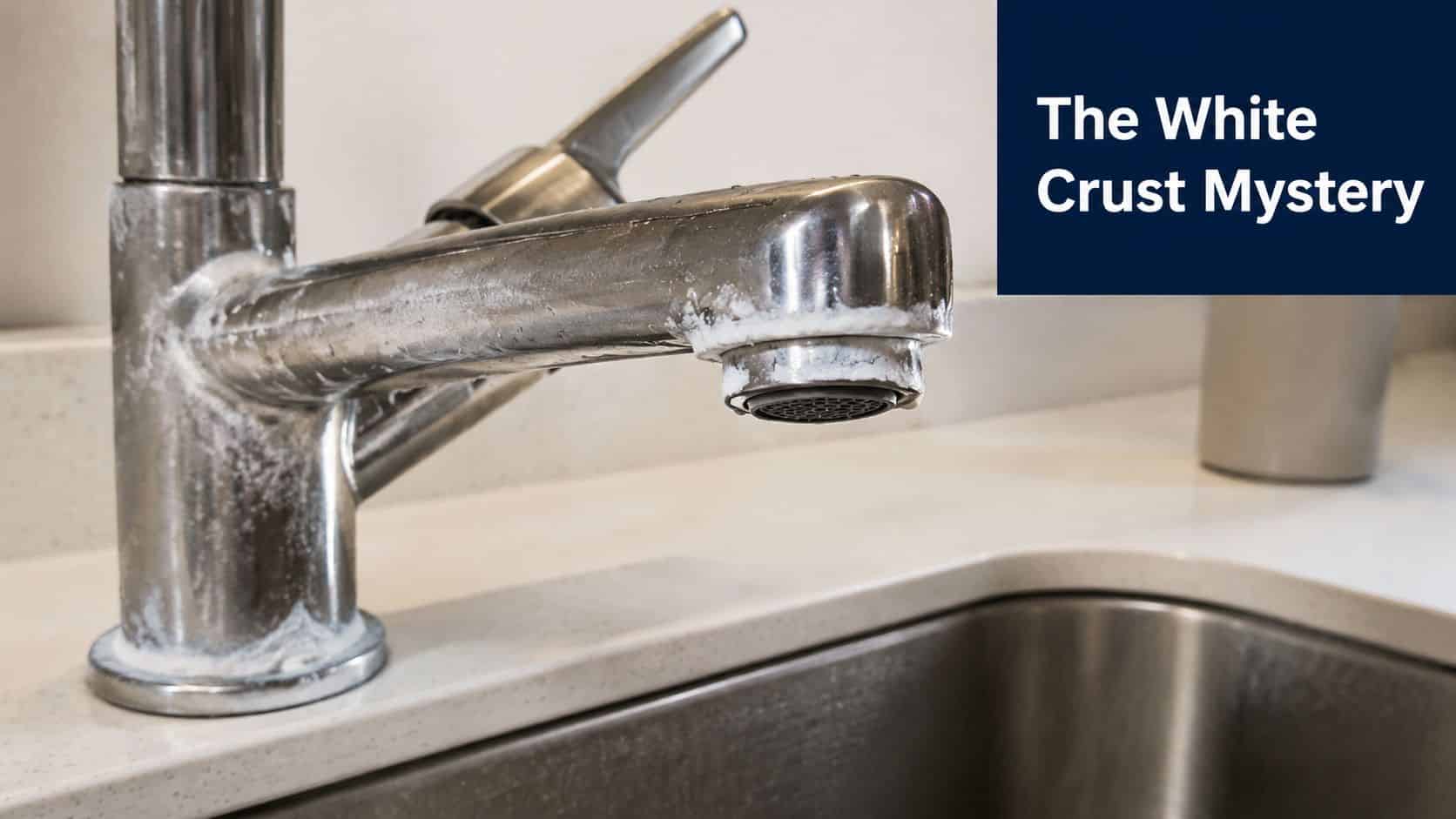
You wipe down the kitchen faucet after cleaning, but a chalky ring is already forming again around the base and aerator. In Las Vegas, that white crust usually isn't dirt or poor housekeeping. It's limescale, created when dissolved calcium and magnesium remain behind after water evaporates.
A small amount can be cleaned at home. Recurring buildup, restricted flow, seized shutoff valves, or scale appearing throughout the home points to a larger hard-water problem. Understanding white crust around faucets in Las Vegas and what causes it helps you decide when cleaning is enough and when the plumbing system needs inspection or water treatment.
Why Your Faucets Keep Getting That Chalky White Buildup
A faucet can look clean in the morning and show a pale ring by evening. In Southern Nevada's dry air, splashed water evaporates quickly, leaving dissolved calcium and magnesium on the metal. Repeated wetting turns a thin film into rough scale around the spout, aerator, handle base, or faucet body.
Plumbing references identify this residue as a hard-water deposit that forms as water dries on fixtures such as faucets and showerheads. For practical removal methods, see This guide to removing mineral deposits.
Why ordinary wiping stops working
A damp cloth can remove a fresh water spot. Hardened minerals bond to the surface, so wiping lifts loose dust while leaving the cement-like layer behind. Deposits become thicker where water collects repeatedly, especially around the spout, handle base, and aerator.
The visible crust is also a useful warning. The same mineral exposure can affect showerheads, toilet fill valves, dishwasher components, water-heater parts, valves, and supply passages. White particles may break loose from plumbing or fixtures and appear in the water, according to the Las Vegas Valley Water District's water-quality information.
Practical rule: If the crust returns soon after cleaning, treat the recurrence as information about the water supply, not proof that you missed a spot.
Las Vegas tap water is classified as very hard. Calcium and magnesium carried in Colorado River water leave deposits wherever water dries. The minerals do not make the faucet unsafe by themselves, but persistent scale can restrict an aerator, affect valve movement, and reduce the useful opening in internal passages.
That distinction matters during a service call. A faucet is often the easiest place to see hard-water stress, not the only affected component. Recurring buildup across several fixtures, weak flow, or deposits near valves and water-heater connections supports a system-level inspection and may justify water treatment instead of repeated surface cleaning.
The Hard Water Problem Behind Las Vegas Faucet Scale
As noted earlier, Las Vegas Valley water is classified as very hard. The practical issue is what that hardness does inside the plumbing. Dissolved calcium and magnesium remain in the water until evaporation or heating changes the conditions. The minerals then precipitate, leaving limescale on faucet surfaces and inside aerators, valve openings, supply passages, and hot-water equipment. A Nevada hard-water overview describes the same deposit pattern in local plumbing.
Why heat makes the problem more noticeable
Heat makes scale easier to see and often increases the stress on hot-side components. As water heats, dissolved minerals are more likely to come out of solution and attach to surfaces. That explains heavier buildup on a hot-water aerator, water-heater parts, dishwasher spray arms, or shower fixtures than on a rarely used cold-water outlet.
A faucet may show only a crusted screen, while the same process is reducing the usable opening deeper in the system. Flow can become weaker or uneven, the spray may splatter, and a valve can become harder to operate. Deposits around a water heater also deserve attention because restricted passages and mineral accumulation can affect heating performance and service access.
Hardness is different from contamination. White scale on a faucet does not automatically mean the water is unsafe, but recurring deposits show that fixtures and plumbing components are repeatedly exposed to mineral-laden water.
| City / Source | Hardness (GPG) | Classification | Scale Risk Level |
|---|---|---|---|
| Las Vegas Valley, local water district | 17 | Very hard | High |
| Las Vegas Valley, recent summaries | 16 to 18 | Very hard | High |
| National comparison, available summary | 3 to 7 | Slightly to moderately hard | Lower |
The comparison comes from regional Las Vegas water-quality coverage. Its value is not the exact number at one faucet. It shows why crust that returns across multiple fixtures can indicate system-wide hard-water stress rather than a cleaning problem.
Pay attention to the pattern. If scale is concentrated around the water heater, hot-water flow is weakening, or the tank makes unusual noises, arrange an inspection through water heater repair in Las Vegas. Repeated surface cleaning may improve appearance, but it will not remove deposits inside restricted passages or address the water conditions causing them.
How a Plumber Diagnoses Faucet Crust and Hidden Scale Damage
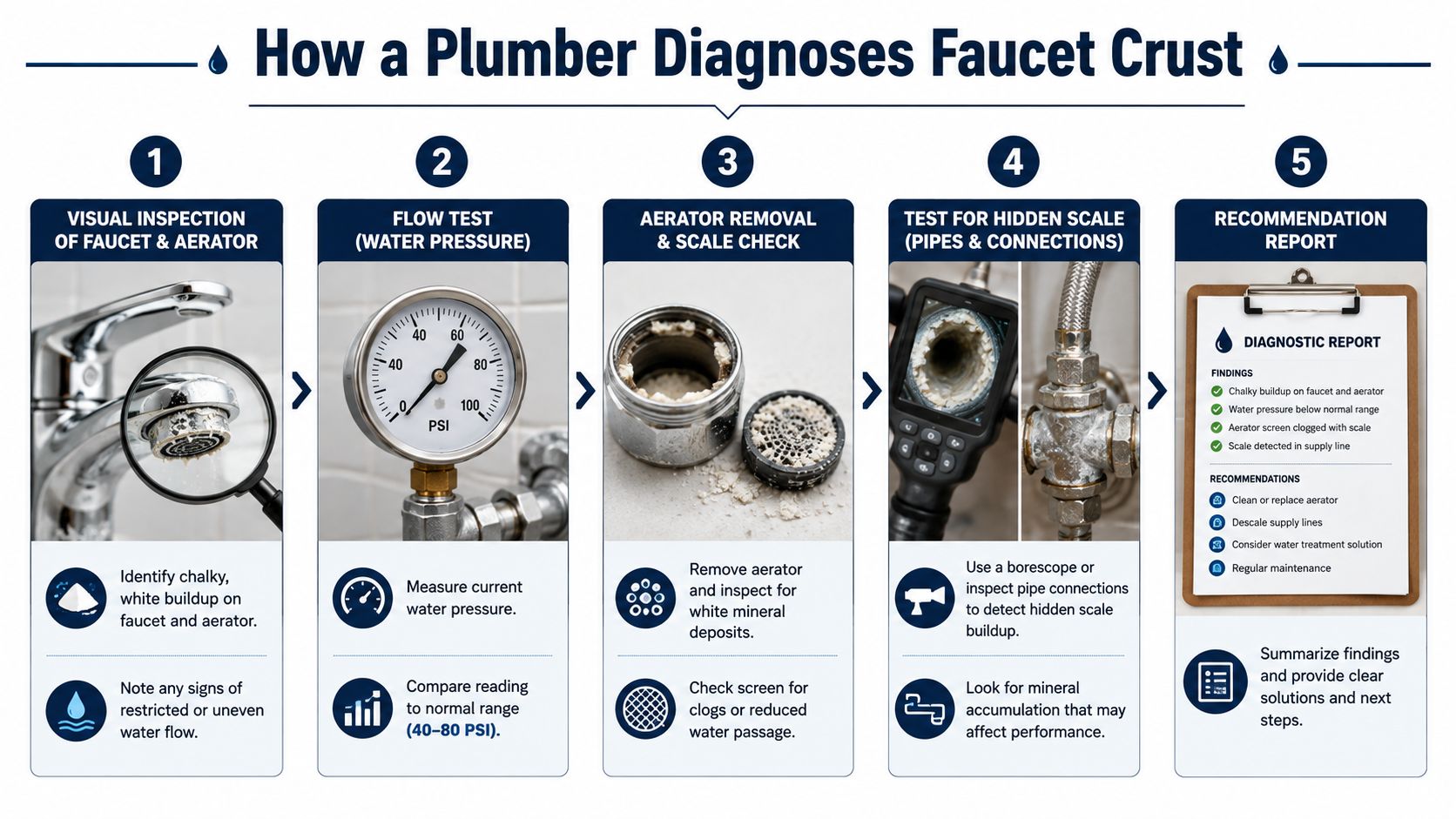
A plumber doesn't diagnose recurring faucet scale by looking at the crust alone. The first task is to determine whether the deposit is limited to the fixture or reflects restricted flow, damaged valves, or buildup elsewhere in the home.
The inspection starts at the fixture
The aerator is removed and examined for mineral blockage. Its screen may be packed with white particles, while the faucet cartridge or valve seat may show scaling that causes dripping, an uneven stream, or difficulty controlling temperature.
The shutoff valves beneath the sink also deserve attention. Mineral deposits can make an angle stop difficult to turn, and corrosion can weaken the connection. A plumber will look for scale rings on nearby toilet fill valves, showerheads, hose bibbs, and other fixtures. Similar deposits in several locations support a system-wide hard-water pattern rather than an isolated spill.
Testing separates symptoms from causes
At the point of use, a plumber may use a hardness test strip or a digital TDS meter as part of the assessment. These tools help confirm whether the water serving the fixture has a significant dissolved-mineral load. TDS doesn't identify every mineral individually, so it isn't a substitute for a complete water-quality analysis, but it can support the visual findings.
Flow and pressure are checked at more than one fixture. A single clogged aerator is a small repair. Reduced flow at several fixtures suggests restrictions in supply lines, valves, or other internal components.
The water heater is another important checkpoint. Sediment and mineral deposits inside the tank, along with the condition of the anode rod, can show whether internal service is needed. For a concealed problem involving connected piping or drainage routes, a professional sewer camera inspection can help identify conditions that aren't visible from the faucet.
The final diagnosis should answer a practical question: is this cosmetic scale that cleaning can manage, or is the home showing hard-water stress that calls for fixture repair, water treatment, or pipe work?
Cleaning Versus Treatment Versus Replacement
Homeowners generally have three choices. They can keep removing the residue, reduce the mineral exposure with treatment, or replace components that scale has already damaged. The right option depends on how quickly the crust returns, whether flow has changed, and how much of the plumbing system shows the same pattern.
| Approach | Typical Cost | Effectiveness | Longevity | Best For |
|---|---|---|---|---|
| Cleaning | Varies by supplies and labor | Removes existing surface deposits | Short-term when exposure continues | Light buildup on sound fixtures |
| Water treatment | Varies by system and installation | Addresses mineral exposure at the source | Ongoing with proper maintenance | Recurring scale throughout the home |
| Fixture replacement | Varies by fixture and labor | Restores damaged or restricted components | Long-term for the replaced part | Seized cartridges, clogged aerators, worn valves |
Cleaning manages the symptom
Vinegar or a manufacturer-approved descaler can loosen light deposits. That approach works well when the faucet still operates normally and the residue appears only after occasional splashing. It becomes inefficient when scale returns within days, because cleaning removes the deposit without changing the water entering the fixture.
Abrasive tools may make the surface look cleaner for a moment, but they can scratch chrome, brushed nickel, or matte finishes. Chemical compatibility matters more than aggressive scrubbing.
Treatment addresses the source
A whole-home softener can reduce calcium and magnesium before water reaches faucets, appliances, and the water heater. Salt-free conditioning systems may be considered by homeowners who want a different maintenance approach, but system design and performance depend on the specific product and water conditions. A qualified installer should test the water and size equipment for the home rather than assuming one standard system fits every property.
Treatment requires space, installation, ongoing maintenance, and a plan for service. It also won't repair a cartridge that has already seized or reopen a pipe passage that has become severely restricted.
Replacement makes sense after damage
Replace an aerator when its screen won't clean properly or the stream remains distorted. A cartridge or valve may need replacement when the handle is stiff, the faucet drips, or internal deposits prevent reliable temperature control.
If scale appears alongside corroded galvanized piping, aging copper, recurring pressure loss, or multiple failed valves, surface repairs may only postpone a larger decision. A plumber should inspect the accessible piping and determine whether targeted replacement is appropriate. Hydro jetting can be relevant for certain accessible, suitable lines with mineral scale, but it isn't a universal fix for every supply pipe or damaged plumbing material. Residential hydro jetting service should follow an inspection, not replace one.
Safe Ways to Remove and Prevent White Crust at Home
DIY cleaning is reasonable when the faucet works normally, the buildup is visible, and no other fixtures show pressure or flow problems. Start with the least aggressive method and follow the fixture manufacturer's finish-care instructions.
A careful cleaning sequence
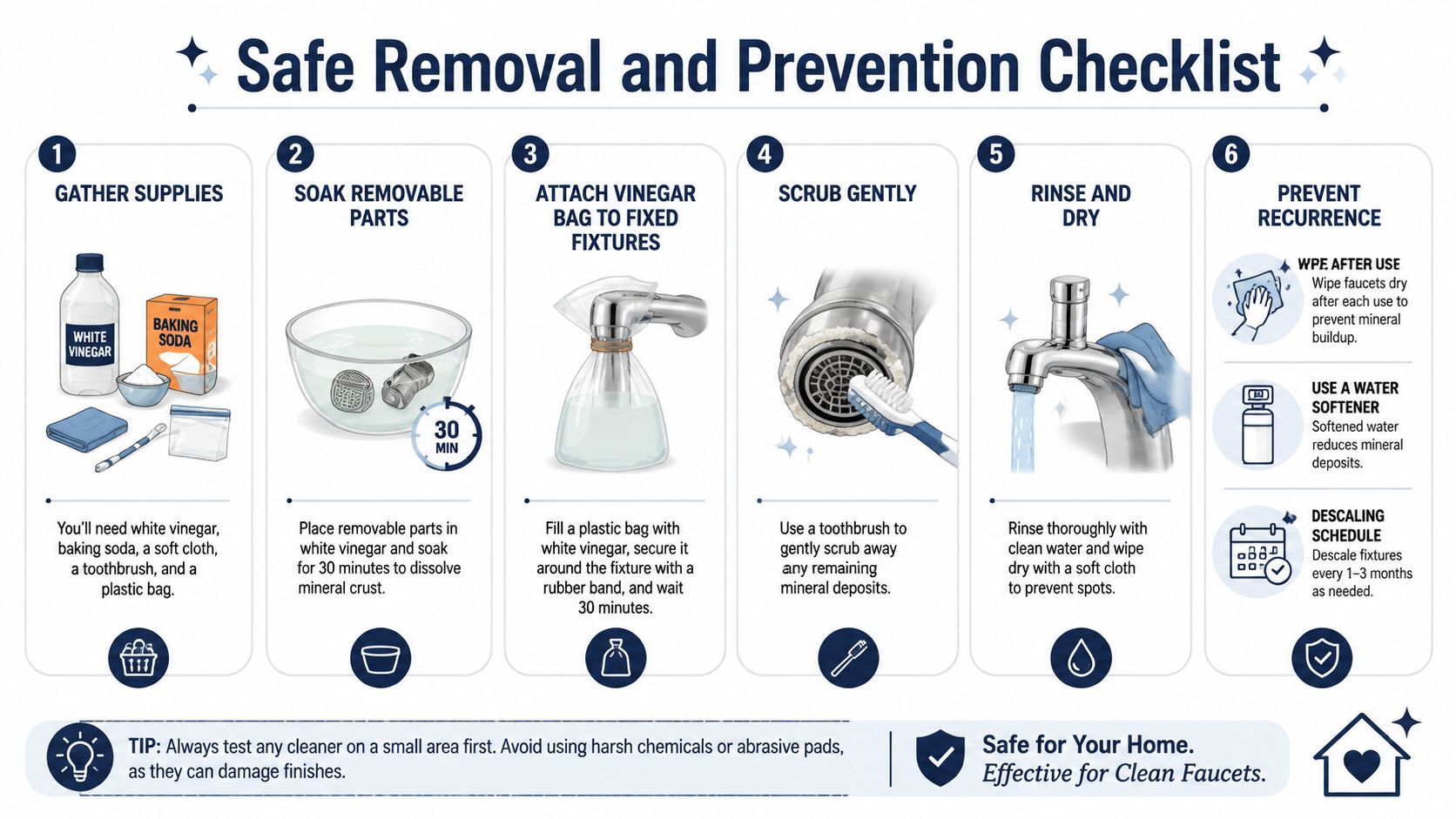
Gather compatible supplies. Use white vinegar, a soft cloth, a soft toothbrush, a plastic bag, and a rubber band. Avoid metal scrapers and abrasive pads.
Remove the aerator if possible. Unscrew it by hand or with a protected wrench. Keep the small parts in order, then soak the removable pieces in vinegar for 30 minutes, as shown in the cleaning checklist below.
Treat a fixed spout. Fill a plastic bag with vinegar, place it over the faucet end, and secure it with a rubber band. The affected area needs contact with the vinegar, but the bag shouldn't put strain on the faucet.
Brush gently. Use a soft toothbrush after soaking. Don't force deposits into the aerator screen or pry against a delicate finish.
Rinse and dry completely. Flush the aerator, reinstall its parts correctly, run the water, and wipe the faucet dry with a soft cloth.
Preventing a quick return
Drying the fixture after use reduces the water left behind to evaporate. A point-of-use filter may help with selected drinking-water applications, but it won't protect every faucet or appliance in the home. If the same crust keeps returning, source-level treatment deserves consideration.
Don't adjust a water heater temperature solely as a DIY scale solution without following the manufacturer's safety guidance and considering scald risk. Heat can encourage deposits, but the safe setting depends on the equipment and household needs.
Stop the DIY work if the aerator won't come out, the shutoff valve is seized, the finish starts to discolor, or water pressure has dropped at several fixtures. Those signs suggest more than surface residue.
When to Call a Licensed Plumber for Hard Water Problems
White crust deserves professional attention when it comes with changes elsewhere in the plumbing. The most useful warning signs include:
- Fast recurrence: The residue returns within 48 hours of cleaning.
- Broad pressure loss: Several fixtures have weaker flow, not just one clogged aerator.
- Discolored or metallic-tasting water: Particles or taste changes can indicate corrosion or disturbed deposits.
- Visible pipe corrosion: Exposed connections, angle stops, or supply lines show deterioration.
- Water-heater symptoms: Inefficiency, rumbling, or other unusual sounds accompany the scale.
- Leaks or damp areas: A damaged valve, supply connection, or concealed pipe may need prompt diagnosis.
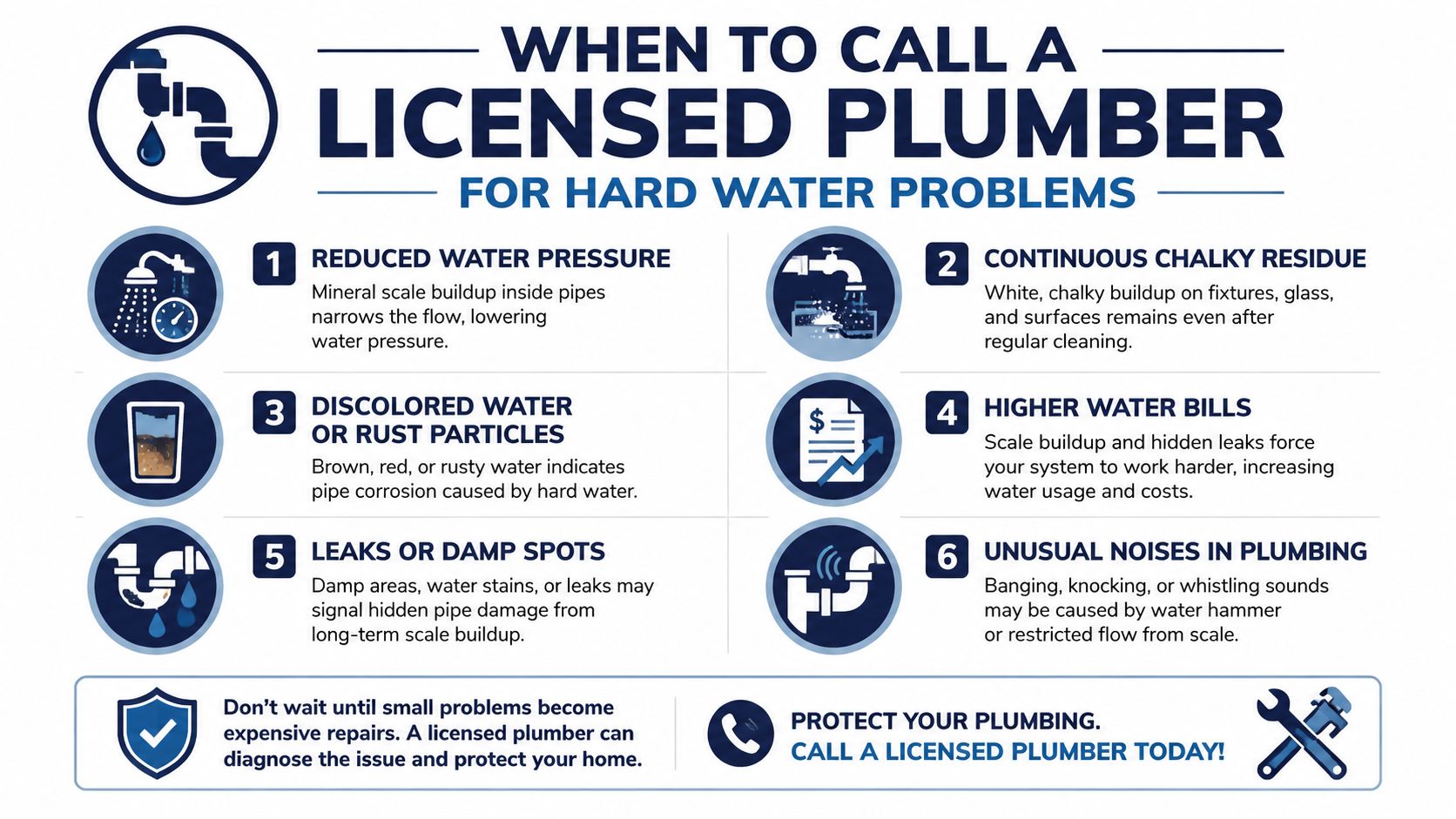
A licensed Las Vegas plumber can measure water hardness, test pressure, compare flow at multiple fixtures, inspect exposed connections, and evaluate the water heater. When hidden piping is suspected, the plumber may recommend camera inspection or targeted access rather than guessing from the faucet alone.
Local experience matters because Southern Nevada homes can have different combinations of slab construction, aging components, hard-water exposure, and previous repairs. Water-treatment installations also need to match the home's plumbing layout and applicable local requirements. Before choosing equipment, request baseline information from the Las Vegas Valley Water District water-quality resources, then compare that information with a point-of-use test.
For suspected concealed water loss, residential water leak detection can help identify whether a wet area, unexplained moisture, or changing pressure is connected to a hidden plumbing problem.
Early diagnosis helps you choose between cleaning, a fixture repair, water treatment, or more extensive pipe work. It also prevents repeated temporary repairs from masking a condition that is affecting faucets, valves, appliances, and the water heater.
MG Drain Services LLC provides residential plumbing inspections, faucet and valve repairs, water-heater service, water-treatment guidance, and leak diagnosis for homeowners in Las Vegas, Henderson, and North Las Vegas. Call 702-480-8070 to discuss recurring faucet scale, or visit MG Drain Services LLC to request service from a licensed and insured, family-owned, owner-operated plumbing company.