
Blog
HISTORY OF PVC
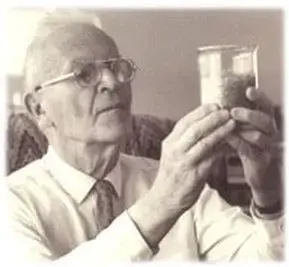
Polyvinyl chloride was discovered late in the nineteenth century. Scientists observing the newly created chemical gas, vinyl chloride, also discovered that when the gas was exposed to sunlight, it underwent a chemical reaction (now recognized as polymerization) resulting in an off-white solid material. But, the solid material was so difficult to work with that it was cast aside in favor of other materials. Years later in the 1920’s, rubber scientist Waldo Semon was hired by BFGoodrich to develop a synthetic rubber to replace increasingly costly natural rubber. His experiments eventually produced polyvinyl chloride. Although product developers began to use PVC in a variety of ways – in shoe heels, golf balls, and raincoats, to name just a few – its application increased significantly during World War II.Polyvinyl chloride (PVC) was discovered in the late nineteenth century. Scientists observed the chemical gas vinyl chloride and found that when this gas was exposed to sunlight, it underwent a chemical reaction known as polymerization, resulting in an off-white solid material. However, this solid material was difficult to work with and was initially set aside in favor of other materials.
Years later, in the 1920s, rubber scientist Waldo Semon was hired by BFGoodrich to develop a synthetic rubber to replace the increasingly expensive natural rubber. His experiments led to the discovery of polyvinyl chloride. Though product developers started using PVC in various applications—such as shoe heels, golf balls, and raincoats—its use expanded significantly during World War II.
PVC turned out to be an excellent replacement for rubber insulation in wiring and was used extensively on U.S. military ships. After 1PVC has proven to be an excellent alternative to rubber insulation in wiring, and it was widely used on U.S. military ships. After 1945, its use expanded significantly during peacetime.
In the U.S., the primary materials for producing PVC are natural gas and rock salt. Natural gas is subjected to high heat and pressure in a process called “cracking” to produce ethylene.
Common rock salt, or sodium chloride, is processed through electrolysis to yield chlorine and lye (sodium hydroxide). Chlorine and ethylene are then combined to create vinyl chloride monomer (VCM).
These VCM molecules link together through a process known as polymerization, forming long chains of Polyvinyl Chloride polymer (PVC plastic). The thermoplastic PVC powder is subsequently compounded, melted, and extruded into pipes.945, its peace-time usage exploded.
In the U.S., PVC’s materials are natural gas and rock salt.
Natural gas is heated under pressure to form ethylene. This is called “cracking”.
Common rock salt (sodium chloride) is split by electrolysis to produce chlorine and lye (sodium hydroxide).
Chlorine and ethylene are combined to form vinyl chloride monomer (VCM).
VCM molecules are then joined end-to-end (polymerized) to form long chains of Polyvinyl Chloride polymer (plastic).
The thermoplastic PVC powder is compounded, melted and extruded into pipes.
Author
The author is a journeyman p l u m b e r in Nevada not a p l u m b i n g contractor.