You notice it before you see anything wrong. On a hot Las Vegas afternoon, a rotten-egg odor drifts from the hall bathroom, strongest when you lean over the sink or turn on the faucet. The basin looks clean, the water drains, and yet the bathroom sink smells like sewer.
That pattern doesn't automatically mean your main sewer line has failed. The odor may be true sewer gas entering through a dry, siphoned, damaged, or incorrectly installed P-trap. It may be a fixture-level smell trapped in the pop-up stopper, overflow channel, corrugated connector, or biofilm. Or it may point to a broader venting or sewer-line problem affecting several fixtures.
The fastest diagnosis comes from matching the smell to its timing, location, and plumbing behavior. A sink that smells only when water runs needs a different response from one that makes the entire room smell, gurgles after a toilet flush, or keeps losing its trap seal.
Table of Contents
- Why Your Bathroom Sink Smells Like Sewer
- How the P-Trap and Vent Are Supposed to Work
- Fixture-Level Smells That Mimic Sewer Gas
- DIY Troubleshooting You Can Do Right Now
- Signs the Problem Is Bigger Than a Dry Trap
- When a Sewer Camera Inspection Is the Right Call
- Keeping the Smell Away and Getting Help in Las Vegas
Why Your Bathroom Sink Smells Like Sewer
A homeowner in Henderson may first try bleach, a drain brush, or a store-bought drain opener. That can make the sink smell better briefly, but it doesn't answer the important question: where is the odor getting into the room?
I separate bathroom sink odors into three working categories. The first is true sewer gas, which gets past the sink's water barrier because the P-trap is dry, siphoned, broken, missing, or improperly installed. The second is a localized fixture odor, where organic buildup inside the overflow passage, around the pop-up stopper, or on the drain components smells sulfurous or musty without indicating a failed sewer line. The third is a vent or sewer-line issue, where pressure problems, a damaged drain, or a larger blockage affects more than the basin.
Read the pattern before choosing a repair
A smell strongest at the drain opening usually starts the investigation under or inside the sink. Odor that appears when water runs can come from the overflow channel because flowing water moves trapped air through that passage. A smell that remains after the sink is dry, spreads across the bathroom, or appears at several fixtures deserves a wider inspection.
Practical rule: Cleaning is appropriate for localized buildup. It won't restore a missing water seal or repair a vent, cracked pipe, or loose drain connection.
The plumbing code reason a sink normally shouldn't smell like sewer is simple. The P-trap holds water between the room and the building drain. If that seal is intact, sewer gases shouldn't enter the bathroom under normal conditions. The rest of this guide uses the symptom pattern to distinguish a dirty fixture from a failed seal or a system-level fault.
How the P-Trap and Vent Are Supposed to Work
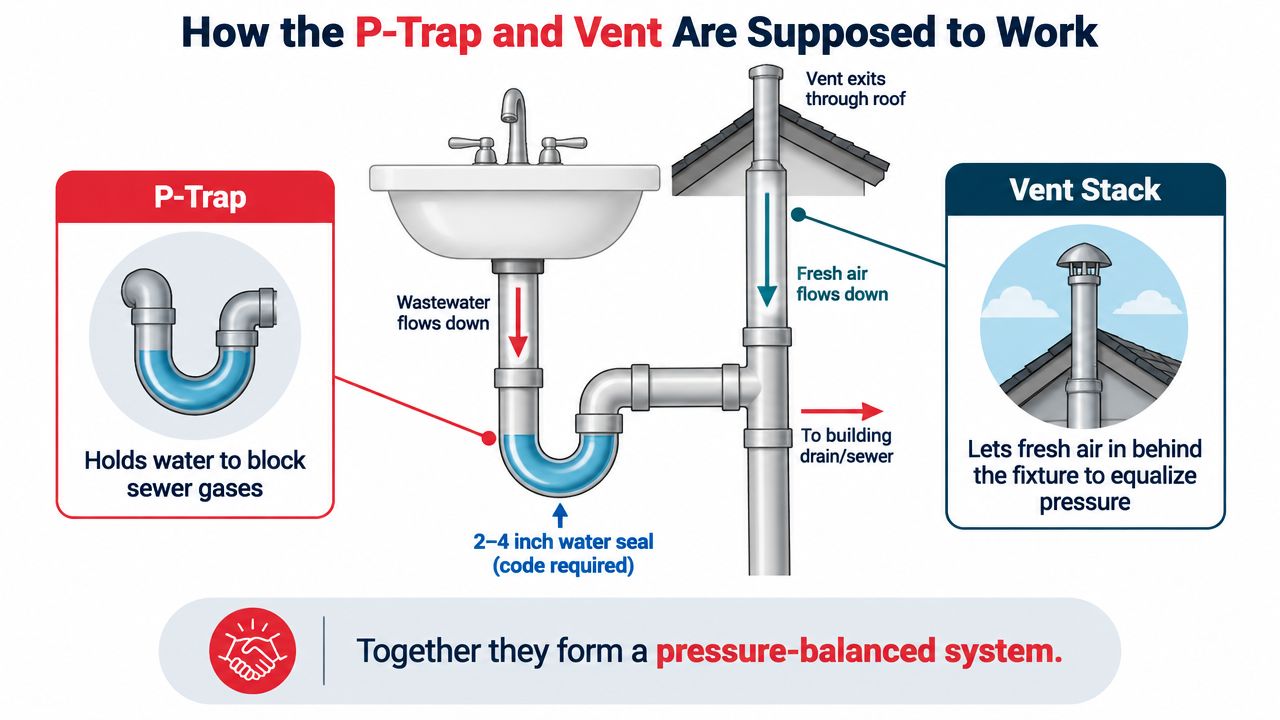
The P-trap is the U-shaped section of pipe beneath the sink. Its job is to hold water, creating a hydraulic barrier between the bathroom and the drainage system. Major plumbing standards require a trap seal not less than 2 inches and not more than 4 inches, or 51 mm to 102 mm, to block sewer gas. Each fixture also needs its own trap, and the trap must sit close enough to the fixture to preserve that seal. See the plumbing code explanation of trap-seal requirements for the underlying standard.
The vent works with the trap rather than separately. As water leaves the basin, the vent path allows air into the drainage system and balances pressure behind the moving water. Without that airflow, a large discharge can pull on the trap water, creating suction that siphons the seal away. Once the water disappears, the drain becomes an open route for sewer gas.
Three ways the barrier fails
- Evaporation: A guest-bathroom sink that sits unused can lose its water seal. Southern Nevada's dry air and hot summers make rarely used fixtures especially easy to overlook.
- Siphoning: A trap may look correctly installed but lose its water after another fixture drains, particularly when the vent path is restricted or pressure behaves improperly.
- Installation or component failure: A loose slip joint, cracked trap, missing trap, or incorrect trap geometry can leave the room exposed to the drain system.
A sink that smells after being unused may need water restored. A sink used regularly that repeatedly develops the same odor needs more attention, especially if the trap is visibly full. EPA-oriented diagnostic guidance recommends checking that traps contain water and that vent components remain intact when sewer-gas odor is present. For an infrequently used fixture, a slow-evaporating liquid such as mineral oil can help preserve the seal after the trap has been refilled, as described in this sewer-smell troubleshooting guidance.
Fixture-Level Smells That Mimic Sewer Gas
Not every sulfur-like odor comes from the sewer line. Bathroom sinks have hidden surfaces that stay wet and collect soap residue, hair, skin oils, toothpaste, and bacteria. The overflow channel is the most commonly missed area because it sits behind the basin wall and isn't part of the visible drain opening.
If the smell is strongest at the basin, appears when the faucet runs, or changes when water reaches the overflow opening, start with the fixture. The pop-up stopper and its pivot-rod pocket can hold hair and sludge. A corrugated flex tailpiece, found in some Las Vegas-area installations, has ridges that retain organic material more readily than a smooth tubular connection. Local hard-water mineral buildup can also narrow passages and give residue more places to collect.
| What You Notice | Most Likely Cause |
|---|---|
| Odor appears when water reaches the overflow opening | Biofilm inside the overflow channel |
| Musty smell stays close to a dry basin | Hair, soap residue, and buildup around the stopper |
| Smell is strongest directly over the drain | Biofilm on the stopper, tailpiece, or drain opening |
| Sulfur odor follows a long period without use | Evaporated water in the P-trap |
| Odor lingers with no water use and fills the room | Trap failure, vent issue, or drain and vent leak |
Why drain chemicals often miss the source
A chemical cleaner travels through the main drain path. It may not contact the upper overflow passage, the underside of the stopper, or the ridges inside a flex connector. It can also leave you with a deceptively clean-smelling basin while the actual odor source remains hidden.
The distinction matters because the repair should match the location. A brush, soap, and careful overflow flush can resolve fixture-level contamination. A dry trap needs water. A recurring smell from a sink with a full trap needs pressure, vent, connection, or line diagnosis. Guidance on cleaning hidden sink odor sources also highlights why the overflow and stopper deserve attention before assuming a sewer-line failure.
DIY Troubleshooting You Can Do Right Now
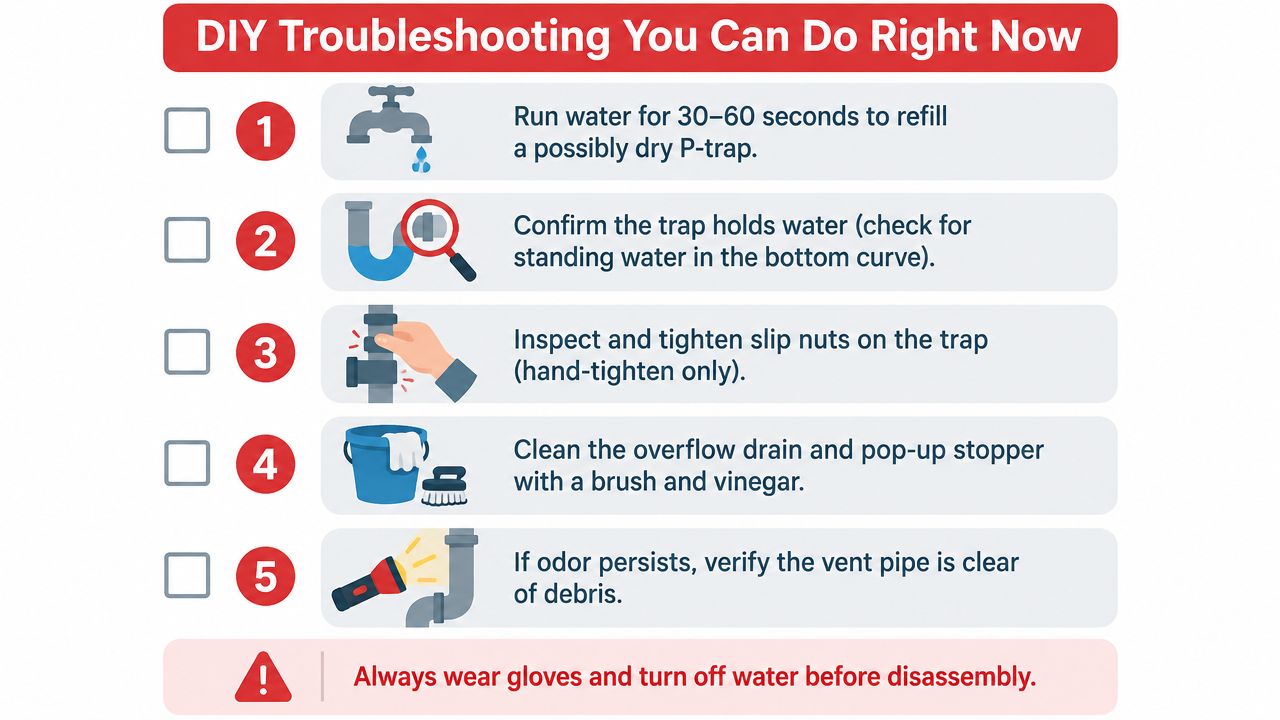
Start with the least invasive check. Run the bathroom faucet for 30 to 60 seconds to refill a possibly dry trap. That range is a practical flushing interval, not a guarantee that the problem is solved. If the odor fades and doesn't return, evaporation was a reasonable suspect. If it comes back, continue with the fixture inspection rather than repeatedly pouring chemicals into the drain.
Work from the visible parts inward
Check the trap. Place a bucket beneath the P-trap and look for leaks, loose slip nuts, or a trap that appears empty. Don't disassemble it unless you're comfortable keeping track of washers and connections. If you do, wear gloves and turn off the faucet before handling the piping.
Clean the stopper. Lift the pop-up stopper. If it won't come out, loosen the pivot-rod retaining nut under the sink, pull the pivot rod back, and remove the stopper. Scrub the stopper and rod pocket with dish soap and an old toothbrush, then rinse the parts thoroughly.
Flush the overflow. Use a small funnel and slowly pour a baking-soda-and-white-vinegar mixture into the overflow opening. Follow with hot water. Pour slowly so the liquid reaches the channel rather than spilling across the basin.
Protect an unused fixture. Refill the trap first, then add a tablespoon of mineral oil to slow evaporation in a guest or powder-room sink. The oil won't repair siphoning or a leak, so a returning odor still needs diagnosis.
Inspect the connections. Check the trap's slip nuts and tailpiece for moisture or a loose joint. Hand-tighten only. Over-tightening can distort washers and create a leak.
Avoid caustic drain cleaners. They rarely reach the biofilm inside an overflow passage, can damage some plumbing components, and leave hazardous liquid in the trap for anyone who later opens it. An enzyme product may help with organic residue, but it won't correct a pressure imbalance, missing trap, or broken drain line.
For a visual walkthrough, use the MG Plumbing Services plumbing videos.
If the smell has a clear fixture-level pattern, this process is a sensible DIY starting point. If you notice gurgling, recurring odor, or multiple affected drains, stop treating the basin as the whole problem.
Signs the Problem Is Bigger Than a Dry Trap
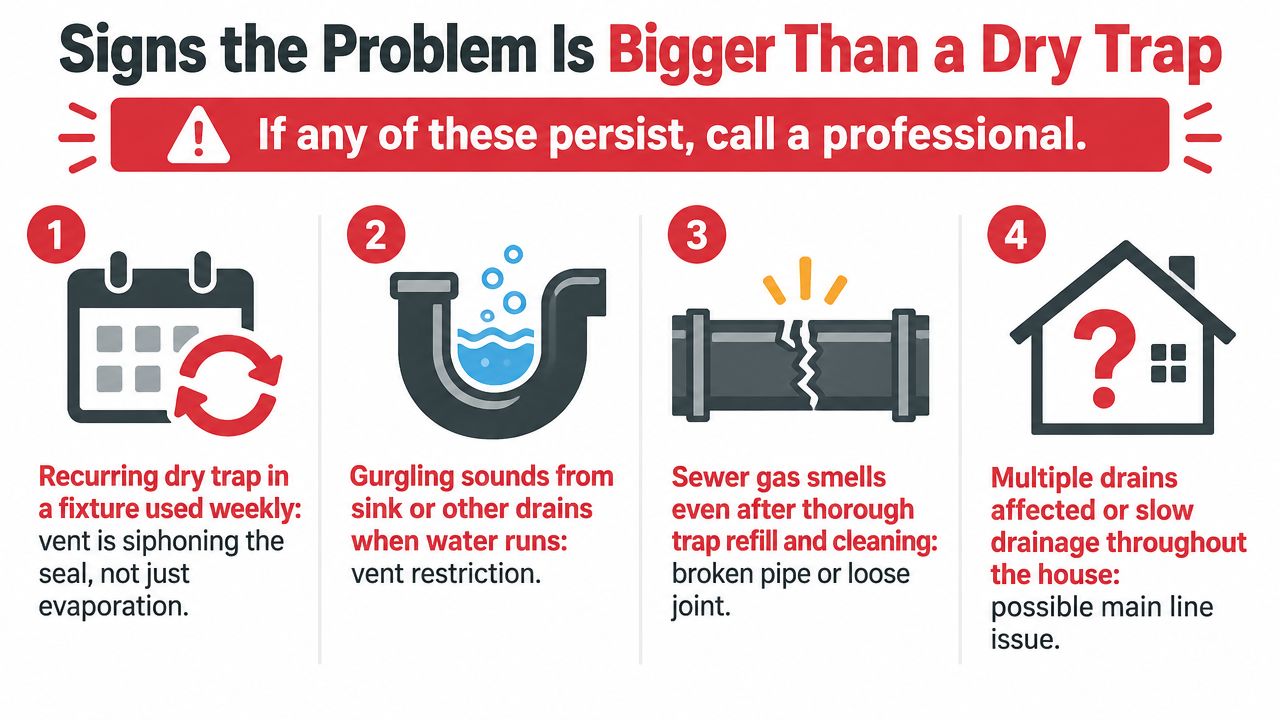
A trap that dries once in an unused bathroom is different from a trap that loses its seal in a sink you use every week. Recurrence changes the diagnosis. If refilling the trap works briefly and the odor returns, negative pressure may be siphoning the water away, which points toward a blocked or restricted vent rather than evaporation alone. The venting explanation for recurring sewer odor describes this pattern clearly.
Listen while nearby fixtures drain. Gurgling from the sink, shower, or another drain can indicate that air is moving through the drainage system improperly. A full trap that gurgles when a toilet flushes or a shower drains shouldn't be dismissed as ordinary sink noise.
Escalation signs worth taking seriously
- Several fixtures drain slowly: A shared branch or main line may be restricted.
- Water backs up elsewhere: Water appearing in a tub or floor drain when the washing machine discharges points beyond the sink.
- The odor intensifies after rain: A sewer-line break, damaged connection, or saturated area around a line deserves inspection.
- Moisture or mold appears: Wetness beneath the vanity, along a wall, near the slab, or around the yard line changes this from an odor problem to a possible leak.
- The ground shows settlement cracking: Cracks or soft, settled soil along the suspected sewer route are reasons to avoid digging and bring in a licensed plumber.
A sink that smells by itself can often be isolated. A sink that interacts with other fixtures is reporting on the plumbing system.
Hydro jetting may be appropriate for confirmed buildup, scale, or certain line restrictions, but it isn't a substitute for finding a broken pipe or vent fault. Review the residential hydro jetting service only after the cause and pipe condition have been evaluated.
When a Sewer Camera Inspection Is the Right Call
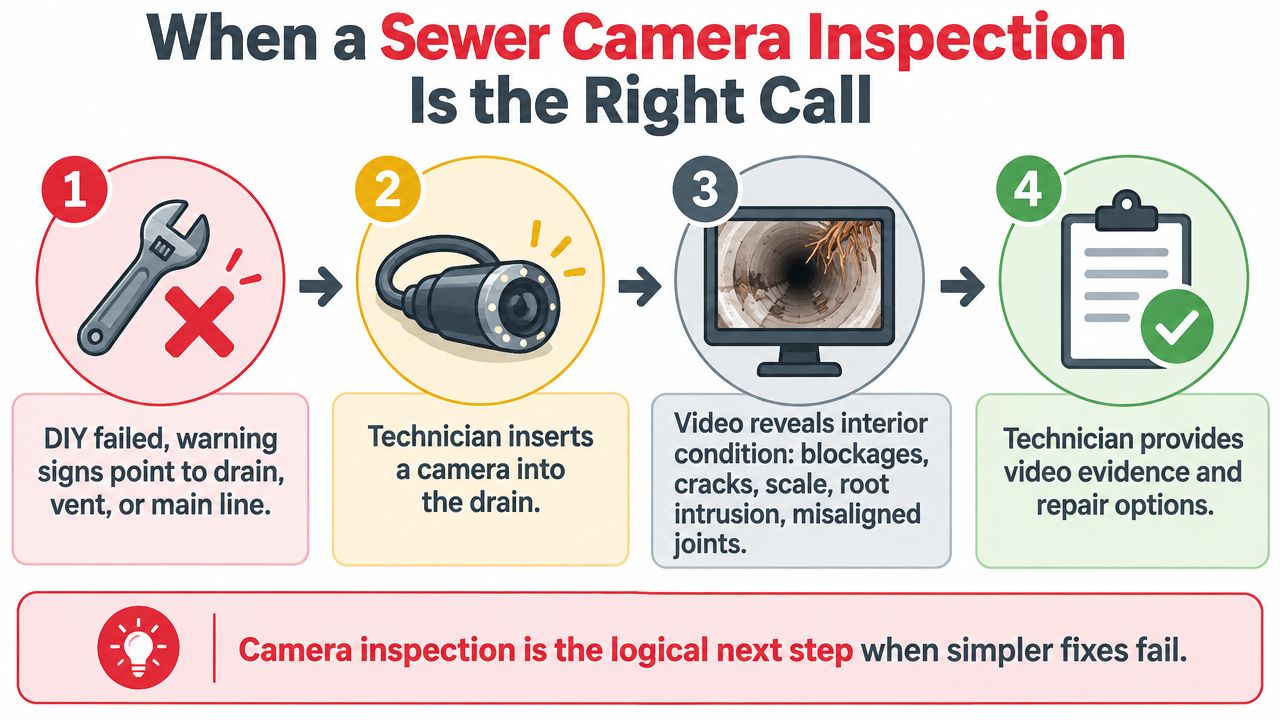
A sewer camera inspection earns its place when the simple checks fail and the symptoms point below the fixture. It can show the interior of the drain or sewer line from an accessible cleanout, including blockages, heavy scale, root intrusion, offset joints, bellies, and breaks. That evidence helps separate a cleaning job from a repair job before anyone opens a wall, cuts concrete, or excavates the yard.
The camera doesn't inspect every part of the plumbing system. It generally won't show the vent stack above the roof, so a recurring trap seal problem or gurgling pattern may still require a vent inspection, pressure testing, or another diagnostic method. A camera also needs a usable access point, and the technician should explain what portion of the line was reached.
What a useful inspection should provide
A professional shouldn't say the pipe looks bad. The technician should show you the live or recorded footage, identify the observed defect, and locate the camera head so the position and depth can be marked. That information matters when repair options include targeted excavation, line replacement, or cleaning rather than guesswork.
In Las Vegas residential work, most camera appointments run 45 to 90 minutes, according to the provided local service guidance. The exact time depends on access, pipe condition, distance, and whether locating is needed, so treat that as a planning range rather than a promise.
For homeowners in Las Vegas, Henderson, North Las Vegas, Summerlin, and nearby communities, sewer camera inspection and locating service is the logical next step when the odor survives trap refill and fixture cleaning. MG Plumbing Services LLC is a licensed, insured, family-owned, owner-operated residential plumbing company. Owner Miguel Garcia is a Nevada-licensed C-1d plumbing contractor and journeyman plumber with more than 25 years of plumbing experience, and the company uses camera, locating, drain-cleaning, hydro-jetting, and leak-detection equipment to support a written recommendation before repair work is authorized.
Keeping the Smell Away and Getting Help in Las Vegas
The decision is usually straightforward once the pattern is clear:
- Dry trap: Refill it and monitor the fixture.
- Localized odor: Remove and scrub the pop-up stopper, clean the overflow passage, and rinse away residue.
- Recurring or widespread odor: Arrange a vent check, drain diagnosis, or camera inspection instead of continuing to mask the smell.
Southern Nevada homes need simple maintenance because guest bathrooms can sit unused while heat and dry air reduce trap water. Run water in guest and powder-room sinks weekly. Deep-clean the overflow channel and pop-up stopper every few months, especially where hard-water deposits make residue cling to fittings.
Skip harsh chemical drain cleaners. They can damage components and won't correct a vent restriction, siphoning, cracked line, or improperly sealed connection. For older homes with recurring drain problems, a preventive camera scope can help document pipe condition before a small odor becomes a backup or a concealed leak.
MG Plumbing Services serves residential customers across the Las Vegas Valley, including Las Vegas, Henderson, North Las Vegas, Summerlin, and surrounding areas. The company handles drain cleaning, sewer and drain services, hydro jetting, camera inspections and locating, leak detection, water heaters, water treatment, and general plumbing repairs. Call 702-480-8070 to request service, and bilingual help is available because se habla español.
If your bathroom sink smells like sewer, MG Plumbing Services LLC can check the trap, overflow, drain connections, vent-related symptoms, and sewer line instead of relying on a temporary deodorizer. Call 702-480-8070 or visit MG Plumbing Services LLC to request a clear diagnosis and straightforward repair recommendation for your Las Vegas Valley home.