Las Vegas Valley water averages about 280 mg/L hardness, far above the 180 mg/L threshold for very hard water, so calcium buildup in pipes is more likely here than most homeowners realize. That hard water becomes a bigger plumbing concern when it moves through hot-water lines, faucets, valves, and water heaters.
A common call starts with a homeowner saying the shower has become weak, the kitchen faucet takes longer to fill a pot, or the water heater isn't keeping up like it used to. They may also notice a white crust around the aerator or a chalky ring on the showerhead. Sometimes the visible deposit is the whole problem. Sometimes it's only the part of the problem you can see.
In Southern Nevada homes, calcium scale can restrict flow, reduce heat-transfer efficiency, and make older plumbing components work harder. It can also be mistaken for a drain clog, a failing pressure regulator, a water leak, or a water heater that needs replacement. The right response starts with identifying where the restriction is and what caused it.
Table of Contents
- What Calcium Buildup in Pipes Actually Looks Like at Home
- Why Hard Water and Heat Create Scale Fast
- How to Spot Early Scale Before It Causes Big Problems
- Calcium Buildup Removal Options and What Each Actually Fixes
- Las Vegas Hard Water Reality and Long-Term Pipe Health
- When to Call a Professional Plumber in the Las Vegas Valley
What Calcium Buildup in Pipes Actually Looks Like at Home
A Las Vegas homeowner may first notice that the farthest shower doesn't have the same force it once did. The bathroom sink still runs, but the stream is narrow. The washing machine fills slowly, the tub takes longer to fill, and hot water seems to arrive with less volume. At the same time, white crust collects around faucet openings and the showerhead nozzles.
Those clues often point to mineral deposits at fixtures or in hot-water components, but they don't prove that a buried supply pipe is blocked. Aerators, cartridge valves, shutoff valves, water-heater connections, and short sections of hot-water piping can collect scale before the larger line shows obvious symptoms.
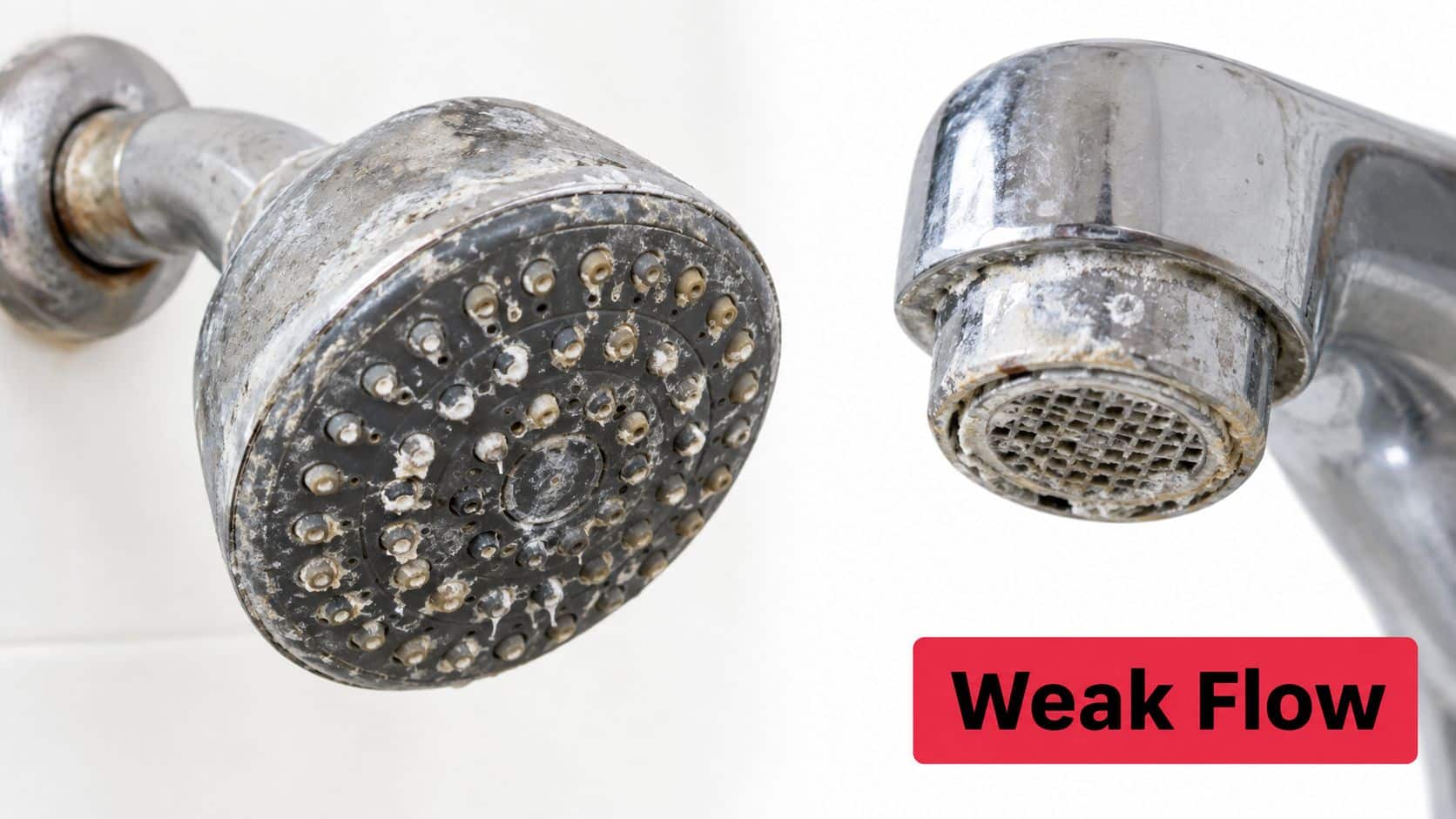
The symptoms homeowners tend to dismiss
Calcium-carbonate deposits make the inside of a pipe rougher and reduce the open space available for water. That can produce noticeable pressure loss at a fixture even when the pipe hasn't failed structurally. The effect may be isolated to one bathroom, limited to hot water, or spread across several fixtures.
Look for a pattern rather than one isolated symptom:
- Weak hot-water flow: If cold water is normal but the hot side is weak, check the water heater, hot-water connections, aerators, and nearby valves first.
- Longer filling times: A washing machine, bathtub, or toilet tank that fills slowly may be receiving less flow through a restricted valve or supply line.
- Recurring fixture deposits: White crust around multiple hot-water outlets supports a hard-water explanation, although it doesn't identify the exact restriction.
- Water-heater strain: Scale on heating surfaces and connections can reduce heat-transfer efficiency and affect hot-water delivery.
- Different performance by location: One weak fixture suggests a local restriction. Several weak fixtures suggest a branch, pressure-control, or broader supply problem.
Why the water heater often shows the problem first
Heating promotes mineral precipitation, so the hot side can develop heavier deposits than the cold side. A homeowner may see flakes at a hot faucet, hear unusual sounds from a tank water heater, or notice that hot water delivery has changed even though the heater still produces hot water.
That distinction matters. Replacing a water heater won't correct a scaled shutoff valve or restricted hot-water branch. Conversely, cleaning one aerator won't solve a heater connection that has narrowed internally. A technician needs to compare flow and pressure at more than one location before recommending a repair.
Practical rule: White crust proves that minerals are present at the surface. It doesn't prove that a buried pipe is blocked.
A drain problem also looks different from a pressurized supply-line restriction. Slow water leaving a sink or shower can result from hair, grease, roots, corrosion, scale, or a damaged drain. Calcium buildup in pipes may contribute, but plunging a drain won't diagnose a weak shower supply line. The symptom's location tells you which part of the plumbing system deserves attention first.
Why Hard Water and Heat Create Scale Fast
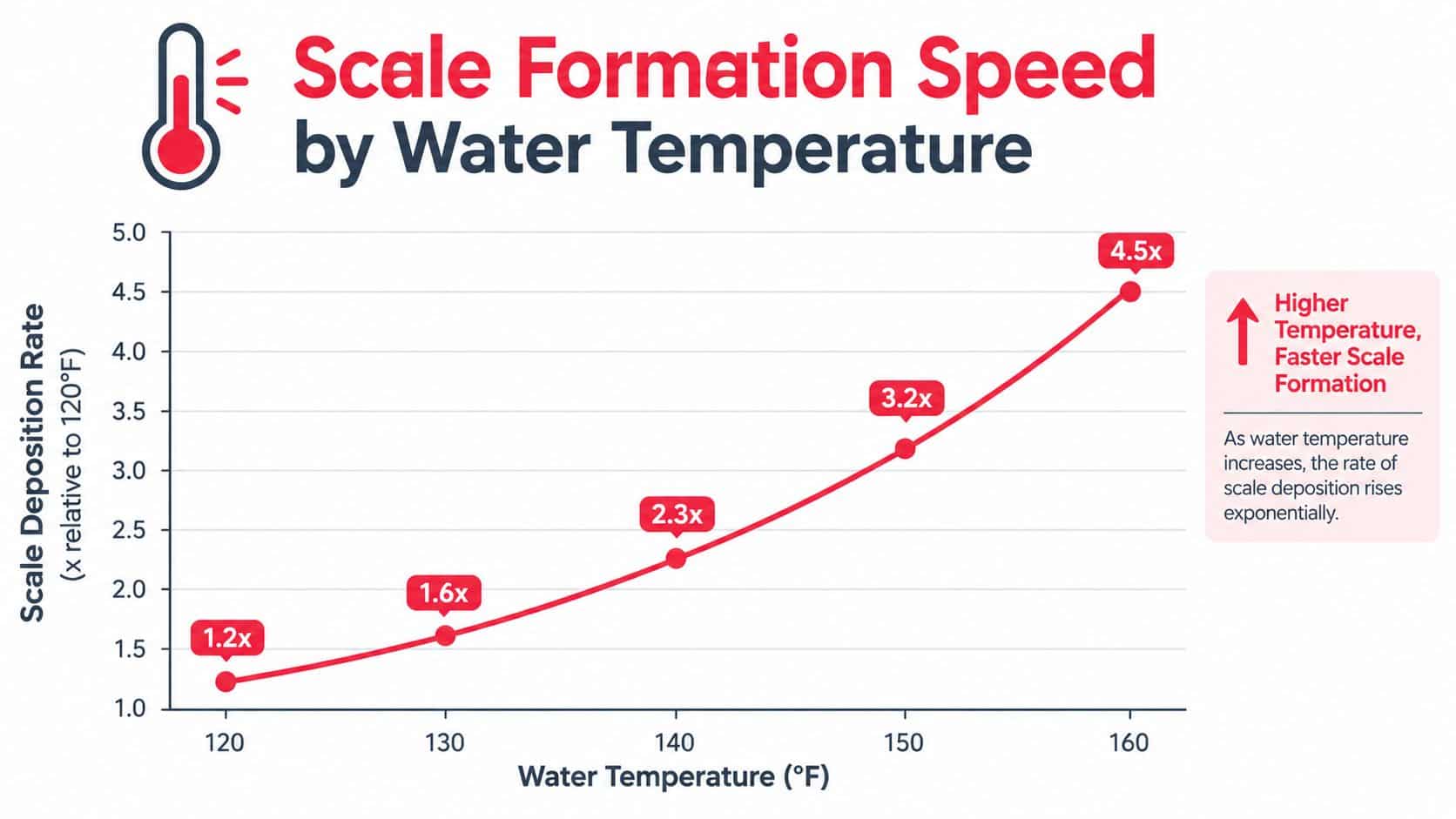
Hard water contains dissolved calcium and magnesium. While those minerals remain in solution under some conditions, heating, carbon-dioxide loss, and changes in pH can cause calcium carbonate to come out of the water and attach to pipe and equipment surfaces.
The result is a hard, adherent layer rather than loose dirt. Over time, it reduces the effective internal diameter of a pipe, roughens the passage, restricts flow at valves and aerators, and interferes with heat transfer in water-heating equipment. The process is especially active in hot-water piping because higher temperature encourages precipitation.
The U.S. Geological Survey explanation of water hardness classifies water as soft at 0 to 60 mg/L, moderately hard at 61 to 120 mg/L, hard at 121 to 180 mg/L, and very hard above 180 mg/L, measured as calcium carbonate equivalent. The Las Vegas Valley falls in the very-hard category based on the local utility's reported hardness, which explains why mineral deposits are a routine plumbing concern rather than an unusual event.
A plain-language hardness guide
| Category | Hardness Range (mg/L as CaCO₃) | Scaling Risk |
|---|---|---|
| Soft | 0 to 60 | Lower likelihood of calcium scale |
| Moderately hard | 61 to 120 | Scale may develop at fixtures and appliances |
| Hard | 121 to 180 | Frequent deposits and increasing maintenance concerns |
| Very hard | Above 180 | High likelihood of scale in hot-water equipment and plumbing components |
These categories help establish risk, but hardness alone doesn't predict exactly where a restriction will form. Temperature, pH, alkalinity, water velocity, pipe material, and the amount of time water sits against a surface all change the outcome. Two homes with similar water hardness can show different symptoms because their plumbing systems operate differently.
Supply lines and drain lines are different problems
Calcium scale in a pressurized supply pipe usually appears as reduced flow or pressure at a fixture. A drain-line restriction appears as slow drainage, gurgling, standing water, or recurring backups. The materials causing the restriction may also differ. Drain lines can contain grease, hair, roots, corrosion debris, and scale, while supply-side complaints may center on valves, aerators, water-heater connections, or narrowed pipe walls.
A water softener addresses the mineral load entering the home. It doesn't clear a drain blockage, remove a root intrusion, or repair a collapsed line. Likewise, drain cleaning doesn't change the hardness of incoming water. Keeping those systems separate prevents homeowners from paying for a treatment that doesn't match the failure.
For hot-water complaints, water-heater repair in Las Vegas may be more appropriate than treating the entire house immediately. A technician can determine whether the issue is scale at the heater, a failed valve, restricted piping, or a separate equipment fault.
How to Spot Early Scale Before It Causes Big Problems
Start with a controlled comparison. Run cold and hot water separately at the same fixture, then compare that fixture with another one nearby and one farther away. If cold flow is strong but hot flow is weak, the water heater, hot branch, or hot-side valve deserves attention. If both are weak at several fixtures, check the whole-house pressure pattern before assuming scale.
Remove and inspect accessible aerators and showerheads. White or chalky material can usually be seen around screens and small openings. Cleaning those parts may restore flow at the fixture, but it won't tell you whether the restriction continues inside the supply line.
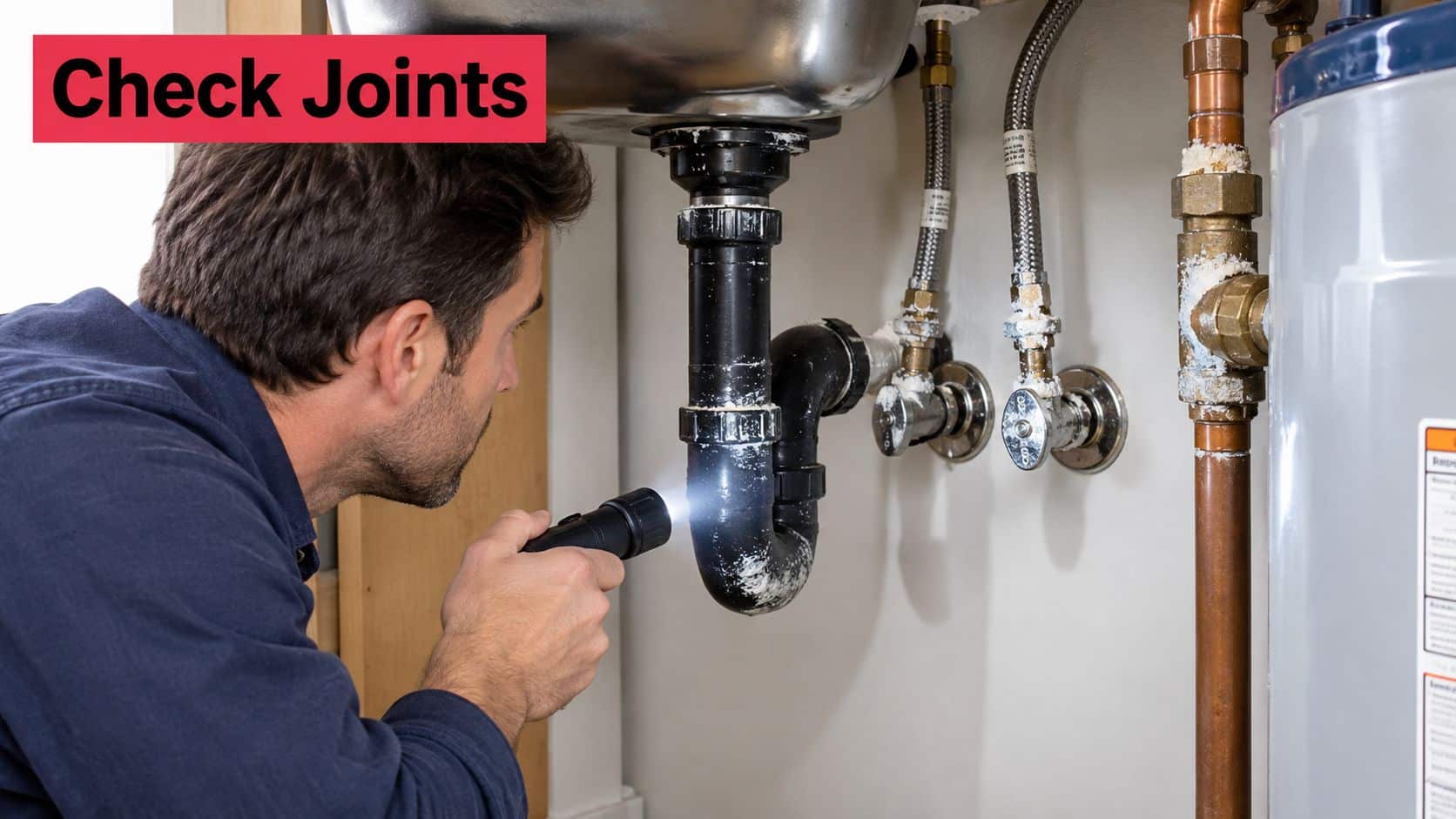
A useful homeowner check
Use the home's symptoms to narrow the location instead of guessing at the remedy.
- Check the fixture screen. Shut off the fixture if needed, remove the aerator, and look for mineral flakes or a packed screen. Cleanable deposits here are a local maintenance issue.
- Compare hot and cold flow. A hot-side-only complaint points toward heat-affected equipment or piping, not necessarily the incoming service line.
- Test more than one outlet. A single weak faucet may have a clogged cartridge or shutoff valve. Multiple weak fixtures indicate a broader pressure or piping issue.
- Watch the drain separately. A sink that fills while the faucet runs has a drainage concern. A faucet that barely delivers water has a supply concern.
- Record changes. Note whether the problem appeared gradually, follows water-heater use, or affects only one side of a fixture.
Don't use visible crust as a reason to open a wall or replace a pipe. An accessible aerator can be cleaned, but a buried line needs evidence. Flow and pressure testing can show whether the restriction is local or systemic. A water test at the incoming cold supply can establish hardness, while testing hot-side components can show whether heating is contributing to the deposits.
When professional inspection adds value
A sewer camera is useful for drain lines, especially when the competing causes include scale, grease, roots, corrosion, a belly, or a collapsed section. It isn't a universal tool for seeing small deposits inside every pressurized water line. For supply plumbing, the technician may rely on pressure readings, flow comparisons, fixture inspection, water chemistry, and targeted access.
A published experimental analysis of inorganic scale deposition reported reductions of up to 96% in pressure drop and up to 95% in scale thickness when a prevention device was compared with an unprotected system in controlled testing, as summarized by the National Water Filtration Authority's scale discussion. Those figures describe the experiment, not the expected capacity loss in every home. They show why scale can have measurable hydraulic consequences, while also reinforcing that deposit thickness and operating conditions must be evaluated.
Call a licensed plumber when pressure loss is persistent, several fixtures are affected, a water heater is struggling, or a drain backs up repeatedly after basic cleaning. Early diagnosis can separate a replaceable valve from a scaled branch, and a drain obstruction from a failing line.
Calcium Buildup Removal Options and What Each Actually Fixes
The correct fix depends on where the scale is and what else is mixed into the restriction. Removing a faucet aerator is not the same job as restoring a narrowed drain line, and installing a softener is not the same as repairing damaged piping.
| Option | Best For | Limitations |
|---|---|---|
| Component descaling or replacement | Aerators, showerheads, valves, and accessible heater connections with surface deposits | Doesn't treat hidden restrictions or reduce future mineral loading |
| Mechanical or chemical descaling | Selected pipe sections where hardened scale is confirmed and the pipe can tolerate the process | Requires proper access and judgment, and may not address structural damage |
| Hydro jetting | Scale, grease, and other buildup in suitable residential drain lines | Doesn't soften incoming water or repair a cracked, collapsed, or severely deteriorated line |
| Water softener | Reducing calcium and magnesium entering the home's plumbing | Won't remove an existing obstruction, repair a damaged line, or correct every pressure problem |
| Pipe replacement | Severely restricted, corroded, damaged, or unreliable piping | More invasive than cleaning and should follow diagnosis of the pipe's condition |
Descaling a component can be enough
If a showerhead, faucet screen, or shutoff valve is restricted, cleaning or replacing that component may restore normal performance without touching the rest of the plumbing. The same approach can apply to a water-heater connection when the deposit is localized and the equipment remains serviceable.
A softener won't scrape scale off a valve that's already narrowed. It can reduce new mineral loading, but it doesn't reverse an obstruction on its own. Homeowners who install treatment without cleaning the affected component may still have the original low-flow complaint.
Hydro jetting belongs on the drain side
Hydro jetting sends high-pressure water through an appropriate drain line to remove scale, grease, and other accumulated material from the interior. It can be effective when a recurring drain problem comes from buildup rather than a structural failure. It doesn't belong in every pipe, and it isn't a substitute for a camera inspection when roots, cracks, bellies, or a collapsed section are possible.
When the issue is repeated drain restriction, residential hydro jetting service can be considered after the line's condition and material are evaluated. A cable machine may open a passage, but opening a temporary channel isn't the same as identifying why the line keeps restricting.
When replacement makes more sense
Old metal piping may have scale, corrosion, and weakened walls at the same time. Aggressive cleaning can be the wrong choice if the pipe no longer has reliable structural integrity. Replacement becomes more reasonable when the line has severe restriction, recurring failures, leaks, or damage that cleaning can't correct.
The decision should account for access, the affected section, pipe condition, and whether the same problem will return. A written recommendation should explain what was found and why cleaning, treatment, repair, or replacement fits the actual failure.
The expensive mistake is choosing a treatment before confirming whether the problem is a component, a drain, a water line, or the pipe itself.
Las Vegas Hard Water Reality and Long-Term Pipe Health
Southern Nevada homeowners deal with a combination of hard water, hot outdoor conditions, and plumbing systems that may include aging valves, older metal piping, and water heaters exposed to repeated heating cycles. The local utility describes the calcium and magnesium in Las Vegas Valley water as nontoxic and not a health risk, but hardness remains an aesthetic and infrastructure concern, as explained in the Las Vegas Valley Water District water-quality information.
That distinction helps homeowners make better decisions. Calcium buildup in pipes is usually a performance and maintenance problem, not a reason to assume the water is unsafe. The practical question is whether the home needs fixture cleaning, water-heater service, water treatment, drain cleaning, a targeted repair, or replacement.

Chemistry changes the maintenance decision
Scale control requires more than removing visible deposits. EPA technical guidance explains that calcium-carbonate precipitation depends on calcium concentration, dissolved inorganic carbon, and pH. It also identifies a relationship between total hardness and approximate calcium concentration, with calcium estimated by dividing hardness expressed as mg/L as calcium carbonate by 2.5. The EPA technical guidance on calcium-carbonate precipitation supports testing chemistry when treatment decisions require more than a surface inspection.
For a homeowner, that may mean testing incoming hardness and, where appropriate, calcium, pH, alkalinity, or dissolved inorganic carbon. Not every service call needs a complete water-chemistry study. A localized crust around one faucet usually doesn't justify whole-house treatment by itself. Widespread hot-water restrictions, repeated valve failures, or water-heater scaling deserve a more complete evaluation.
Temperature, pipe material, water velocity, and residence time also affect where deposits form. Hot-water branches and heater connections commonly deserve attention first, while a drain line may have a mixed obstruction involving scale and organic debris. That is why a single white deposit shouldn't dictate the repair.
A short inspection video can help show how professional diagnosis separates these conditions:
Choosing maintenance over replacement
Descaling is reasonable when the pipe is structurally sound, the restriction is confirmed, and access allows the work to be performed safely. Water-heater service may be the better move when the complaint centers on hot-water delivery, heater connections, or reduced heating performance. Replacement is more reliable when the pipe is badly deteriorated, repeatedly leaking, severely restricted, or likely to fail after cleaning.
A softener can reduce future calcium loading, but it won't fix a slab leak, a broken shutoff valve, a root-filled sewer line, or a collapsed drain. Treatment should be selected after the plumbing diagnosis, not used as a blanket answer to every white deposit.
MG Plumbing Services has hands-on experience diagnosing Southern Nevada residential problems involving hard-water mineral buildup, recurring drain blockages, sewer lines, leaks, aging components, and water heaters. The company uses drain-cleaning, hydro-jetting, sewer-camera, locating, and leak-detection equipment to identify the cause before recommending a repair. It serves Las Vegas, Henderson, North Las Vegas, Summerlin, and nearby parts of the Las Vegas Valley.
When to Call a Professional Plumber in the Las Vegas Valley
Schedule professional diagnosis when a fixture stays weak after cleaning its aerator, hot-water flow remains poor, or several fixtures lose performance together. Persistent pressure loss can come from scale, a failing pressure-control component, a leak, or a supply-line problem. Guessing at the cause can lead to a softener installation when the actual repair is a valve, heater connection, or damaged line.
Recurring drain backups also deserve more than repeated plunging or temporary snaking. A camera inspection can help identify scale alongside grease, roots, corrosion, cracks, bellies, or structural failure. Suspected slab leaks, unexplained water loss, and aging components that keep failing are strong reasons to have a licensed plumber inspect the system before damage spreads.
The service conversation should include the observed symptoms, the diagnostic method, the recommended repair, and the price before work begins. MG Plumbing Services is a licensed and insured, owner-operated residential plumbing company led by Miguel Garcia, a Nevada-licensed C-1d plumbing contractor and journeyman plumber with more than 25 years of plumbing experience. The company provides diagnosis and repairs for water heaters, drains, sewer lines, leaks, water treatment, fixtures, valves, and residential water piping, rather than marketing itself as a commercial or 24/7 emergency plumbing company.
For a diagnosis-first appointment during business hours, homeowners can request same-day residential plumbing service in Las Vegas. Call 702-480-8070 or request service online. Se habla español.
If hard-water scale is reducing fixture flow, affecting hot-water delivery, or contributing to recurring drain problems, visit MG Plumbing Services LLC to request an inspection. The team can evaluate the affected fixtures, water heater, drains, leaks, and piping, then explain whether cleaning, treatment, repair, or replacement is the practical next step.