You start the washing machine, walk past the bathroom, and hear the shower drain start to bubble. Then dirty water rises around the shower base even though no one's showered. That's not two separate problems happening on the same day. It's one pattern, and it's how main line clog symptoms usually announce themselves.
A single slow sink usually means hair, soap, or grease in that fixture's branch drain. A main line problem is different because every toilet, tub, shower, sink, and laundry drain in your Las Vegas home converges into one building sewer. When that shared pipe narrows or blocks, fixtures start reacting to each other.
The seven signs below help you read that pattern. Pay attention to which fixtures are affected, which one reacted first, and what was running at the time. That sequence tells a plumber far more than "the drain is slow," and it helps you stop water use before a partial blockage turns into sewage on the floor.
Table of Contents
- 1. Multiple Drains Slowing at the Same Time
- 2. Gurgling Sounds from Toilets and Drains
- 3. Toilet Water Rising When Other Drains Are Used
- 4. Sewage Backing Up in the Shower, Tub, or Floor Drain
- 5. Persistent Sewer Odors Inside or Outside the Home
- 6. Wet Spots, Soggy Ground, or Unusually Lush Lawn Over the Sewer Line
- 7. Clogs That Keep Returning After Cleaning
- Main Line Clog Symptoms at a Glance
- What to Do Next When You Spot a Main Line Clog Symptom
1. Multiple Drains Slowing at the Same Time
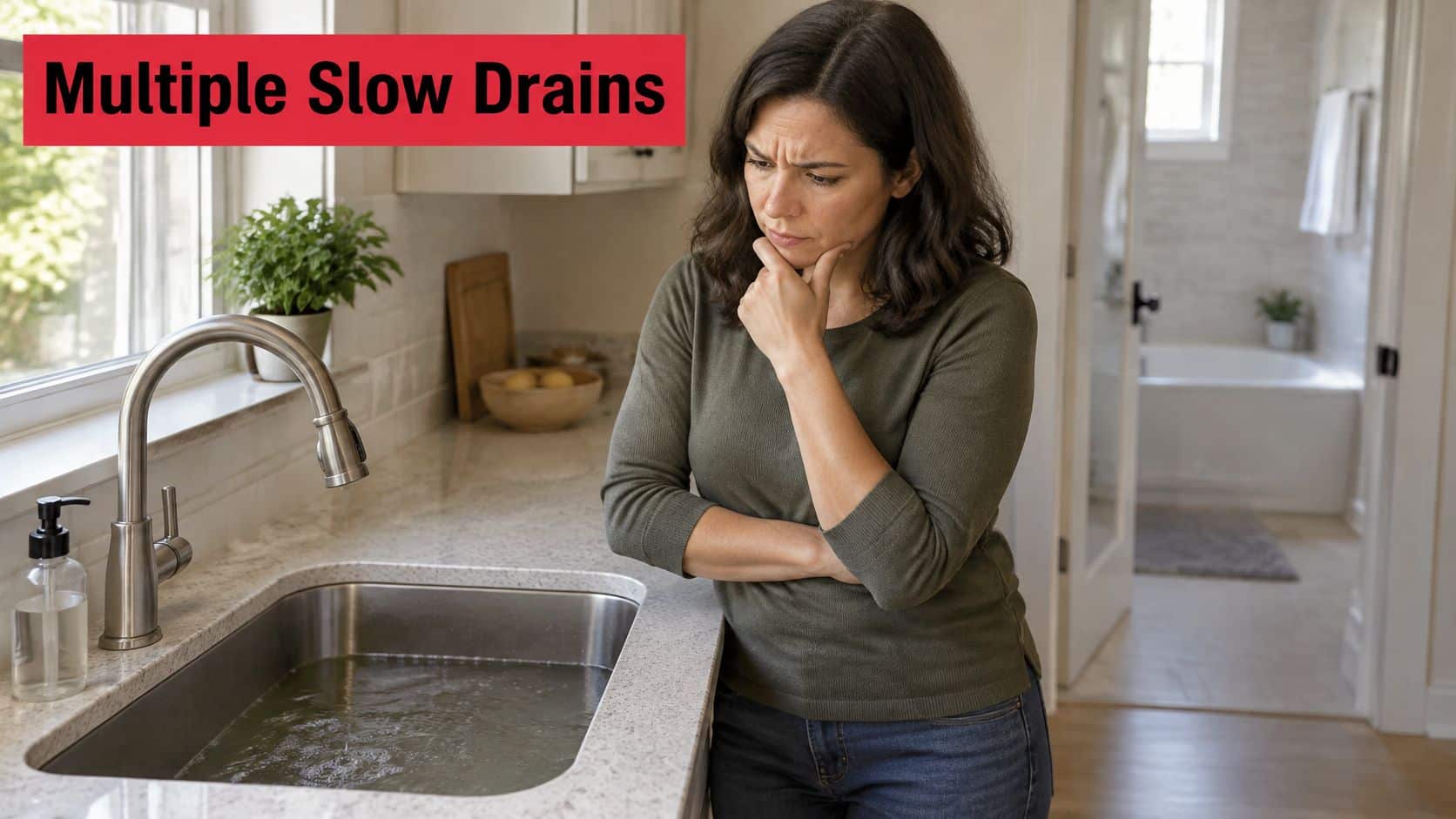
If your kitchen sink, bathtub, and laundry standpipe all get sluggish in the same week, stop treating them as three unrelated clogs. They're on different branches, so a restriction downstream of where those branches meet will slow all of them. A hair clog in one bathroom sink doesn't make a kitchen sink across the house hesitate.
That whole-house pattern matters at a larger scale too. The U.S. Environmental Protection Agency overview of sanitary sewer overflows estimates that approximately 23,000 to 75,000 sanitary sewer overflows occur annually in the United States, discharging an estimated 3 to 10 billion gallons of wastewater each year. In your home, simultaneous slow drainage is the smaller, earlier version of the same warning, a shared line that can't move wastewater freely.
A quick comparison test
Run water briefly at two fixtures on separate branches, say a bathroom sink and the kitchen sink, and compare how they drain. If both pool and clear slowly, the problem is likely shared. If only one misbehaves while everything else is normal, that branch is the place to start.
- Compare fixtures, don't just test one: Slow drainage in several rooms points downstream to the main.
- Skip caustic chemical openers: They rarely reach a main line blockage and can leave harsh standing water in the pipe.
- Confirm before you clear: A camera can locate the restriction, then professional hydro jetting or cable clearing can be matched to what is coating or blocking the pipe.
2. Gurgling Sounds from Toilets and Drains
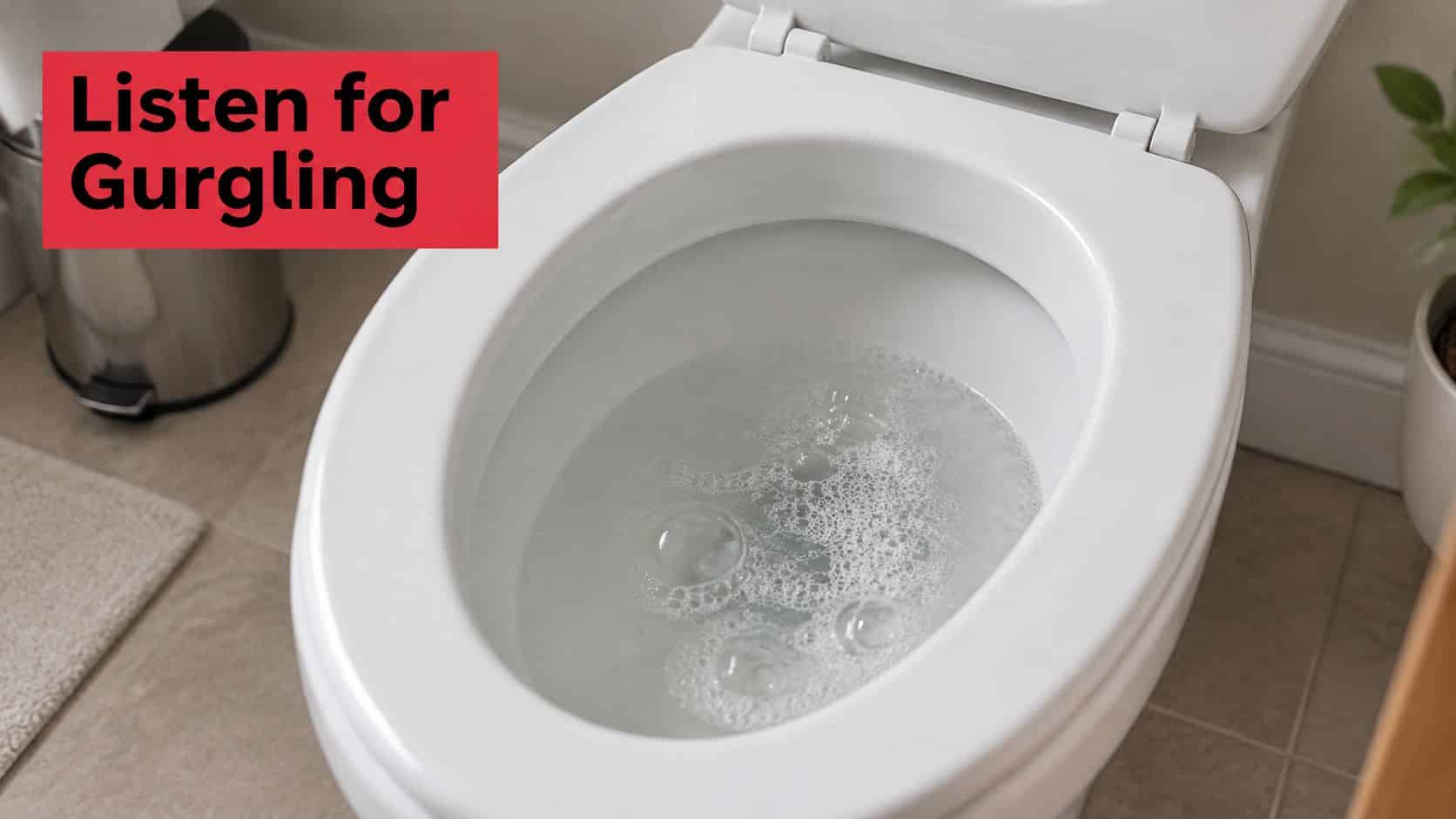
A toilet that gurgles while the shower runs is talking to you. Water moving past a partial blockage displaces air in the line, and that air has to escape somewhere. It often bubbles back through a toilet, tub, or floor drain that no one is using at that moment.
A single gurgling sink while that same sink drains can be a local branch or vent issue. Gurgling in an unused fixture when a different fixture drains is the stronger main line signal. Say you flush an upstairs toilet in a Summerlin two-story and the downstairs tub gurgles every time. Those fixtures shouldn't interact unless pressure and wastewater are backing up in a shared section.
Municipal guidance from MSD Project Clear on lateral line problems lists gurgling toilets alongside slow drainage across the home, sewage odors, pooling near floor drains, and leakage from exterior cleanouts as actionable indicators of a blocked or damaged lateral. That's why I recommend writing down the pairing, which fixture was running and which one gurgled, before you call.
Practical rule: If plunging one fixture makes another fixture bubble or rise, stop plunging. You're pushing against a downstream restriction, not clearing a trap.
Don't wait for the noise to become a backup. Gurgling usually means the line is still passing some water, which makes this the cheapest stage to have it checked.
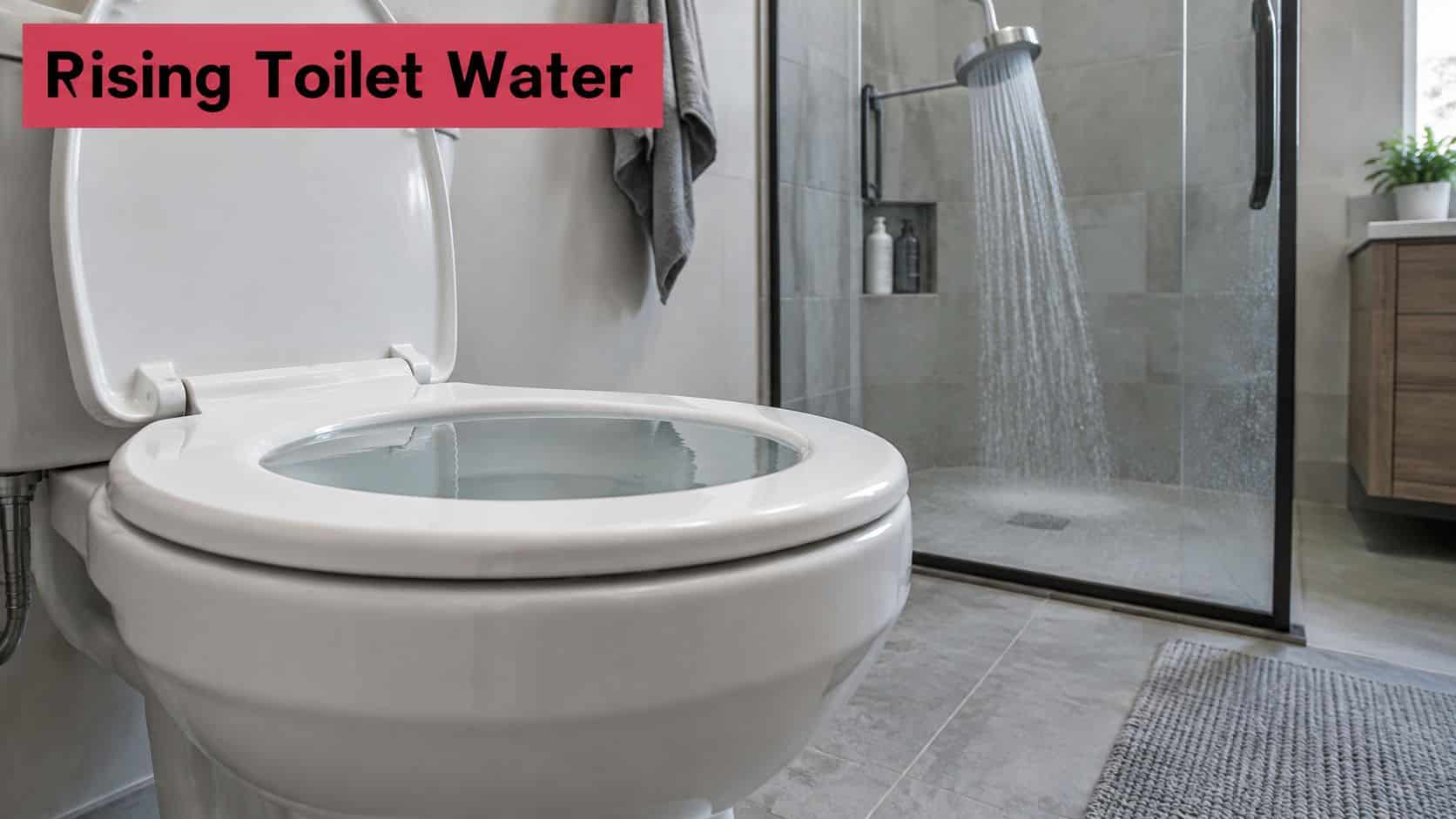
3. Toilet Water Rising When Other Drains Are Used
Watch the toilet bowl while a high-volume fixture drains. The washing machine is the best stress test in the house because it discharges a large surge quickly. If the bowl water rises, rocks, or bubbles during that surge, wastewater is hitting a restriction and pushing back toward a low, open fixture.
Contrast that with a toilet that rises only when you flush that toilet and everything else in the house drains fine. That's more likely a toilet or close branch obstruction. The main line pattern is cause in one room, effect in another, such as a Henderson laundry cycle making a nearby toilet bowl climb.
The EPA homeowner guidance on sewer backups reports that sewer-main blockages and breaks can cause sewage to back up through household toilets, shower drains, floor drains, and laundry sinks, sometimes as foul-smelling, black or thick wastewater mixed with toilet paper and human waste. You don't need to wait for water that looks like that before acting on a rising bowl.
What to do while it is happening
Limit laundry, dishwasher cycles, and long showers, since every gallon you add has to pass the same restriction. Don't keep flushing a bowl that's already rising to test it. One flush gives you the information. Repeated flushes are how a warning becomes an overflow onto tile, baseboards, and the subfloor around the flange.
4. Sewage Backing Up in the Shower, Tub, or Floor Drain
This is no longer an early warning. Wastewater in a shower base, tub, or floor drain means the line downstream is full enough that water is rising through the lowest available opening. In a slab-on-grade Las Vegas home, that's often a first-floor shower or tub rather than an upstairs fixture, which may still appear to drain because it's sending its water down to you.
Treat the first hour as containment, not drain cleaning. The EPA frequently asked questions on sanitary sewer overflows states that overflows can contain bacteria, viruses, protozoa, intestinal worms, molds, and fungi, and advises avoiding contact and keeping children and pets away. That guidance changes your priorities from "clear it fast" to "stop adding water and keep people out of it."
Watch how a backup presents at the lowest drain before you decide what to touch:
- Stop all water use: No flushing, laundry, showers, or dishwasher cycles until the line is assessed.
- Isolate the area: Keep kids and pets away, wear gloves if you must move items, and don't wade through it in bare feet.
- Don't open a pressurized cleanout yourself: A capped cleanout on a backed-up line can release wastewater all at once when the cap comes off.
Sewage backups rarely resolve on their own. If water is already surfacing indoors, call early in the day and describe exactly where it appeared first.
5. Persistent Sewer Odors Inside or Outside the Home
Odor alone doesn't prove a main line clog, and treating every smell as a sewer emergency wastes money. A guest bathroom that hasn't been used in months can smell because the water in its P-trap evaporated. Pour a quart of water into that sink, tub, and any rarely used floor drain, wait, and see whether the smell fades.
The Las Vegas Valley Water District water quality facts identify organic buildup, bacteria, clogs, and dry P-traps as possible causes of drain odor. That list is your diagnostic fork. Odor at one fixture that disappears after you refill the trap was probably local. Odor at several drains, especially paired with slow drainage or gurgling, points toward wastewater sitting in a shared line instead of moving to the city sewer.
Reading the location of the smell
Note where the odor is strongest. A smell concentrated at one sink often means buildup in that trap or overflow. A rotten-egg smell near a floor drain, around multiple fixtures, or outside near the cleanout deserves a line inspection rather than deodorizer.
Deodorizer that works for a day and then fails is not fixing anything. It is masking gas that is still finding a path into the house.
For example, a North Las Vegas home with odor only in a seldom-used guest bath is a trap refill and a cleaning. The same odor plus a gurgling toilet in the primary bath is a different call, because now two branches are involved.
6. Wet Spots, Soggy Ground, or Unusually Lush Lawn Over the Sewer Line
In the Las Vegas Valley, dry and compacted soil is normal. A persistently wet patch, sunken area, or strip of unusually green grass over the sewer path is not. Wastewater escaping through a crack, failed joint, or overflowing cleanout feeds that soil and keeps it damp between irrigation cycles.
Rule out sprinklers first. Compare the wet area with your irrigation zones and check whether it stays wet on a day that zone didn't run. Then notice whether it looks worse after heavy indoor water use, like back-to-back laundry loads. If indoor use changes an outdoor spot, you've linked the yard symptom to the sewer line instead of a sprinkler head.
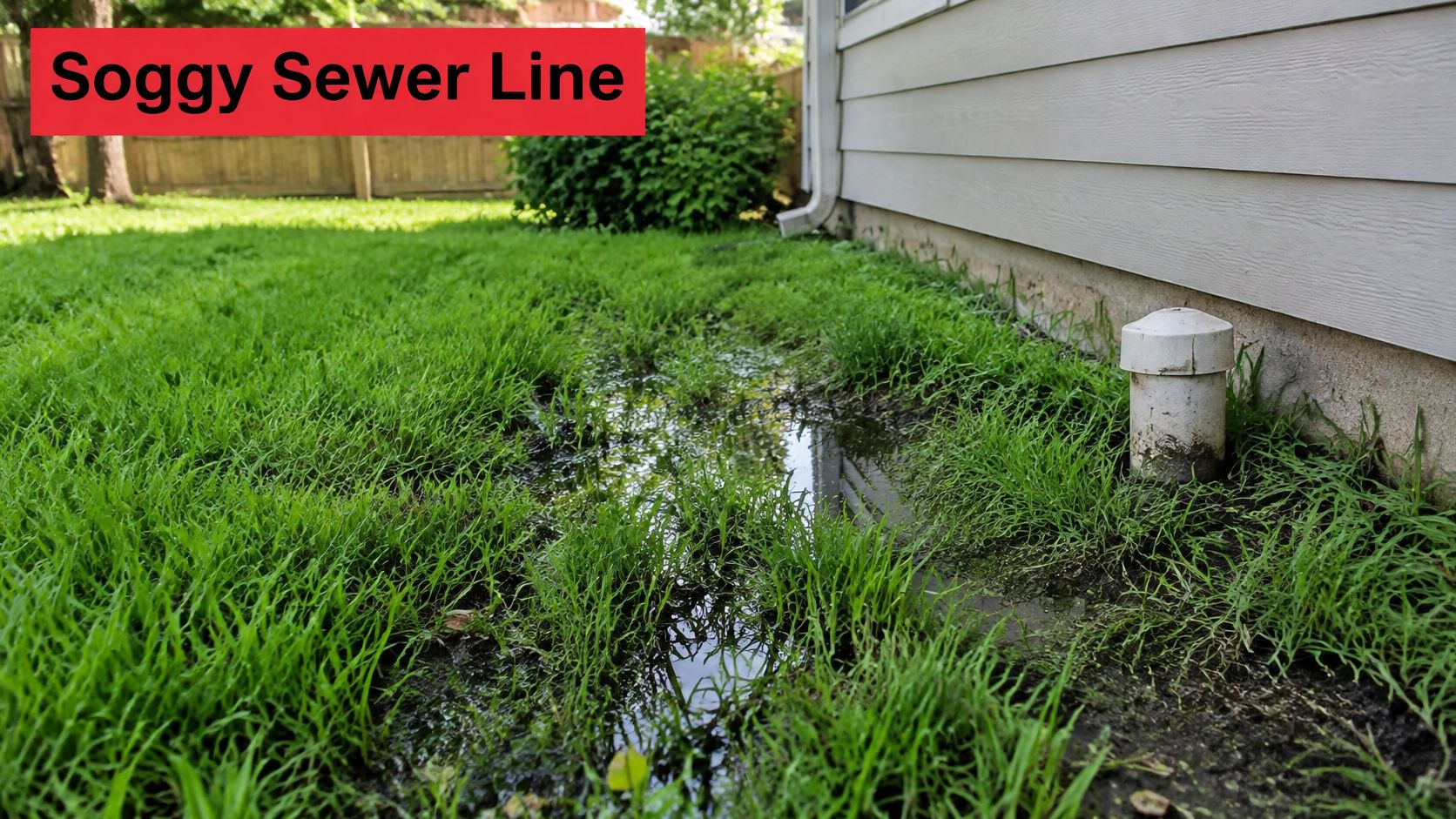
A branch drain clog never wets the yard. Saturation along the sewer path means the main line itself is losing water, and in Las Vegas that usually traces back to root intrusion in older neighborhoods or cast iron failure in homes built before 1985.
Who pays is the next question. Responsibility for the sewer lateral varies by local jurisdiction, so confirm where your line runs and check with the local utility or municipality before anyone excavates.
Don't start digging to find the pipe. A camera and locator can mark the line and the defect, and professional water leak detection helps separate a sewer problem from a pressurized water line leak that happens to wet the same yard.
7. Clogs That Keep Returning After Cleaning
A line that clears, then slows again within days or weeks, is telling you the cleaning removed the symptom and left the cause. A cable can punch a hole through grease, roots, or scale and restore flow today. If the pipe still has a root-filled joint, a sagging belly, or a coating on its walls, debris starts collecting at that same spot right away.
One detail tells you which line is at fault. A single fixture that clogs again points back to that branch drain. Two or more fixtures slowing together after a clearing means the main sewer line still has the underlying problem.
The causes are well documented. An EPA case study on sanitary sewer overflow control attributed more than 70% of reported overflows to line or main breaks or line blockages, with oil and grease buildup the most common blockage cause, followed by tree roots. Southern Nevada adds mineral scale to that list. The region's water is hard, and the U.S. Geological Survey explanation of water hardness describes how dissolved minerals in hard water leave deposits inside plumbing, a coating that narrows the pipe and catches debris a cable passes straight through.
A City of Bloomington homeowner sewer guide identifies root intrusion as the most common reason for slow drainage or blockage and states that video-camera evaluation is the most effective way to assess root-related defects. Roots also trap paper and grease, so a small intrusion becomes a large obstruction.
- Log the pattern: Record dates, fixtures affected, and how long each clearing lasted.
- Document before repeat cleaning: Ask for a sewer camera inspection with the defect location in writing.
- Fix slope problems, don't just jet them: Jetting clears a belly temporarily, but the low spot will collect solids again.
Main Line Clog Symptoms at a Glance
| Symptom | Where It Shows Up | Severity Signal | What It Often Points To |
|---|---|---|---|
| Multiple drains slowing at the same time | Two or more sinks, tubs, or laundry drains | Strong sign of a main-line restriction; worsening over days or weeks | Main sewer line blockage |
| Gurgling sounds from toilets and drains | Toilets, floor drains, or tubs, often when another fixture drains | Early warning that a restriction may be worsening | Trapped air from a partial blockage or restricted venting |
| Toilet water rising when other drains are used | Toilet bowl when a shower, sink, or washer drains | Clear sign of wastewater backing up toward a low fixture | Main sewer line restriction |
| Sewage backing up in the shower, tub, or floor drain | Lowest drains, especially on lower levels | Urgent; sewage exposure is a health hazard | Main sewer line at or near full blockage |
| Persistent sewer odors inside or outside the home | Near floor drains, fixtures, basement areas, or outdoor cleanout | Strong or persistent odors warrant inspection | Sewer gas or wastewater held in a restricted line |
| Wet spots, soggy ground, or unusually lush lawn over the sewer line | Yard above the sewer path or near the cleanout | Potential leak or backup; soil and foundation damage may worsen over time | Cracked or failed sewer line, or wastewater pooling in the line |
| Clogs that keep returning after cleaning | The same drains or fixtures after temporary clearing | Recurring within days or weeks signals an unresolved cause | Deeper main-line issue, such as roots, grease, offset joints, or a sagging pipe |
What to Do Next When You Spot a Main Line Clog Symptom
Start with the pattern, not a bottle of chemical opener. If only one fixture is slow and everything else drains normally, work that branch or have that single drain cleaned. If several fixtures slow together, one fixture makes another gurgle or rise, or wastewater appears at a low drain or cleanout, treat it as a main line problem until a professional diagnosis proves otherwise.
If sewage is backing up, stop running water in the house. Keep children and pets away from affected drains and floors, don't repeatedly flush a rising toilet, and don't open a cleanout that may be holding wastewater under pressure. If symptoms are still at the slow and gurgling stage, limit laundry and dishwasher use and get the line checked while it's still passing some water. That timing often means a cleaning visit instead of a cleaning visit plus contaminated flooring.
For Las Vegas Valley homeowners, MG Plumbing Services LLC is a local, family-owned and owner-operated residential plumbing company serving Las Vegas, Henderson, North Las Vegas, Summerlin, and surrounding areas. Owner Miguel Garcia is a Nevada-licensed C-1d plumbing contractor and journeyman plumber with more than 25 years of plumbing experience, and the company is licensed and insured. We focus on professional diagnosis, straightforward recommendations, honest pricing, and quality workmanship, using drain-cleaning, hydro-jetting, sewer camera, locating, and leak-detection equipment rather than relying on temporary fixes.
A sewer cleaning call with us includes confirming the clog is in the main line, locating the nearest clean-out, providing a flat-rate written estimate before work begins, clearing the line with a cable machine or hydro jetting, and test-flushing from multiple fixtures with written notes on the drain's condition. That written record is especially useful for landlords, property managers, and escrow inspections that need documentation, not just a cleared drain. We're a residential company and don't market ourselves as a commercial or 24/7 emergency service.
If you're seeing two or more of these symptoms together, call 702-480-8070 or visit mgplumbingservices.com to request service. Se habla español.
If your drains are reacting to each other, gurgling, or backing up at the lowest fixture, MG Plumbing Services LLC can confirm whether the blockage is in a branch or the main sewer, clear it with cable or hydro-jetting equipment, and verify flow from multiple fixtures. Call 702-480-8070 or contact MG Plumbing Services LLC to schedule residential service in the Las Vegas Valley, and se habla español.