
You open your water bill at your Henderson kitchen table and find a charge nearly double last month's. There haven't been extra guests, new sprinklers, or changes in your routine. Outside, the driveway is dry, and there's no puddle near the house.
That mismatch is worth investigating. A buried supply pipe can lose water without leaving an obvious wet spot, and normal-looking landscaping doesn't rule out a problem. Main water line leak symptoms often start with changes in consumption, not flooding.
Your private service line carries water from the meter toward the house. That's different from the public water main in the street, and it's also different from a toilet leak or a damaged hot-water pipe beneath the slab. The distinction matters because each problem calls for different testing and repairs.
Start with what you can verify safely: your bill, the meter, and where moisture appears. A single symptom isn't a diagnosis. Several symptoms together, especially unexplained meter movement and new dampness, justify prompt investigation rather than waiting for visible damage.
Table of Contents
- 1. Unexplained Spike in Your Water Bill
- 2. Water Meter Keeps Moving With All Fixtures Off
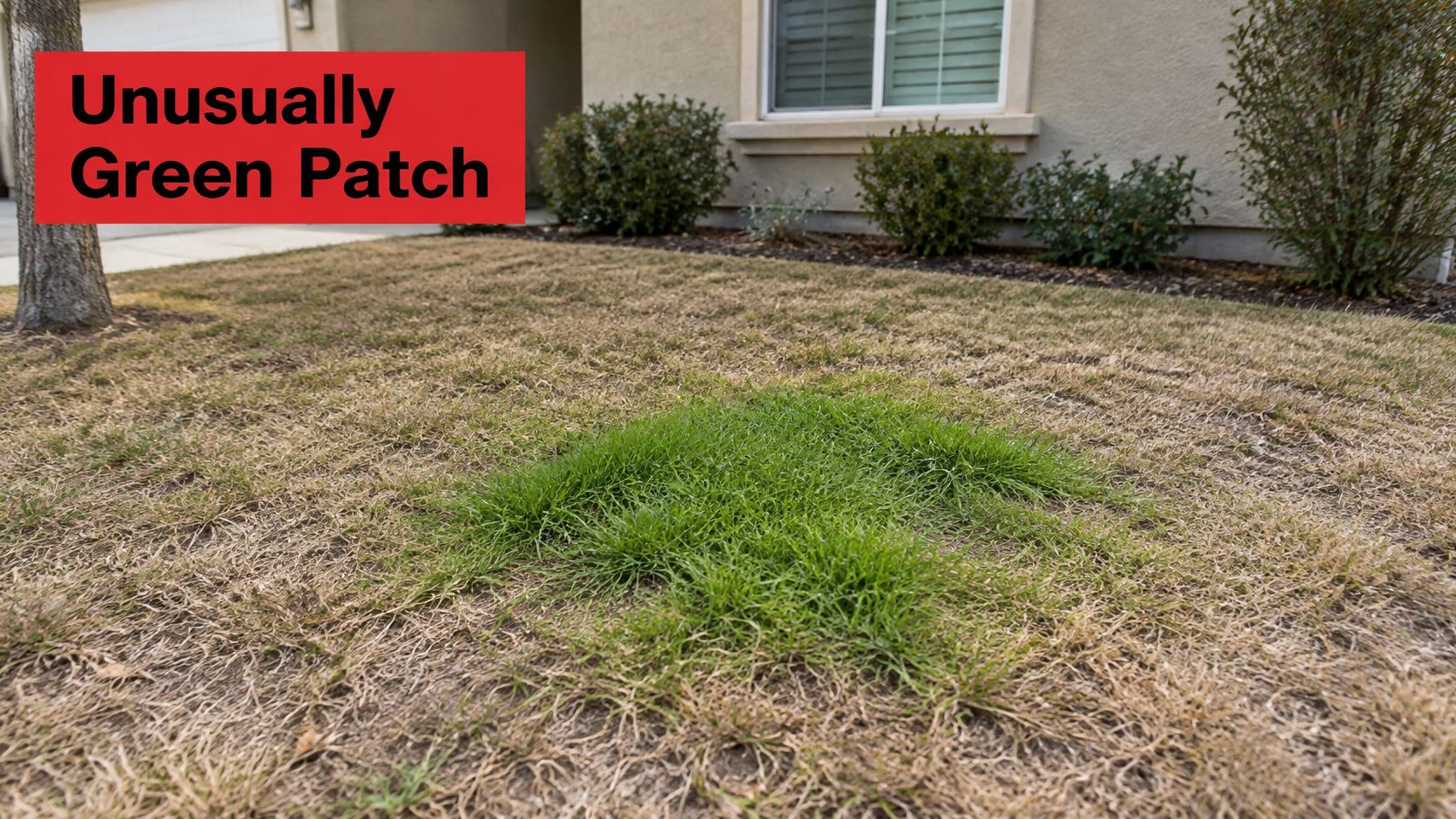
- 3. Wet, Soggy, or Unusually Green Patches in the Yard
- 4. Noticeable Drop in Water Pressure
- 5. Warm or Damp Spots on Floors and Slabs
- 6. Foundation Cracks, Settling, or Pooling Near the Home
- 7. Discolored, Cloudy, or Musty Water and Odors
- How each main water line leak sign shows up and how to check it
- What Las Vegas Homeowners Should Do Next
1. Unexplained Spike in Your Water Bill
Compare water consumption, not just the amount due. A higher charge can reflect billing changes, while higher metered use tells you more about what's happening on the property.
The U.S. Environmental Protection Agency reports that average household leaks waste more than 10,000 gallons annually. That includes household leaks generally, not just buried service lines, so a high bill should trigger investigation rather than an automatic main-line replacement.

Separate seasonal demand from unexplained use
Las Vegas irrigation, pool makeup water, evaporative cooling, and visiting family can change consumption. Compare the bill with the same season previously, then check whether irrigation settings or appliance schedules changed.
- Review actual readings: Look for estimated readings or a longer billing period before assuming the pipe has failed.
- Check ordinary leaks: Listen for running toilets and inspect exposed supply connections.
- Record the trend: Photograph the meter at consistent intervals and note known outdoor water use.
Say a Henderson homeowner's consumption keeps rising while the irrigation schedule stays unchanged. A running toilet might explain it, but if fixture checks reveal nothing, the next useful step is a controlled meter test.
Don't assume a hidden leak must be beneath the driveway just because that's where the service line runs. Confirm the loss before choosing the repair. Review the cost-estimate information to understand the estimating process, and keep your bills and meter photographs available for the appointment.
2. Water Meter Keeps Moving With All Fixtures Off
A moving meter during a genuine no-use period is stronger evidence than a suspicious patch of grass. It confirms water is passing through the meter, but it doesn't identify the leaking pipe by itself.
A toilet, irrigation valve, pool autofill, ice maker, or water softener can account for movement even when every faucet is closed. The EPA's meter-testing guidance recommends recording the reading, avoiding water use for two hours, and checking again; a change requires investigation.
Isolate demand before interpreting the result
Turn off irrigation and water-using appliances, and make sure nobody uses a fixture during the test. Record both the meter reading and the valve positions so the result can be repeated.
If the house-side main shutoff is accessible and operates normally, closing it can help separate interior demand from upstream loss. Continued meter movement can point toward the service line, provided irrigation branches and other connections have also been accounted for.
Practical rule: A moving meter proves unexplained consumption only after you've excluded intentional water use. It doesn't automatically prove the main line is leaking.
For example, a Summerlin homeowner might see the indicator turning with the house shutoff closed. If irrigation branches off before that valve, the sprinkler system still needs isolation before blaming the buried service.
This meter-check demonstration can help you recognize the indicator and record a reading.
Don't force a seized valve or operate utility-owned equipment. While scheduling an appointment, we can walk you through locating and operating your home's main water shutoff.
3. Wet, Soggy, or Unusually Green Patches in the Yard
A green strip across an otherwise dry yard deserves attention, especially when it stays damp between irrigation cycles. Still, sprinkler overspray is easier to mistake for a main-line leak than many homeowners expect.
The Las Vegas Valley Water District's leak-repair guidance explains that some underground leaks are difficult to detect and describes acoustic detection used to locate them. A dry surface doesn't clear the pipe, and a wet surface doesn't establish which pipe is responsible.
Compare conditions with irrigation off
Water can follow pipe bedding, soil layers, or the edge of a driveway before surfacing. The wettest point may therefore be some distance from the break.
- Watch the timing: Moisture that appears only after a sprinkler cycle suggests an irrigation problem.
- Mark the location: Photograph the patch relative to the meter, house, and hardscape.
- Avoid exploratory digging: Buried utilities and an already weakened pipe make guesswork risky.
Say a Las Vegas homeowner notices a soft strip beside the walkway during cooler weather. If it dries when irrigation is suspended, inspect the irrigation system first; if it remains wet and the meter registers unexplained flow, investigate the pressurized supply.
Persistent dampness plus meter movement is more persuasive than grass color alone. Sewer leakage and drainage problems can also produce wet ground, so locating should come before excavation.
If testing confirms service-line damage, the choice between a spot repair and main water line replacement in Las Vegas depends on the pipe's condition, accessibility, and extent of deterioration.
4. Noticeable Drop in Water Pressure
A weak shower doesn't automatically mean water is escaping underground. Start by asking whether the problem affects one fixture, hot water only, or the entire house.
A clogged aerator can restrict one faucet. Mineral buildup can affect valves and water-heating equipment, while a failing pressure-reducing valve, or PRV, can change pressure throughout the property.
The Las Vegas Valley Water District classifies local water as very hard, with hardness of approximately 291 parts per million. That makes scale a relevant competing explanation, not proof that hardness caused a buried leak.
Test pressure and flow separately
Attach a water-pressure gauge to a suitable hose bib and record the reading with fixtures closed. Then observe what happens when a fixture runs, noting whether the bib is upstream or downstream of the PRV.
Our pressure-control work uses a 50–70 PSI range for fixture protection. That's a working target, not a leak-detection threshold, and a reading within it doesn't rule out water loss.
A PRV controls downstream pressure. Replacing it may correct pressure without addressing a separate leak, so pressure readings and meter results need to agree.
For a North Las Vegas homeowner with weak flow throughout the house, testing might identify a restricted PRV rather than a broken service line. Conversely, persistent meter movement after demand is isolated keeps a leak under suspicion even if pressure seems acceptable.
The EPA's household water-use guidance supports investigating persistent unexplained consumption. Pressure loss alone remains inconclusive because open fixtures, valve problems, and thermal effects can alter readings.
Don't keep adjusting the PRV to compensate for unexplained low pressure. Establish the cause first.
5. Warm or Damp Spots on Floors and Slabs
A warm floor usually shifts attention toward hot-water piping, not the cold-water service from the street. That distinction prevents a slab leak from being mislabeled as a main service-line failure.
A persistent warm patch, damp grout, lifting flooring, or swollen baseboard warrants investigation. Sunlight, radiant heating, appliance heat, and a nearby shower can create misleading temperature differences.

Check the pattern before opening the floor
Compare the suspicious area with nearby flooring before sunlight heats the room. Note whether warmth persists without recent hot-water use and whether you hear hissing when fixtures are closed.
- Track moisture: Photograph darkened grout, lifting edges, and affected baseboards.
- Check nearby sources: Inspect accessible appliance connections and plumbing cabinets.
- Keep the slab intact: Don't drill or remove concrete based only on a warm spot.
For example, a kitchen tile patch that stays warm overnight may justify isolating and testing the hot-water system. A cool, damp patch might involve a cold supply, drain leak, appliance connection, or moisture entering from outside.
Expansive soils can move as moisture conditions change, but soil conditions vary across Las Vegas properties. Neither regional soil concerns nor aging copper establishes where a particular pipe has failed.
We confirm the leak, isolate the line, pinpoint it with tracer gas, and then report the findings and repair recommendation. That sequence supports targeted water leak detection without choosing a demolition location from surface symptoms alone.
6. Foundation Cracks, Settling, or Pooling Near the Home
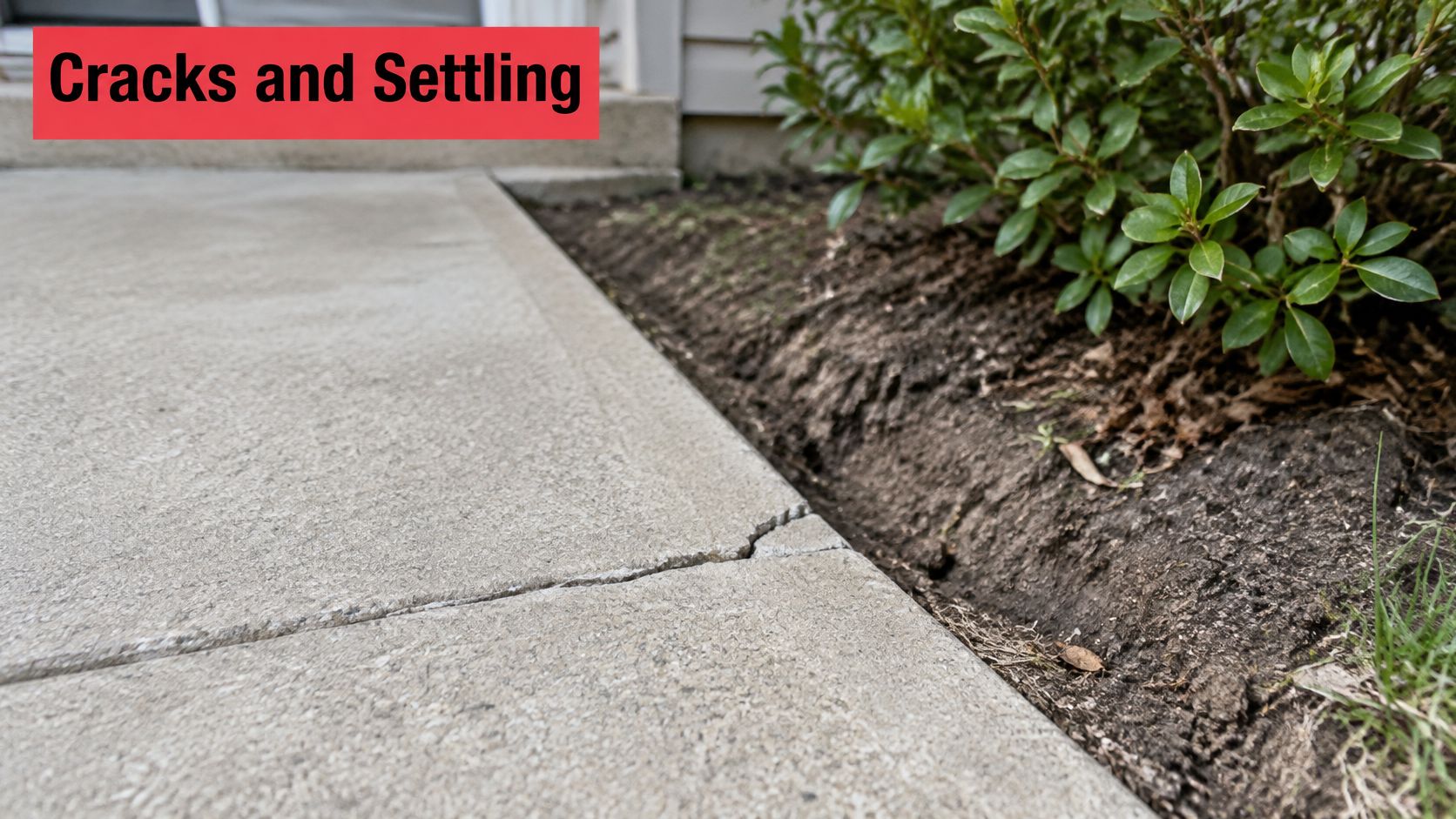
A sinking walkway beside the service-line route is more concerning when it appears alongside unexplained water use. Escaping water can soften supporting soil or carry material away, but a crack alone doesn't prove a plumbing leak.
Concrete shrinkage, drainage, irrigation, and ordinary settlement can produce similar symptoms. Where expansive soils are present, changes in moisture can also affect movement around slabs and foundations.
Document movement and control the water source
Photograph new cracks, depressions, and pooling from the same position so changes are easier to compare. Include dates, recent irrigation activity, and any sticking doors or windows in your notes.
Consider a Henderson property with a newly sunken patio edge and a damp garage perimeter. A supply-line test can establish whether pressurized plumbing is losing water, while separate drain testing may be necessary if supply results are normal.
Safety first: Keep people and pets away from a depression, undermined slab, or visibly unstable paving. Don't step into the area to judge its depth.
A sewer camera is useful for inspecting a drain or sewer pipe. It doesn't establish whether a pressurized water service is watertight, so the diagnostic tool must match the suspected source.
If water is actively collecting against the house, arrange prompt assessment rather than redirecting it and assuming the problem is solved. Safe isolation may limit further loss, but structural cracking or continuing movement can also require evaluation by a qualified structural professional.
Plumbing repairs stop the water source. They don't automatically restore washed-out soil or confirm that a damaged foundation is sound.
7. Discolored, Cloudy, or Musty Water and Odors
Brown water, cloudy water, and a musty room smell are different clues. None is a dependable standalone diagnosis of a main-line leak.
Discoloration can follow disturbed sediment, corrosion, utility work, or changes in flow. Cloudiness may come from tiny air bubbles, while a musty smell near flooring or cabinets points toward a moisture investigation rather than necessarily contaminated tap water.
Separate a water-quality problem from building dampness
Collect cold water in a clear glass and observe whether cloudiness clears as bubbles rise. Compare hot and cold taps, and note whether the issue affects the whole house or only a seldom-used fixture.
- Check the timing: Record any connection with utility work, pressure loss, or a recent shutoff.
- Identify the source: Distinguish odor in the water from odor at the drain or surrounding materials.
- Protect drinking water: Don't assume persistent discoloration or an unusual odor is harmless; contact the water district for guidance.
Say a rental property develops brown water at several cold taps after pressure drops. The property manager should check for utility activity and arrange supply testing if symptoms persist, rather than deciding immediately that the buried line is corroded.
A pressurized leak generally pushes water outward. Entry of outside contaminants is a greater concern when pressure is lost or other adverse conditions occur, so discoloration alone doesn't prove soil has entered the pipe.
The EPA's home-maintenance guidance identifies flow-monitoring and moisture-detection systems as tools for recognizing irregular consumption or unexpected moisture. They can provide an earlier warning, but they don't replace diagnosis when water quality changes or damp materials are already present.
How each main water line leak sign shows up and how to check it
| Item | Where the Sign Appears | Quick Home Check | Act Urgently If |
|---|---|---|---|
| Unexplained Spike in Your Water Bill | Water bills and usage history | Compare bills with the same month last year and check for unexplained increases | Higher usage continues across billing cycles without a clear cause |
| Water Meter Keeps Moving With All Fixtures Off | Water meter near the property line | Turn off fixtures and irrigation, record the meter, then check it again after 30 minutes | The meter continues to register flow with all water use stopped |
| Wet, Soggy, or Unusually Green Patches in the Yard | Lawn, soil, or yard near the water line | Look for persistent dampness or unusually lush grass after dry weather | Water pools or runs without rain or irrigation |
| Noticeable Drop in Water Pressure | Faucets and other fixtures throughout the home | Check whether pressure is weak at multiple fixtures; use a hose-bib gauge if available | Pressure drops significantly throughout the house without an obvious cause |
| Warm or Damp Spots on Floors and Slabs | Tile, flooring, carpet, or baseboards | Compare floor temperatures in several areas and check for dampness or hissing | A warm or damp area persists, especially with sounds of running water |
| Foundation Cracks, Settling, or Pooling Near the Home | Foundation, walls, slab, driveway, or yard | Photograph cracks and dips with dates to track changes | Cracks widen, areas sink, or pooling appears near the foundation |
| Discolored, Cloudy, or Musty Water and Odors | Faucets, floors, walls, or crawl spaces | Run cold water briefly and note whether discoloration clears | Discoloration persists or mold, mildew, or musty odors appear |
What Las Vegas Homeowners Should Do Next
Treat a rising bill, meter movement with fixtures off, soggy yard soil, house-wide pressure loss, warm slab areas, new cracking, or musty water as a reason to act within days. Act immediately if water is surfacing, pressure collapses suddenly, soil is washing out, or the ground near the foundation looks unstable. Shut off the main valve if it is safe to reach. MG Plumbing Services LLC will also walk customers through locating and operating the main shutoff while an appointment is being scheduled.
Before the visit, keep irrigation off during the meter check and save the last bills, photos of wet areas, irrigation run times, and notes about pressure or odors. That record helps separate a main water line leak from a single fixture branch. One weak faucet points toward a local problem. A moving meter, yard saturation, broad pressure loss, or warm flooring points toward the service line, slab, or concealed piping.
Get the cause confirmed before approving repairs
MG Plumbing Services LLC is an owner-operated residential plumbing company serving Las Vegas, Henderson, North Las Vegas, Summerlin, and nearby Las Vegas Valley communities. The company holds a Nevada C-1d Plumbing Contractor license, and owner Miguel Garcia has been in the plumbing trade since 2000. Service is available in English and Spanish, with same-day appointments during business hours, Monday through Saturday, 7:00 AM to 5:00 PM.
A proper diagnosis follows a clear sequence: confirm the leak, isolate the line, pinpoint it with tracer gas, then report and repair. The locating work can use meter and pressure testing, acoustic listening, thermal imaging, and hydrogen tracer gas detection. Tracer gas is useful for plastic pipe, deep underground lines, noisy yards, and leaks too small to make a sound, and it can narrow the target to roughly a 3-foot area. After the leak is located, the company provides a written estimate.
The repair should match the confirmed cause. A pressure regulator can imitate a supply leak, expansive Las Vegas soils can crack slabs without a pipe failure, and a broken sewer line can place unexplained water under the home. Leak detection and slab leak repair, drain cleaning, hydro jetting, sewer camera inspection, water heater repair and replacement, main water line replacement using Wirsbo AquaPEX, PRV and booster pump service, and cast iron to ABS replacement are handled in-house, so the same plumber can carry the job from inspection to repair.
If the signs line up across the bill, meter, yard, pressure, floors, structure, or water quality, request a residential appointment through MG Plumbing Services LLC.