A sudden pressure drop at the kitchen sink is easy to blame on a faucet aerator. Then the shower weakens, the washing machine takes longer to fill, and the water meter keeps moving after every fixture is shut off. In a Las Vegas Valley home, that pattern can point to a failing main water line, but excavation shouldn't be the first response.
The pipe between the utility connection and your home is the private service line, commonly called the main water line by homeowners. Before replacing it, you need to determine whether the problem is on your property, identify the pipe material, test the pressure, and confirm who owns each part of the route. Hard water, shifting soil, aging materials, failed pressure-regulating equipment, and utility-side faults can produce similar symptoms.
Table of Contents
- Why Your Main Water Line Needs Attention
- Signs You Need Main Water Line Replacement
- Open Trench vs Trenchless Replacement Methods
- Comparing Water Line Materials, PEX, Copper, and PVC
- The Main Water Line Replacement Process
- Cost Factors and Budgeting for Las Vegas Homes
- Choosing a Licensed Contractor in the Las Vegas Valley
- Final Thoughts on Protecting Your Home's Water Supply
Why Your Main Water Line Needs Attention
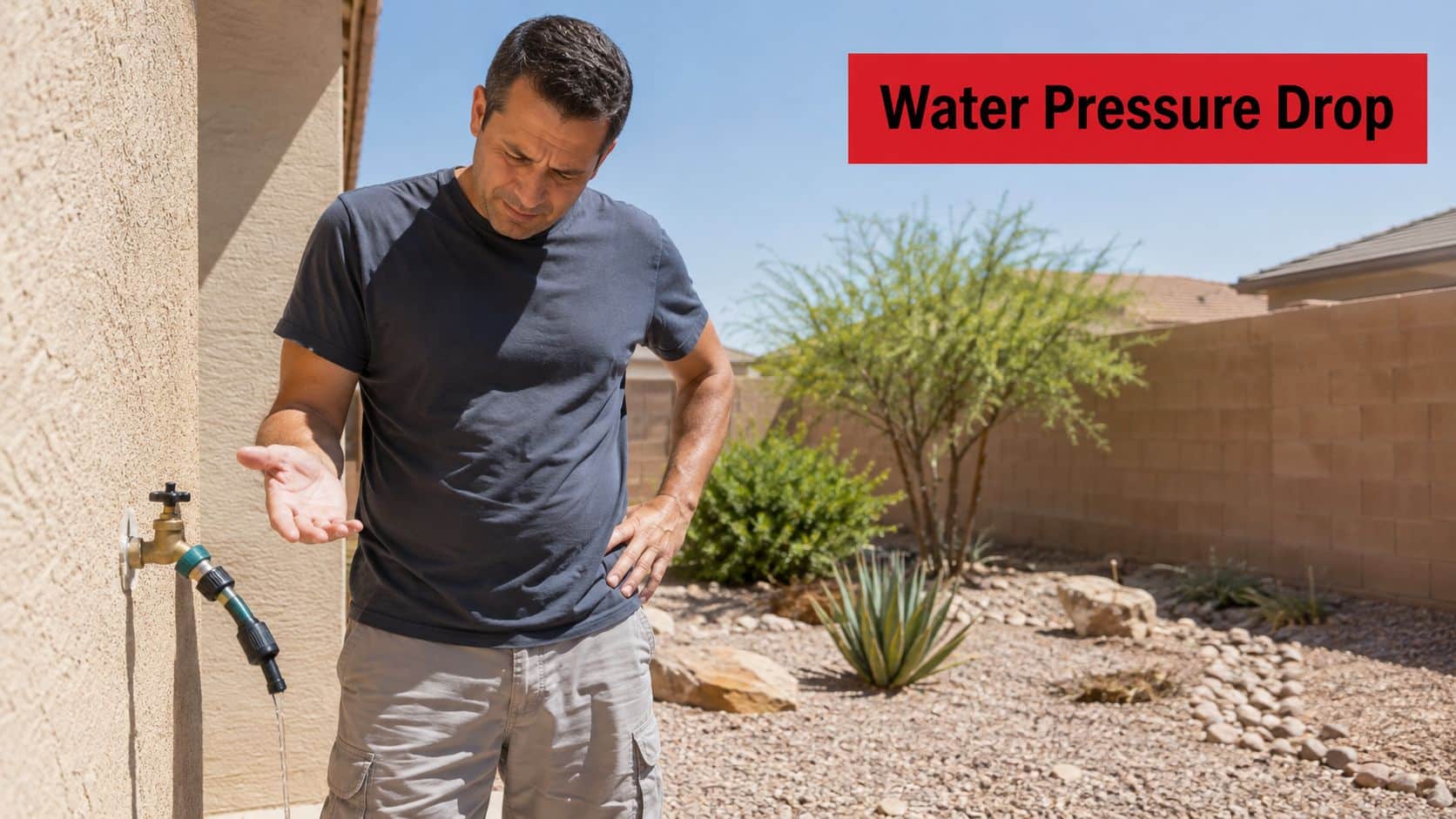
A homeowner may first notice that the outdoor faucet barely fills a bucket, the shower pressure has faded, or the water bill looks wrong even though household use hasn't changed. Another common clue is a hollow or rushing sound near the slab, meter box, or wall where the service line enters the home. Those symptoms can be connected, but they can also come from a clogged fixture, a failed pressure-reducing valve, or a leak somewhere else.
The main water line is the home's single supply route from the public water system to the building. Every shower, toilet, hose bibb, water heater, and appliance depends on it. A restriction or leak before the branch lines affects the entire house, while a problem at one faucet usually stays local.
What local conditions change
Southern Nevada's water is very hard. The Las Vegas Valley Water District reports approximately 291 parts per million of dissolved calcium and magnesium, or 17 grains per gallon, classified as “very hard” water (LVVWD water hardness information). A separate LVVWD water-quality report lists approximately 280 parts per million, or 16 grains per gallon. Those minerals aren't considered a health risk, but scale can build inside valves, fixtures, water heaters, and older piping.
The soil matters too. Expansive soils can swell when wet and shrink as they dry, putting movement into buried piping and its connections. A leak can worsen the problem by saturating the soil around the line, while a shifted or poorly supported pipe can create the original leak. That's why a visible wet spot doesn't automatically tell you whether the pipe, the soil, or a fitting failed.
Start with the pattern
If only one faucet has low flow, clean its aerator and check its shutoff valve. If every fixture has weak pressure, test the building supply before authorizing replacement. Check whether the meter moves when all water use is off, compare pressure near the meter with pressure inside the home, and ask the water provider where its ownership ends.
Practical rule: Diagnose the supply path before opening the yard. A new line won't correct a failed regulator or a utility-side break.
The U.S. infrastructure picture makes proactive planning sensible. EPA documents approximately 2.2 million miles of drinking-water transmission lines and distribution mains nationwide, with a documented replacement baseline of 0.5% of existing mains per year, equivalent to replacing 10% over 20 years (EPA drinking-water infrastructure needs assessment). That broad challenge doesn't prove your private line has failed, but it does explain why homeowners need condition-based decisions rather than relying on age alone.
Signs You Need Main Water Line Replacement
A main water line replacement makes sense when the evidence points to a deteriorated or unsuitable run, not just because one fitting has failed. The strongest diagnosis combines symptoms, testing, material identification, and the history of previous repairs.
Symptoms that deserve testing
Look for a pattern across the house:
- Whole-house pressure loss: Weak flow at several fixtures suggests a restriction, leak, regulator problem, or supply-side issue upstream of the interior branches.
- Meter movement: Turn off faucets, appliances, toilets, and irrigation. If the meter still moves, water is escaping somewhere between the meter and the fixtures.
- Recurring leaks: A second failure along the same buried line changes the decision. Replacing one fitting may only postpone the next excavation.
- Corroded copper: Green staining, pinholes, damp soil, or repeated slab-leak repairs can indicate broader deterioration rather than one isolated defect.
- Flaking galvanized steel: Internal corrosion reduces the effective opening and can make spot repairs unreliable.
- Low flow with clean fixtures: If aerators, shutoff valves, and filters are clear but the whole home remains weak, the buried service line needs professional evaluation.
Hard-water scale can imitate a failing line. Scale inside a valve or pressure-reducing device may restrict flow without any buried leak. Testing should separate mineral restriction from leakage, excessive incoming pressure, and inadequate pipe sizing.
What age tells you, and what it doesn't
Age is a screening clue, not a verdict. The American Society of Civil Engineers reports that many U.S. pipes installed after World War II have an average lifespan of 75 to 100 years, and that the average life expectancy reported in 2023 was just over 78 years (ASCE water infrastructure discussion via McKinsey). A home built during the major postwar construction period may have a service line entering or exceeding its expected service window, but installation quality, material, soil, pressure events, and water chemistry still matter.
A newer line can fail at a fitting or connection. An older copper line may continue performing acceptably. The decision should follow evidence.
Confirm before excavation
A water service line generally can't be evaluated like a sewer line with a routine camera pass while it remains pressurized. Use a pressure test to confirm leakage, electronic or acoustic detection to locate it, and exposed pipe at the meter or entry point to establish material. For targeted diagnosis, water leak detection service can help identify whether the fault is in the service line, slab piping, irrigation, or another branch.
Ask for a written conclusion that states the suspected failure location, pipe material, ownership boundary, test results, repair alternative, replacement route, and restoration responsibilities. If the contractor recommends replacing the whole line without explaining those points, ask for more diagnostic detail.
Open Trench vs Trenchless Replacement Methods
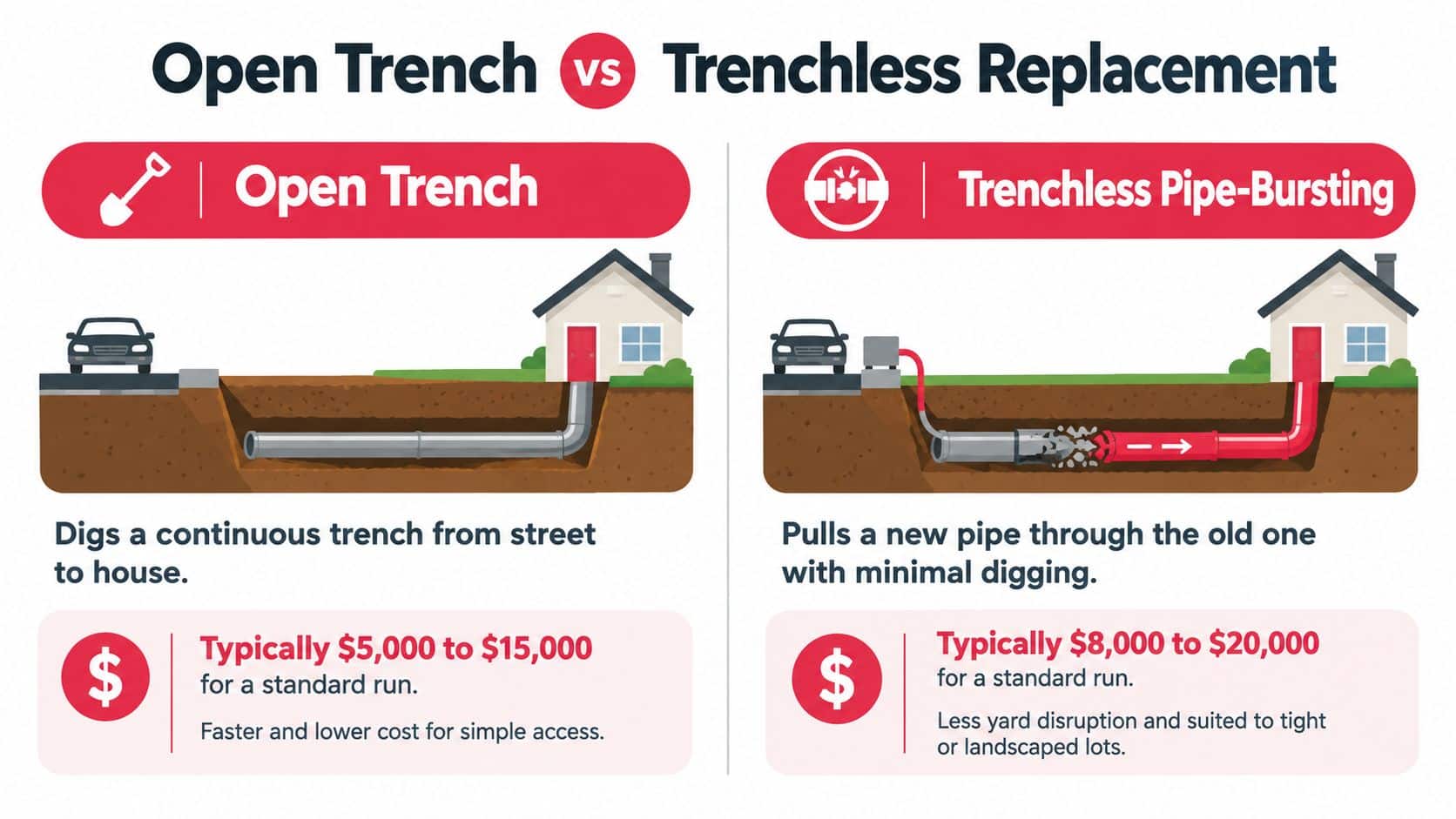
Homeowners often hear “trenchless” and assume it always means less risk and lower cost. The method is only better when the route, existing pipe, access points, soil, and approved potable-water materials support it. A contractor should explain the installation method in terms of your property, not present it as a universal upgrade.
Open trench excavation
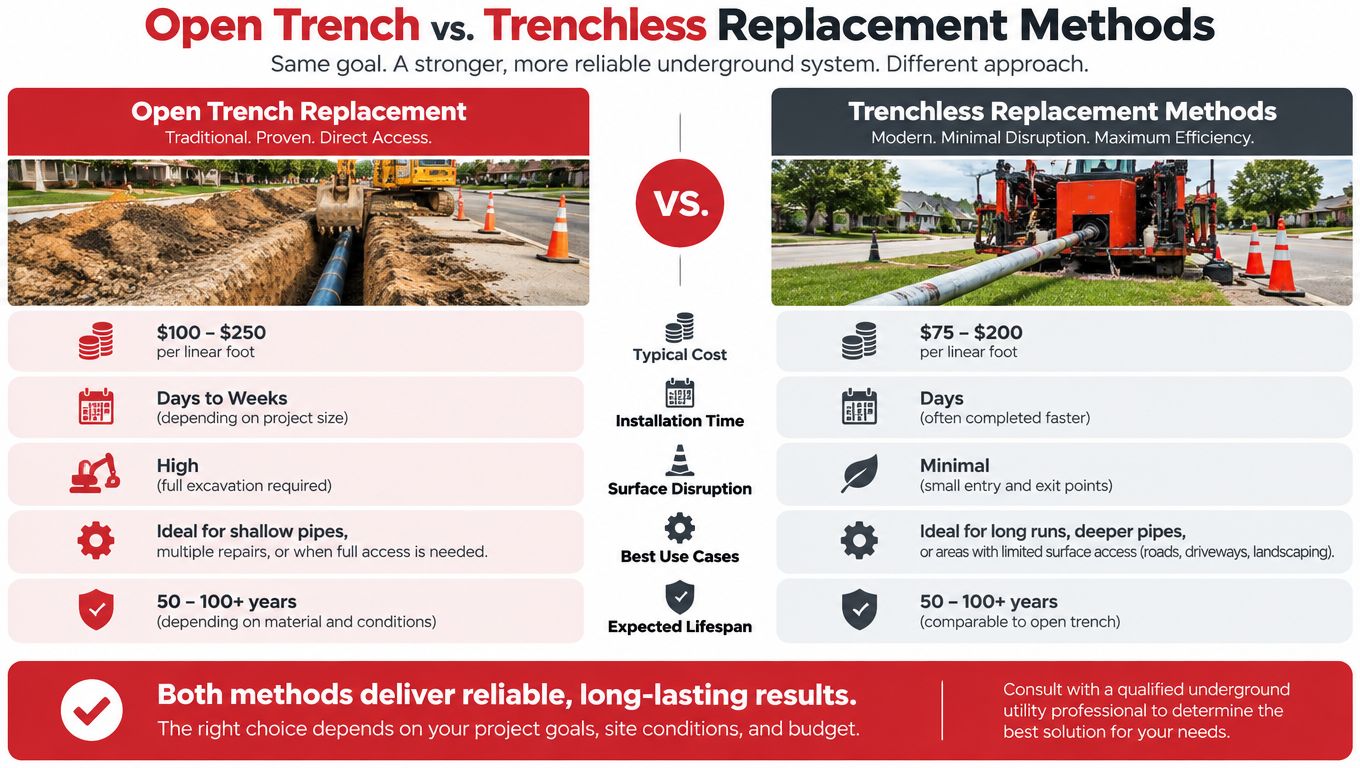
Open trench work exposes the complete route from the meter or utility connection to the building entry. The crew can remove failed piping, inspect the bedding, correct unsuitable soil, protect the new line, and see every connection before backfilling. That visibility is the major advantage.
The trade-off is surface disruption. Driveways, block walls, landscaping, irrigation, decorative rock, and hardscape may need removal and restoration. A route under a slab or through a tightly built side yard can also require careful planning around the foundation and other utilities.
Open excavation is often the straightforward choice when the line is shallow, the route is accessible, the soil needs correction, or the existing pipe has multiple failures. It also makes it easier to document what was installed.
Trenchless installation
Pipe bursting or directional boring can reduce surface disturbance where the route is suitable. Crews create access pits or entry points, then install the new line along or through the existing path. The approach can work well around established landscaping or constrained lots, but it isn't a license to ignore obstacles.
Bends, dense utility crossings, poor access, unstable soil, and uncertain ownership can make boring a poor fit. The contractor must also confirm that the selected pipe and installation method are approved for potable water service in the jurisdiction. Trenchless work may reduce restoration, but specialized equipment, pits, locating, and difficult ground conditions can add complexity.
A smaller excavation footprint doesn't automatically mean a simpler project. The new line still needs correct sizing, approved fittings, pressure testing, flushing, and a defensible route.
How to compare the proposals
| Decision point | Open trench | Trenchless approach |
|---|---|---|
| Visibility | Exposes the route and connections directly | Relies more heavily on locating and path control |
| Surface impact | More excavation and restoration | Less surface disturbance when conditions cooperate |
| Soil correction | Easier to remove poor bedding and rebuild support | More limited access to surrounding soil |
| Route complexity | Works around obstacles with direct access | Bends and dense crossings may restrict feasibility |
| Documentation | Straightforward photographs of the complete installation | Requires clear records of bore path, pits, and connections |
The right choice for a Summerlin, Henderson, or North Las Vegas property depends on what lies between the meter and the home. Ask whether the estimate includes utility coordination, permits, bedding, connection work, testing, disinfection or flushing, inspection, and surface restoration.
Comparing Water Line Materials, PEX, Copper, and PVC
Material choice sets the job up long before excavation starts. In Las Vegas, I do not pick a service line by habit or by what was already in the ground. I start with three questions homeowners often miss. Where does the utility-owned piping stop and your private line begin, what material is approved for that route, and what testing or commissioning will be required before the line is put back in service. Those answers affect whether PEX, copper, or PVC makes sense.
PEX for flexible routing
PEX earns attention on replacements because it can snake around landscaping, hardscape, and existing utilities with fewer buried joints. Fewer joints usually mean fewer buried failure points. That matters on long residential runs and on properties where expansive soils have already put movement into the yard. It also avoids the pinhole-leak pattern that shows up in older metal systems, but it still has weak points if the installer mishandles the tubing, over-bends it, or leaves fittings and valves exposed to stress.
AWWA C904-2022 covers crosslinked polyethylene pressure tubing for municipal or residential water-service applications in nominal sizes from one-half inch through 3 inches, with a required material designation code of 1306 or higher (AWWA standards information). The handling details matter. PEX guidance calls for a minimum bending radius of eight times the tube's outside diameter and no bend closer than 10 pipe diameters from a fitting or valve (PPI PEX water-service guidance).
Commissioning matters just as much as the tubing itself. Guidance calls for testing at no less than expected working pressure, at least 40 psi, and no more than 1.25 times working pressure at 73°F, for at least 15 minutes and no more than two hours. If those details are missing from the proposal, the material discussion is incomplete.
Copper for familiar, rigid installations
Copper is still a practical water-service material in the right setting. It is rigid, familiar to inspectors and plumbers, and it tolerates heat well. But Las Vegas conditions are hard on lazy material choices. Hard water can build scale at valves and transitions, and soil or water chemistry can shorten service life if the route, connections, or pressure conditions are poor.
Copper works best when the route is straightforward and the contractor can explain how the line will be bedded, protected, connected, and tested. Familiarity is not a reason by itself.
PVC where approved
PVC resists many corrosion problems and can be a cost-conscious option where local rules allow it. It needs proper bedding and careful handling. Poor support, impact, or a rough installation can create problems that do not show up until after backfill.
Whatever material is proposed, size the line from developed length, fixture demand, static pressure, elevation change, and allowable friction loss. A line that is too large adds cost and extra water volume. A line that is too small shows up fast when several fixtures run at once.
The Main Water Line Replacement Process
A proper replacement starts before anyone opens the ground. In Las Vegas, I see homeowners approve excavation on the first leak call, only to learn later the failure was on the utility side, at the meter assembly, or in a pressure control issue inside the home. The process works when diagnosis, ownership, and commissioning are handled in the right order.
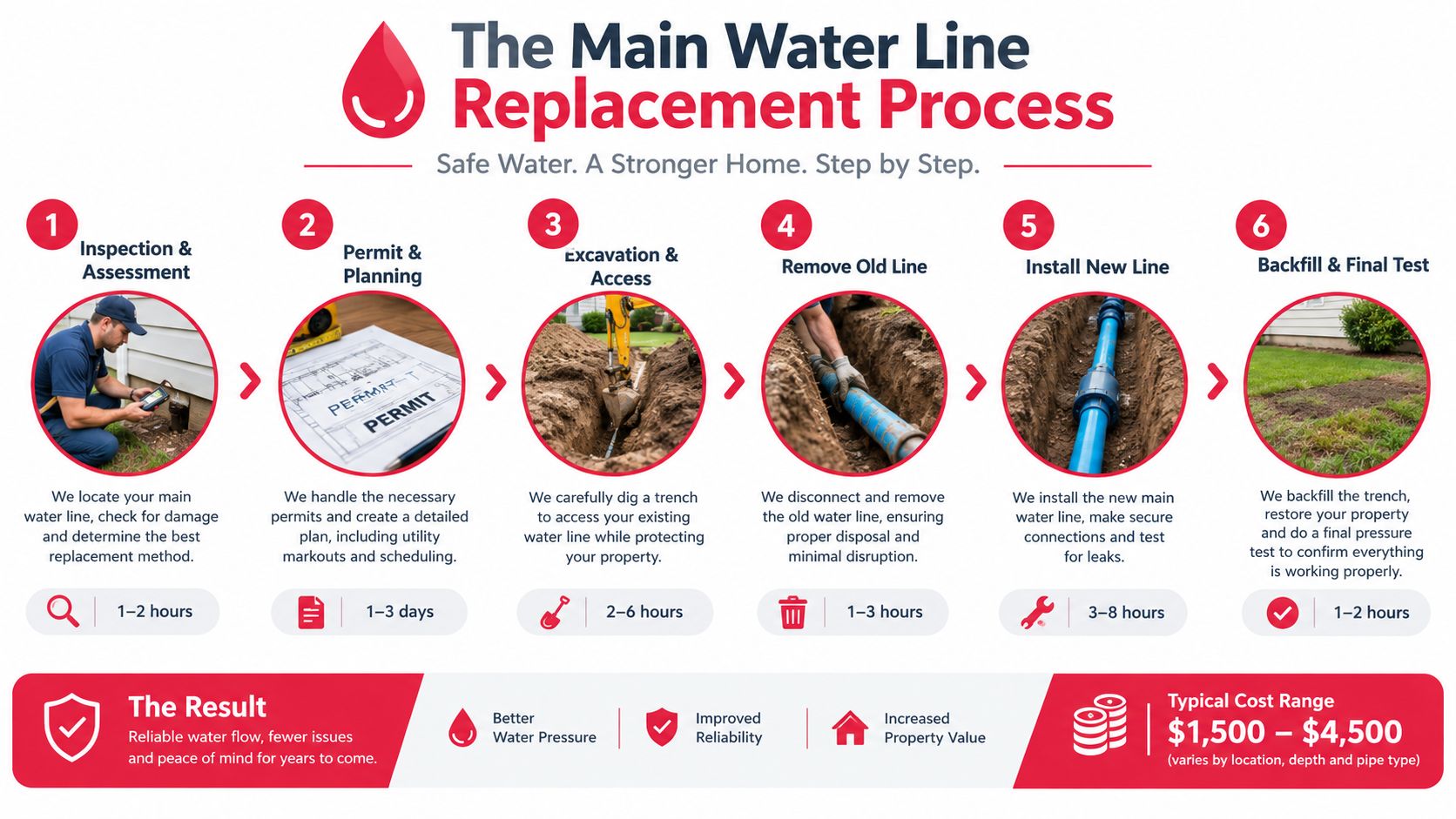
1. Diagnose the failure
Start with the basics. Check the meter for movement when no water is running, take static and flowing pressure readings, inspect accessible piping at the meter and where the service enters the house, and compare those findings with what the homeowner is seeing at fixtures. Low pressure alone does not prove the buried line has failed.
A contractor may then use acoustic listening, electronic locating, pressure-loss testing, and targeted leak detection to narrow the problem before trenching. Sewer diagnostics are a separate scope, but they can help when wet soil, yard settlement, or a shared trench is muddying the picture. If that is part of the concern, a sewer camera inspection in Las Vegas can help rule out a nearby sewer issue before the water service route is disturbed.
2. Confirm ownership and permits
This is the step homeowners miss most often. Before excavation, confirm where the utility's responsibility ends and where the private service line begins. Ask the water provider for the service-line material record and the stated ownership boundary. Federal inventory guidance recognizes both utility-owned and customer-owned portions of a service line, which is why the record may cover more of the route than a homeowner expects (EPA service-line inventory fact sheet).
Do not assume the pipe near the street, sidewalk, curb stop, or meter belongs to you. The contractor should also identify permit requirements, utility shutoff coordination, utility locating, inspection points, and any right-of-way restrictions before work begins.
3. Select the route and material
Once the failing section and ownership line are clear, the written scope should pin down the route, pipe size, material, connection method, valves, fittings, burial depth, separation requirements, and the restoration area. Las Vegas conditions matter here. Hard water is rough on neglected valves and transitions, and expansive soils make route support, bedding, and backfill more than a paperwork item.
Approved service fittings and valves should match applicable utility and code requirements, and many contractors use AWWA-based product standards for underground service components.
4. Install and protect the line
The crew excavates or bores, removes or abandons old pipe as allowed, prepares the trench or bore path, installs the new service, and makes the street-side and building-side connections. Good installation is controlled work, not just pipe in the ground. In our soils, poor bedding and loose backfill can shorten the life of a new line by leaving unsupported sections or creating movement after the job is closed.
5. Pressure-test the completed work
Pressure testing needs a documented pressure and test duration. That is how leaks at fittings, valves, transitions, or the pipe itself are found before backfill hides them. Record the readings. If the home has a pressure-reducing valve or booster equipment, account for that during testing and startup.
6. Flush, disinfect, inspect, and restore
A line is not ready for use just because it passes a pressure test. Flush and disinfect it as required by the utility, complete inspections and permit closeout, and give the homeowner clear instructions for returning the system to normal use. Final restoration should match the written agreement, whether that means soil, rock, paving, or hardscape.
Keep the paperwork after the crew leaves. Photos, material records, connection details, test results, inspection signoff, and warranty information make future troubleshooting, resale questions, and later plumbing work much easier.
Cost Factors and Budgeting for Las Vegas Homes
A verbal price rarely tells you what a main water line replacement involves. The final cost reflects excavation difficulty, route length, depth, surface restoration, materials, permits, connection work, testing, and the condition found after access is created.
What changes the estimate
A short, accessible route through bare soil is a different project from a line beneath a driveway, block wall, decorative rock, mature landscaping, or slab. Expansive soil can affect excavation and backfill. Hardscape restoration can become a major part of the scope even when the pipe itself is straightforward.
Material and method also change the work. Flexible PEX may simplify routing, while rigid pipe may require more precise alignment and connections. Open trench provides access but increases restoration. A trenchless proposal may reduce surface disruption while requiring locating, pits, specialized equipment, and route verification.
Demand a complete written scope
A useful estimate should identify:
- Diagnosis: The suspected failure, test performed, and reason for repair or replacement.
- Ownership: Which section belongs to the utility and which section belongs to the customer.
- Excavation: Route, access points, depth assumptions, soil handling, and protection of nearby utilities.
- Materials: Pipe, valves, fittings, connection hardware, and applicable standards.
- Pressure control: Testing of the PRV or booster arrangement, especially if pressure is abnormal.
- Restoration: Landscaping, irrigation, concrete, pavers, asphalt, block walls, and finish grade.
- Closeout: Permit inspection, flushing or disinfection, photographs, test records, and warranty terms.
The EPA states that most U.S. plumbing codes require a pressure-regulating valve when domestic supply pressure exceeds 80 psi (EPA service water pressure technical sheet). That threshold should be checked before a contractor blames the buried line for every pressure complaint.
For a clear starting point, request a written plumbing cost estimate that separates base work from allowances and restoration. Don't compare two proposals by the total alone. Compare what each contractor is promising to test, install, document, and restore.
Choosing a Licensed Contractor in the Las Vegas Valley
The contractor's diagnostic habits matter as much as the pipe brand. A company that starts with excavation may create a larger problem than the original leak. Look for a plumber who can explain the ownership boundary, test the pressure, identify the material, and distinguish a private-line failure from a regulator or utility issue.
Verify the business before work starts
Nevada's public contractor search can show a license number, classification, expiration status, active or inactive status, listed principals, and disciplinary information such as citations, pending cases, hearings, or final actions (Nevada Contractor License Search). Check the entity that will perform the work, not just the name shown in an advertisement.
Confirm insurance, permit responsibility, warranty terms, and who handles utility coordination. Ask for a written scope with exclusions. “Replace the main” isn't enough. The proposal should state the route, material, size, fittings, testing, flushing, restoration, and responsibility for unexpected conditions.
Questions worth asking at the estimate
- Where is the failure? Ask which test identified it and whether the evidence points to the private line, slab piping, irrigation, PRV, or utility side.
- Who owns the pipe? Request confirmation from the water provider before paying for work near the street.
- Why replace rather than repair? The answer should address material, repeated failures, corrosion, access, and the condition of the surrounding soil.
- What gets tested afterward? Require pressure readings, leak checks, flushing or disinfection, and written records.
- What happens to the surface? Make landscaping, irrigation, concrete, pavers, and other restoration responsibilities explicit.
- Who performs the work? Ask whether the owner or rotating subcontractors will supervise the installation.
MG Plumbing Services LLC is a local, family-owned, owner-operated residential plumbing company serving Las Vegas, Henderson, North Las Vegas, Summerlin, and surrounding communities. Owner Miguel Garcia is a Nevada-licensed C-1d plumbing contractor and journeyman plumber with more than 25 years of plumbing experience. The company provides written recommendations for water leak detection, pressure problems, water piping, water heaters, drains, sewer lines, hydro jetting, and related residential work, and offers service in English and Spanish.
The Nevada license check remains the homeowner's independent verification. A contractor's local presence doesn't replace licensing, insurance, permits, or a properly documented scope.
Final Thoughts on Protecting Your Home's Water Supply
Main water line replacement is a significant project, but the decision doesn't have to be a guess. Start by checking the meter, comparing pressure, identifying the pipe material, and confirming the ownership boundary with the water provider. Then choose repair or replacement based on the pattern of failures, soil conditions, pipe condition, access, and the quality of the proposed installation.
A new pipe alone doesn't guarantee a dependable result. Correct sizing, approved valves and fittings, careful bedding, protected connections, pressure testing, flushing, and documented commissioning all matter. In a hard-water environment with expansive soil movement, those details can determine whether the replacement performs well or develops another problem at a fitting, regulator, or unsupported section.
Keep the project file. Save photographs before backfill, material and connection records, pressure-test results, permit closeout, flushing instructions, and the final written scope. Future owners, property managers, insurers, and plumbers can make better decisions when they can verify what was installed.
If your home has recurring leaks, persistent whole-house pressure loss, unexplained meter movement, or an aging and unknown service line, arrange diagnosis before the next failure forces an emergency excavation.
MG Plumbing Services LLC can diagnose Las Vegas Valley main water line problems, locate leaks, evaluate pressure and regulators, and provide a written repair or replacement recommendation. Visit MG Plumbing Services LLC or call 702-480-8070 to request residential plumbing service, and Se habla español.