You're standing in the laundry room with a damp floor, a water heater that isn't producing enough hot water, or a kitchen drain that keeps slowing down after every cleaning. You've already tried the hardware-store solution, and the problem came back. In Las Vegas, that often means the visible symptom isn't the failure.
Hiring a residential plumber in Las Vegas requires more than finding someone who can clear a clog or replace a faucet. Very hard water, changing municipal pressure, aging plumbing materials, and concealed leaks demand accurate diagnosis before repair. The right contractor checks the cause, explains the trade-offs, and gives you a repair plan that protects the rest of the home.
Table of Contents
- Understanding the Las Vegas Plumbing Environment
- Verifying Credentials and Avoiding Red Flags
- Evaluating Diagnostic Tools and Repair Methods
- Navigating Estimates and Pricing Structures
- Preparing Your Home for the Service Visit
- Making the Final Hiring Decision
Understanding the Las Vegas Plumbing Environment
A shower that suddenly loses flow, a water heater that produces less hot water, or a valve that starts leaking may be reporting a system problem rather than a failed fixture. In the Las Vegas Valley, very hard water, changing municipal pressure, aging plumbing materials, and concealed leaks determine how a competent plumber should diagnose and repair the home.
The valley's water measures about 280 mg/L, or 16.4 grains per gallon, placing it in the very hard category, according to the Las Vegas Valley Water District's background on local water. Calcium and other minerals collect inside tank water heaters, faucet aerators, valves, showerheads, and narrow supply passages. That buildup reduces hot-water capacity and fixture flow, while making a water heater appear to be failing when scale has affected the tank or heating components.
Replacing one faucet may restore flow for a short time, but it will not correct an upstream hardness problem. A local plumber should test the water, inspect the affected equipment, and decide whether flushing, descaling, water treatment, or replacement fits the condition. The repair should address the cause, not just the most visible symptom.
Pressure creates a second local risk. The utility reports operating pressure across its system generally ranges from about 30 psi to 100 psi, and sustained pressure above 80 psi can damage plumbing inside the home. Homes at 80 psi or greater should use a pressure-reducing valve, according to the utility's residential water pressure guidance. A plumber who checks pressure before replacing a leaking valve or fixture can prevent the next failure.
Why generic plumbing advice falls short
Treating every low-flow complaint as a clog can miss mineral buildup. Replacing a leaking valve without testing pressure leaves downstream components exposed. Running a cable through a recurring sewer blockage may restore flow while leaving a damaged or collapsed section undiscovered. The diagnostic method should match the failure: pressure testing for supply problems, inspection and descaling for mineral buildup, and appropriate camera or leak-detection work for concealed or recurring issues.
The Southern Nevada Water System has operated since 1971 and expanded in 1982. Its regional scale and decades of growth make pressure balancing, leak detection, and careful service-line diagnosis practical requirements for local work. Those conditions do not prove what failed in one house, so the plumber still needs evidence from that property before recommending repairs.
Practical rule: Do not approve a repair until the plumber explains whether hard water, pressure, age, or a structural defect caused the failure.
In Summerlin and nearby communities, a residential plumbing professional serving Summerlin should recognize when a fixture needs replacement and when it is only signaling a larger system problem.
Verifying Credentials and Avoiding Red Flags
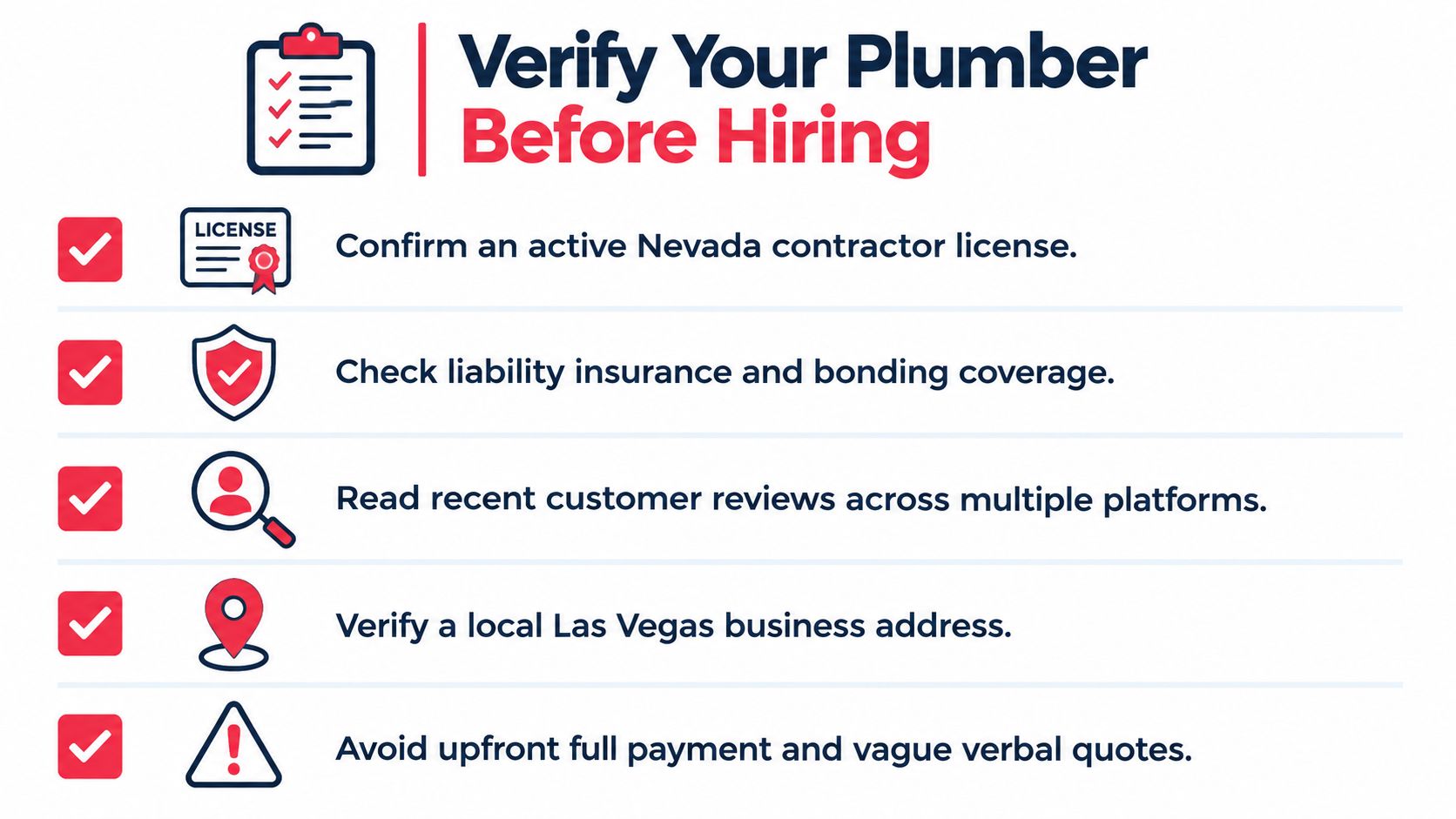
A polished website doesn't prove that a contractor is qualified. Before allowing anyone to alter your water, drain, gas, or sewer systems, verify the license classification, insurance, business identity, and written terms.
Nevada's C-1d plumbing subclassification covers the installation and maintenance of plumbing systems, including sanitary fixtures, supply, waste, and vent systems. It also includes potable water heating, gas supply piping, roof drainage, outdoor irrigation, hydronic heating up to 200,000 BTU, and piping for compressed air, vacuums, and medical gases, according to the Nevada Administrative Code plumbing classification.
A practical credential check
Ask for the contractor license number. Confirm that the classification matches the work you need. A generic handyman registration isn't the same as a Nevada plumbing contractor license.
Verify insurance. Ask whether the company carries liability coverage and worker protection. Don't rely on a verbal assurance if the contractor can't provide documentation.
Check the operator's experience. Nevada plumbing contractor applicants commonly document four years of experience within the last 15 years, submit an application with a $300 processing fee, and pass both management or business and trade exams, as described in this Nevada plumbing licensing overview. Those requirements don't guarantee good workmanship, but they provide a meaningful distinction from an unqualified service provider.
Ask who will perform the work. An owner-operated company may provide continuity from diagnosis through repair. A large franchise may send different technicians or subcontractors, so ask directly who is responsible for the recommendation and who stands behind the work.
Demand written scope and terms. Missing license information, vague insurance answers, pressure to approve work immediately, and requests for full payment before the job starts are all reasons to stop.
Don't confuse a low initial quote with value. A contractor who skips camera inspection, pressure testing, or proper access may charge less today and leave you paying for the same failure again. For a complex repair, accountability is often more important than a flashy guarantee.
Evaluating Diagnostic Tools and Repair Methods
The best residential plumber in Las Vegas doesn't start with a guess. The plumber starts by identifying what is happening inside the pipe, behind the wall, under the slab, or inside the water heater.
For a recurring drain backup, there are two very different approaches. Mechanical snaking can open a passage through a blockage, but it may leave grease, scale, or roots attached to the pipe wall. Hydro-jetting uses high-pressure water to clean the interior more thoroughly. Industry summaries report roughly 95% success on tough blockages for hydro-jetting versus roughly 60% for mechanical snaking, with typical jetting pressures of 1,500 to 4,000 PSI, as outlined in this hydro-jetting service reference.
Those numbers don't mean every line should be jet-cleaned. Fragile cast iron, compromised ABS, offsets, bellies, and cracked lines require judgment. High pressure in a damaged pipe can worsen the defect or expose a leak.
The diagnostic sequence matters
A competent drain specialist should:
- Camera inspect first to identify pipe material, roots, offsets, breaks, and standing water.
- Choose the jetter head and pressure based on the line's condition rather than using one setting for every property.
- Clean in a controlled direction, from downstream to upstream when the layout permits.
- Re-camera after cleaning to confirm that the pipe wall is clear and structural problems haven't been overlooked.
A cable that restores flow isn't proof that the sewer line is healthy. If the same drain backs up repeatedly, ask for a live sewer camera inspection and a recorded explanation of what the camera found. Homeowners can review sewer camera inspection services in Las Vegas before authorizing a repeat cleaning.
Hidden water requires the same discipline. A professional leak-detection system can help locate slab leaks and concealed line failures before a contractor opens large areas of flooring or drywall. For an under-slab copper leak, the decision may be between a targeted opening and rerouting. Local guidance connects this choice to finished floors, aging copper, hard water in the 16 to 17 grains-per-gallon range, and older 1970s to 1990s housing stock, as discussed in this Las Vegas slab leak repair guide.
Ask before work begins: “What will you inspect, what will the equipment show, and what repair options remain if the first approach doesn't solve the cause?”
Navigating Estimates and Pricing Structures
A plumbing estimate should tell you what you're buying. A verbal range over the phone usually can't account for access, pipe condition, restoration, or the difference between cleaning a line and repairing it.
I recommend a flat-rate, itemized written estimate before work begins whenever the scope can be defined. The document should separate labor, parts, access requirements, disposal, testing, and any restoration that the plumber includes or excludes. It should also state whether the diagnostic fee is credited toward the repair.
What a useful estimate includes
A strong estimate answers practical questions:
- What failed? The plumber should describe the observed condition, not just write “plumbing repair.”
- What will be done? Look for the method, such as cable cleaning, hydro-jetting, valve replacement, leak repair, or water-heater replacement.
- What isn't included? Flooring, drywall, cabinets, permits, and electrical work may be separate.
- What happens if conditions change? Additional work should require your approval before the contractor proceeds.
- What protects the customer? Ask about workmanship coverage, manufacturer warranties, payment timing, and cleanup.
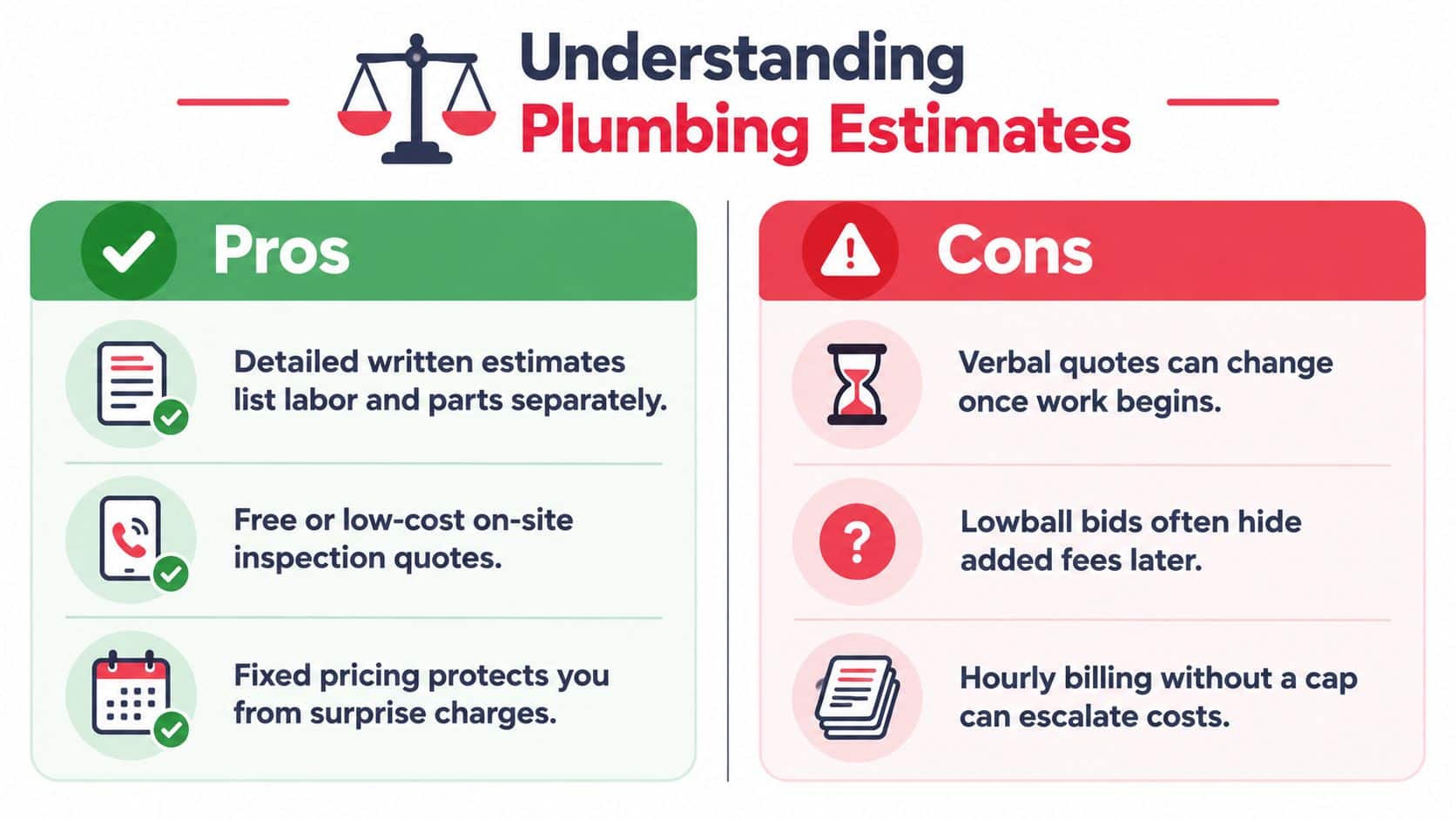
Hourly billing isn't automatically wrong, but it needs clear boundaries. Ask for the rate, minimum charge, expected crew size, material markup, and a spending cap. If the contractor refuses to provide a written ceiling or keeps adding vague “possible” charges, you're accepting financial risk without receiving a defined result.
The safest comparison isn't just the lowest bid. Compare whether each contractor inspected the same problem, proposed the same repair standard, included testing, and explained what happens if the defect extends farther than expected. A written plumbing cost estimate gives you a better basis for that comparison than a number delivered casually by phone.
Preparing Your Home for the Service Visit
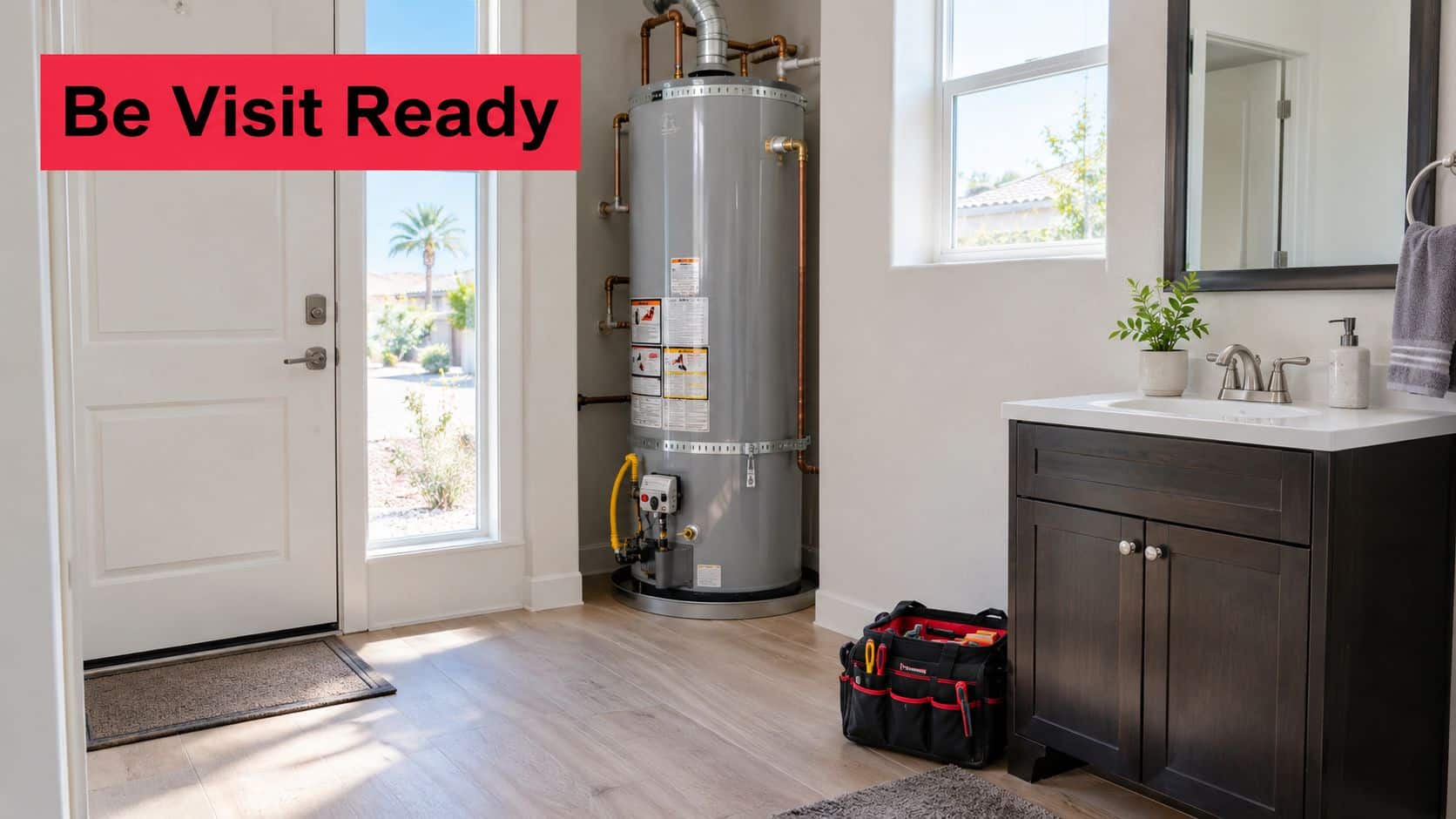
A little preparation gives the plumber room to work and gives you better information to share. Start by locating the main water shutoff. If you don't know whether it operates, test it carefully before a leak becomes urgent. A seized or inaccessible shutoff can turn a small repair into preventable water damage.
Clear the path to the water heater, main shutoff, crawlspace access, under-sink cabinets, toilets, and cleanouts. Remove stored items from around the work area and take fragile objects off nearby shelves. If the plumber needs to inspect a ceiling, wall, slab, or cabinet, clear the surrounding space before arrival.
Give the technician useful evidence
Write down what you observed instead of relying on memory. Note whether the problem affects one fixture or the whole house, whether hot water is involved, and whether the issue appears after irrigation, laundry, or heavy household use.
- Record timing. Note when pressure drops, drains back up, or the water heater stops recovering.
- Take photographs. Capture visible leaks, staining, scale around fixtures, standing water, and any damaged flooring.
- Save previous records. Gather water-heater information, prior drain-cleaning invoices, camera footage, and remodel details.
- Secure pets. Keep animals away from tools, open access points, and unfamiliar workers.
- Protect personal items. Move rugs, boxes, and furniture away from the likely work area.
Don't conceal a previous repair or downplay a recurring symptom. A plumber needs the full history to distinguish a new failure from a temporary fix that never addressed the cause. Tell the technician what you tried, what improved, and how quickly the problem returned.
If a leak is active, shut off the nearest valve or the main supply when safe, then document the location. Don't remove drywall, flooring, or cabinets just to search for a hidden leak. Professional locating equipment can help limit unnecessary destruction.
Making the Final Hiring Decision
Choose the plumber who gives you the clearest diagnosis, not the contractor who promises the fastest guess. For a Las Vegas home, the decision should come down to five questions: Is the contractor properly licensed, does the company carry insurance, will the technician use the right diagnostic equipment, is the estimate written, and will one accountable professional explain the repair?
Local availability matters for urgent residential work. A leaking water heater, active slab leak, failed shutoff, or sewer backup shouldn't sit unresolved while a contractor arranges a distant crew. Same-day service during normal business hours can be useful, but confirm the actual service window and whether the company handles residential work rather than marketing itself primarily as a commercial or 24/7 emergency provider.
Communication matters just as much. Spanish-speaking homeowners should be able to discuss symptoms, options, exclusions, and approval terms in Spanish. Bilingual service reduces the chance that a technical recommendation gets misunderstood, especially when the choice involves opening a slab, rerouting a line, replacing a pressure-reducing valve, or selecting water treatment.
Use a simple final comparison
| Question | Strong answer |
|---|---|
| Who diagnoses the problem? | A licensed, accountable plumber who explains the evidence |
| How is the cause confirmed? | With cameras, locating equipment, pressure testing, or appropriate water-heater inspection |
| How is the price presented? | In writing, with scope, exclusions, and approval rules |
| Who performs the work? | The identified company or technician, without unexplained subcontracting |
| What happens after repair? | The system is tested, the work area is cleaned, and remaining risks are explained |
A suitable local benchmark is an owner-operated company led by Miguel Garcia, a Nevada-licensed C-1d plumbing contractor and journeyman plumber with more than 25 years of plumbing experience. His residential plumbing operation serves Las Vegas, Henderson, North Las Vegas, Summerlin, and surrounding valley communities, with drain cleaning, hydro-jetting, sewer camera inspections, locating, leak detection, water-heater repair and replacement, water treatment, fixture repairs, pressure troubleshooting, and water or sewer line work. The company is licensed and insured, provides straightforward recommendations and written flat-rate estimates, offers same-day appointments during business hours, and provides service in English and Spanish.
That standard protects you from the cheapest form of plumbing: the temporary fix that creates another call. Pay for a diagnosis that matches the Las Vegas environment, a repair that addresses the cause, and a contractor who will explain the trade-offs before opening your home.
MG Plumbing Services LLC provides residential drain cleaning, hydro-jetting, sewer camera inspections, leak detection, water-heater service, water treatment, and general plumbing repairs across the Las Vegas Valley. Call 702-480-8070 or visit MG Plumbing Services LLC to request service, and ask for a clear diagnosis and written recommendation. Se habla español.