You press the flush button and hear the familiar rush of water, but the bowl still has residue, the seat needs wiping, and a faint mineral ring is forming around the rim. A self-cleaning toilet sounds like the answer to that everyday frustration. In practice, it can reduce hands-on cleaning, but it also adds sensors, valves, spray nozzles, electrical parts, and narrow water passages that need the right care.
That tradeoff matters especially in the Las Vegas Valley. Local water is very hard, and the same water that rinses a bidet nozzle or cleaning cycle can leave scale inside the fixture. The right question isn't whether self cleaning toilets are modern or convenient. It's whether the system matches your water quality, plumbing, bathroom layout, and willingness to maintain a more complicated fixture.
Table of Contents
- The Self-Cleaning Toilet Reality
- How Self-Cleaning Technology Works
- Commercial Versus Residential Systems
- Benefits and Practical Advantages
- Hidden Maintenance Challenges
- Residential Suitability Guidelines
- Making the Final Evaluation
The Self-Cleaning Toilet Reality
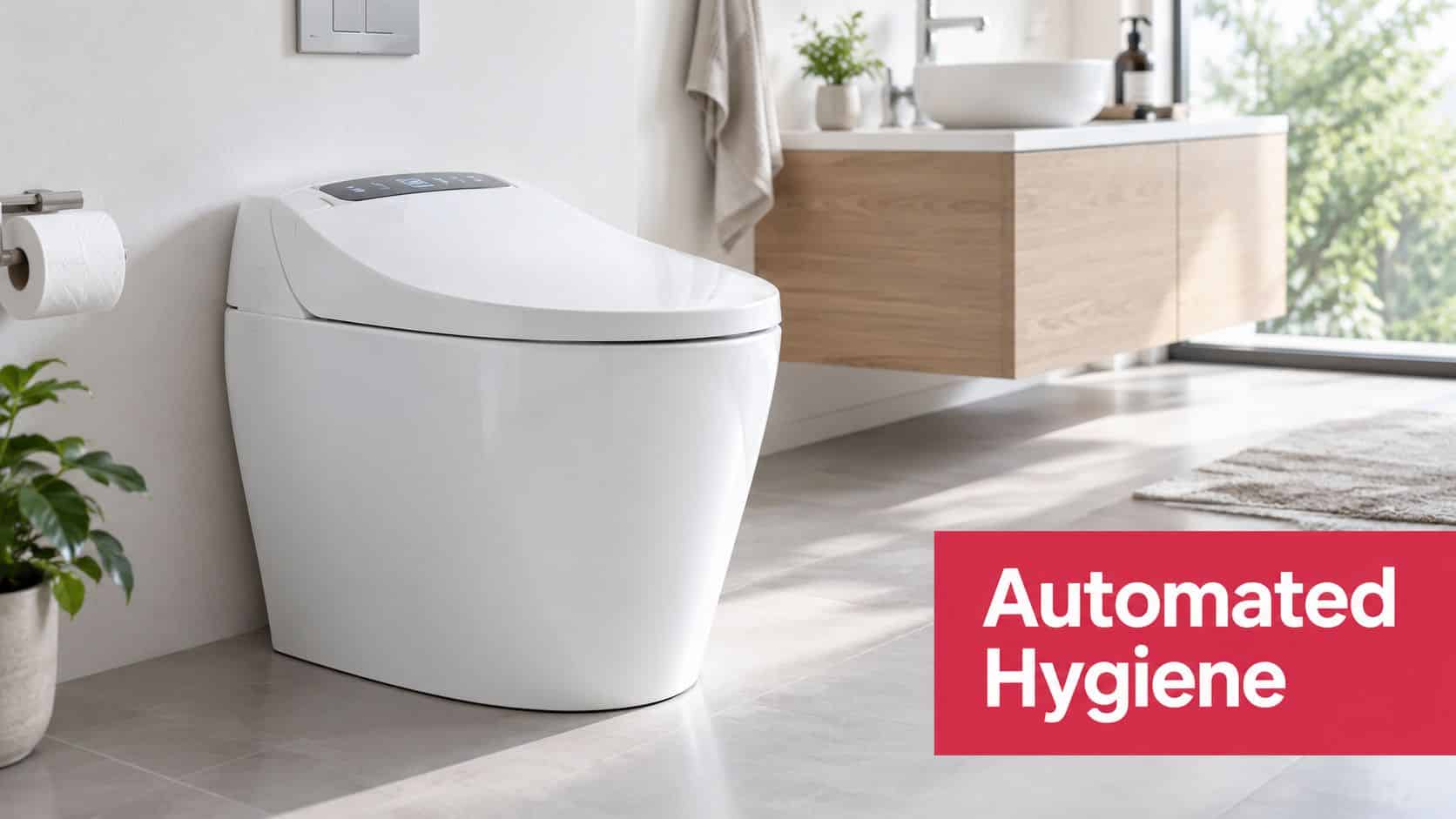
A homeowner may buy a smart toilet expecting a bathroom fixture that looks after itself. After installation, the daily experience is more specific. The nozzle rinses, the bowl may receive a pre-mist or wash cycle, and an automatic lid or flush can reduce touchpoints. Yet someone still needs to wipe the seat, inspect the connections, clean the bowl, and respond when a sensor or valve behaves oddly.
That doesn't make the technology a failure. It means self-cleaning usually means reduced manual cleaning, not zero maintenance. A cycle can rinse a surface, but it can't remove every mineral deposit, reach every hinge, or diagnose a slow leak under the tank.
Convenience shifts the work
Consider two common situations. In the first, a household uses a self-cleaning bidet toilet with a retracting nozzle. The nozzle rinses before and after use, so it needs less frequent attention than an exposed fitting. The bowl stays easier to wipe, and users may use less toilet paper.
In the second, the same toilet begins showing a weak spray. The owner assumes the automation has failed, but the cause may be scale at the inlet screen, nozzle, or valve. The fixture has reduced one chore while creating a diagnostic question that a conventional toilet wouldn't present.
Practical rule: Treat automation as a cleaning layer, not as a substitute for plumbing inspection.
Before buying, check the model's installation requirements, cleaning instructions, shutoff access, and replacement-part support. For general questions about toilets and household plumbing, homeowners can also review the MG Plumbing Services frequently asked questions.
How Self-Cleaning Technology Works
Self-cleaning toilet technology combines several functions that are often marketed under one name. Understanding the difference helps you judge what a model actually does.
Bowl and surface cleaning
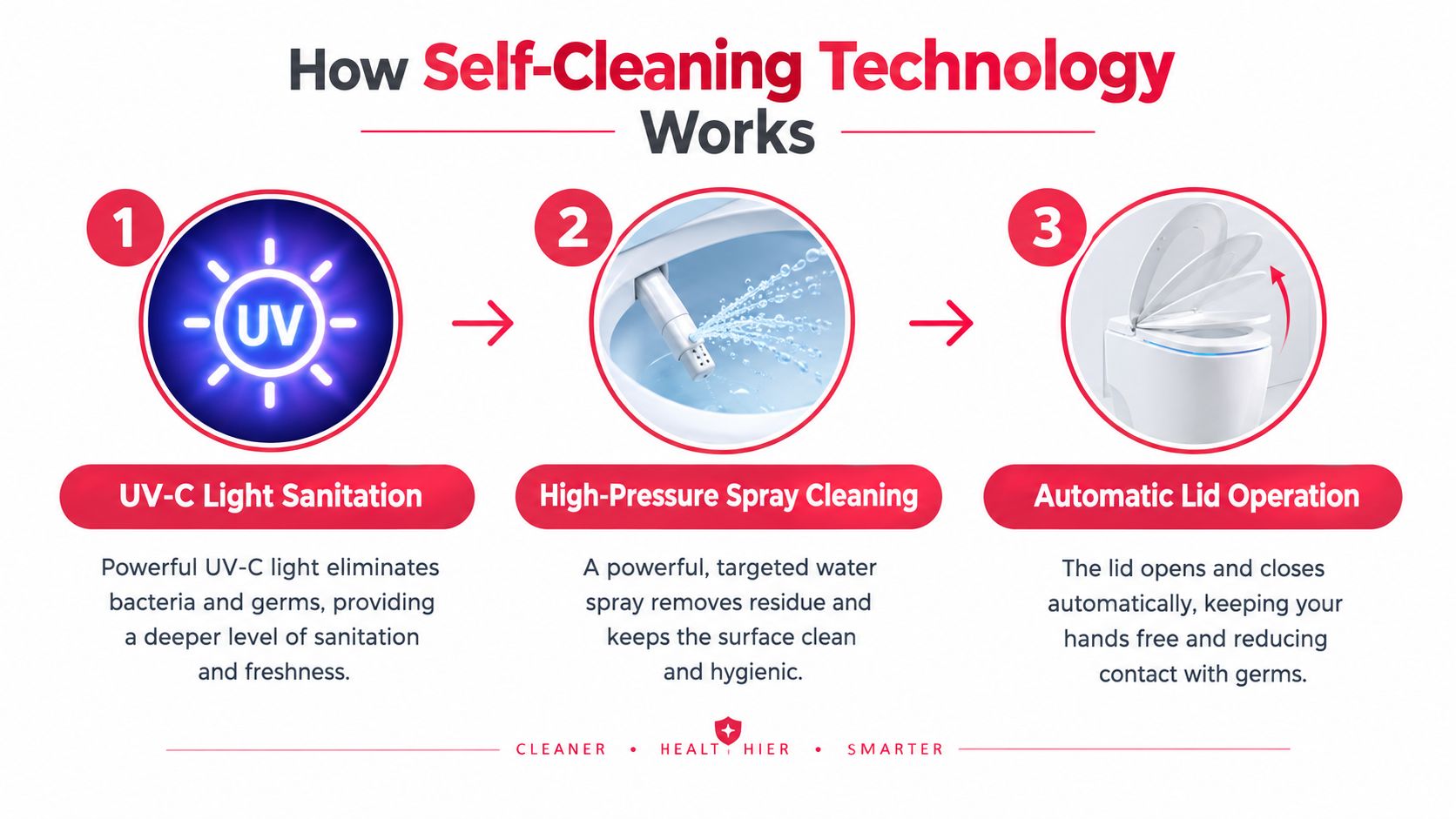
Some systems spray water around the bowl before or after use. A pre-wet surface can make residue less likely to stick, while a timed rinse can remove light contamination. Commercial units may use a dedicated bowl wash, disinfectant dose, or floor-cleaning cycle rather than relying on a household bidet nozzle.
UV light is a separate mechanism. It can provide treatment where the light reaches, but it doesn't physically remove scale, residue, or dust. A UV feature should therefore be viewed as an additional sanitation measure, not as a replacement for wiping and bowl cleaning.
Nozzle sanitation
Integrated bidet toilets typically retract the cleansing nozzle when it isn't in use. During operation, the nozzle sprays water, then rinses as it extends or retracts. Product documentation for TOTO WASHLET systems describes a water-sheet rinse during nozzle movement, with cleansing-water use ranging from about 9 to 30 ounces per minute and average family wash-function use of under 1 gallon per day according to the TOTO WASHLET product documentation.
The rinse reduces residue, but it doesn't guarantee a sterile or scale-free assembly. Smooth surfaces and an accessible nozzle area make occasional manual cleaning safer and easier.
Timed commercial cycles
A commercial specification shows how fixed cycles standardize cleaning. Its bowl and floor-cleaning process uses 13.5 liters of water, 5 watts of electricity, 20 cubic centimeters of disinfectant, and 35 seconds per cycle, as described in the Sano commercial toilet specification. The value isn't just speed. A defined sequence and dose make repeated cleaning more consistent than asking different users or staff members to scrub manually.
Watch the operating sequence here:
For a homeowner, the important distinction is simple. A toilet may clean the bowl, rinse the nozzle, disinfect with UV light, or automate the lid and flush. Those functions can appear together, but they don't perform the same job and they don't remove the need to maintain the water supply, drain connection, seals, and controls.
Commercial Versus Residential Systems
The public self-cleaning toilet and the residential smart toilet share an idea, but they solve different operating problems. Commercial systems are designed around repeated public use, controlled cleaning sequences, durable enclosures, and service access. Residential models focus more on personal comfort, bidet functions, heated seats, automatic lids, and quieter operation.
JCDecaux reports that it installed the first self-cleaning public toilets in Paris in 1981 and has since expanded to more than 2,500 self-cleaning toilets across 28 countries. The company also reports about 31 million users each year and 721 million users between 2001 and 2021, figures summarized in the global self-cleaning toilet market reference. That history shows that automated sanitation can operate at public scale, but it doesn't mean a commercial unit is a direct fit for a family bathroom.
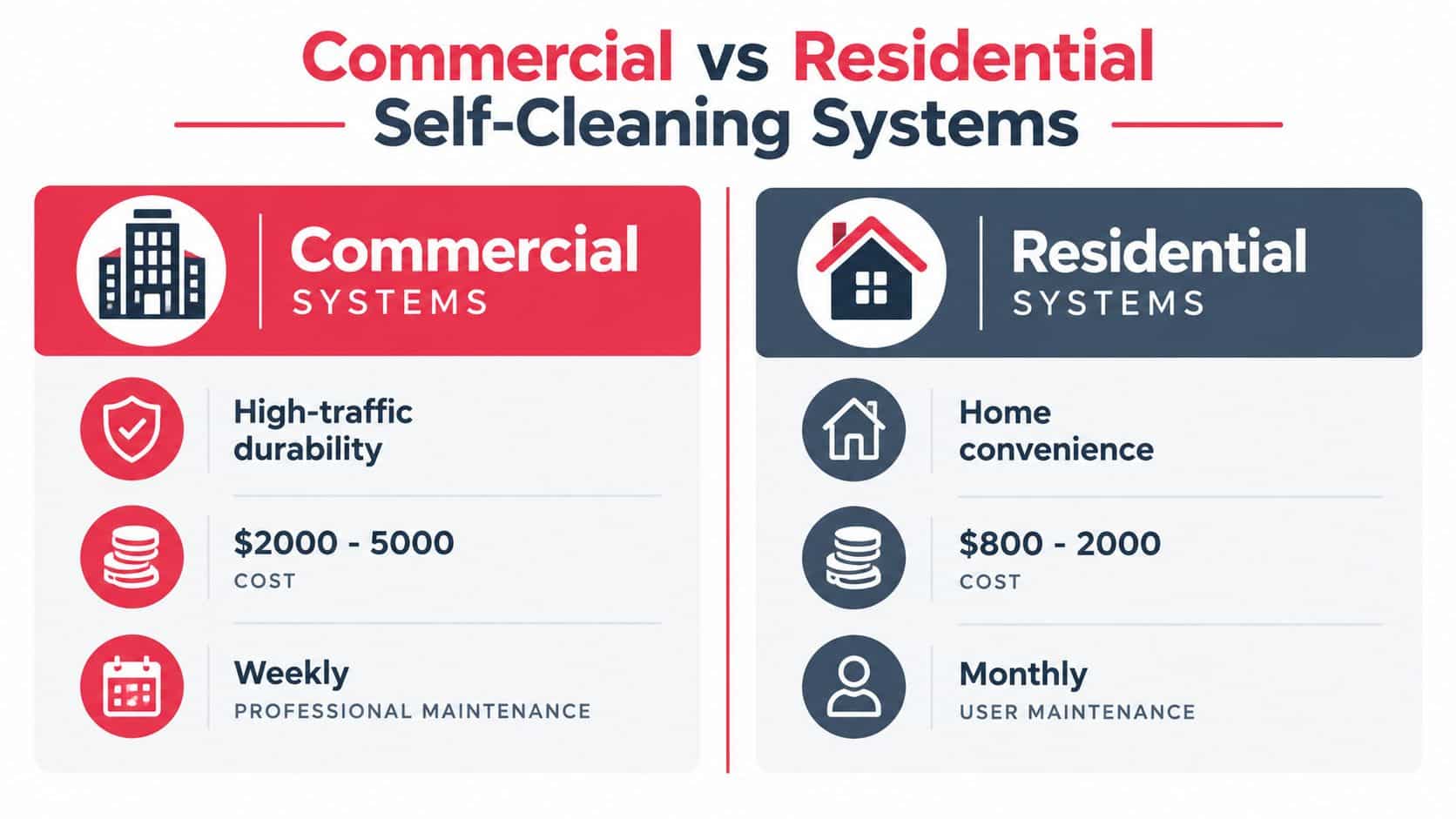
The commercial approach
Many commercial systems use two cleaning layers:
- Bowl sanitation: An automatic wash or disinfection cycle addresses the toilet bowl after use.
- Floor sanitation: A separate high-pressure system cleans the floor or surrounding area.
The commercial specification cited above uses a fixed-duration cycle, measured water volume, electricity input, and disinfectant dose. This arrangement suits busy facilities because operators can inspect a standardized system rather than depend entirely on individual user behavior.
The residential approach
Residential bidet-style fixtures usually concentrate on the user area. They may rinse the nozzle, wash with adjustable water pressure, warm the seat, deodorize the bowl, or trigger an automatic flush. They generally don't provide the same integrated public-restroom floor-cleaning system.
That distinction affects installation. A household unit still needs a compatible supply line, an accessible shutoff, proper drainage, and, for powered models, a suitable electrical connection. A commercial system may be built as infrastructure. A residential smart toilet is still a plumbing fixture inside a home, and its reliability depends on the home's water quality and existing piping.
Benefits and Practical Advantages
The strongest argument for a self-cleaning toilet is not that it eliminates all bathroom work. It's that it can make repeated use more comfortable and make certain cleaning tasks less demanding.
Integrated bidet systems are designed to use modest water volumes for washing. One industry review notes that many models are engineered to meet the EPA WaterSense ceiling of 1.28 gallons per flush while achieving at least 350 grams of waste-removal performance, as described in the industry review of integrated bidet toilets. The same reference notes that half-flush modes can use about 0.8 gallons.
Those figures matter because a homeowner often assumes added washing functions must create excessive water use. In a properly selected model, the wash cycle can add a relatively small amount of water compared with flushing, although actual use depends on the fixture and household habits.
What improves day to day
A nozzle that rinses itself before and after use can reduce direct contact with residue. A pre-mist feature may make the bowl easier to wipe. An automatic lid or flush can reduce touchpoints, while a heated seat and controlled wash can make the fixture more comfortable for people who find wiping difficult.
The benefits are practical rather than magical:
- Less routine scrubbing: Light residue and nozzle contamination may be easier to manage.
- More consistent washing: Users can adjust spray position and pressure instead of relying only on toilet paper.
- Potentially lower paper use: A wash function can reduce the amount of wiping required, though it doesn't guarantee that a household will stop using paper.
- Better accessibility: Reduced twisting and wiping can help some older adults and people with limited mobility.
Where the benefit stops
The toilet won't clean the bathroom floor, remove scale from a valve, or correct a sewer blockage. A self-rinsing nozzle also won't repair a leaking supply connection. The practical gain is lower effort in selected tasks, not freedom from plumbing care.
Choose models with easy-to-clean surfaces, accessible shutoffs, clear instructions, and replacement parts that you can obtain. Those details usually matter more over time than a long list of automatic features.
Hidden Maintenance Challenges
Hard water changes the maintenance equation. Las Vegas Valley water is classified as very hard at 291 parts per million, or 17 grains per gallon, with calcium and magnesium minerals responsible for the hardness, according to the Las Vegas Valley Water District water-quality information.
That mineral content can leave scale on household plumbing fixtures. In a self-cleaning toilet, the vulnerable areas may include the nozzle tip, inlet screen, small valve passages, spray openings, and sensors near wet surfaces. Water rinsing can remove loose residue, but it won't necessarily dissolve deposits that accumulate over time.
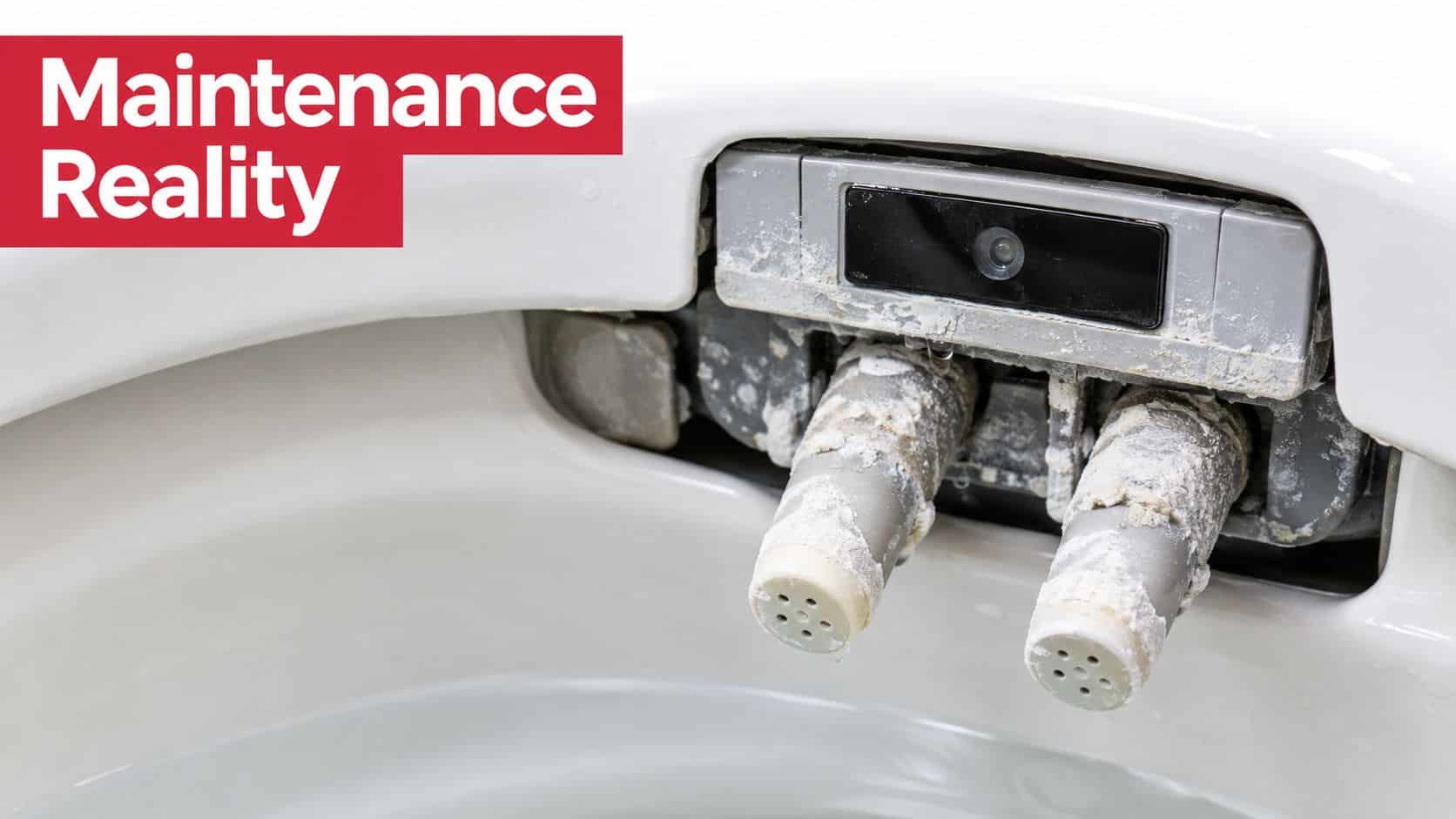
The maintenance paradox
Automation creates a maintenance paradox. The system reduces the need to scrub after ordinary use, yet it introduces components that are less forgiving when water passages narrow or moving parts collect deposits.
A weak wash may indicate a blocked screen rather than a failed pump. An inconsistent flush may involve a sensor, fill valve, or supply issue. A slow drain still requires drain diagnosis, even if the toilet has advanced cleaning features.
Homeowners should also avoid assuming that every cleaner is safe for every seat, nozzle, gasket, or electronic housing. Follow the manufacturer's instructions, use gentle cleaning methods on sensitive surfaces, and inspect for moisture around the supply connection.
If a toilet is backing up or draining slowly, don't keep repeating flushes. A qualified plumber may need to clear the fixture or investigate the branch drain. MG Plumbing Services' clogged drain service in Las Vegas is one local option for diagnosing recurring drain problems rather than treating each backup as an isolated event.
When a fixture needs more than cleaning
Call for professional assessment when you notice repeated weak spray, unexplained water around the base, a supply connection that won't stay dry, recurring clogs, or a cleaning cycle that stops partway through. A temporary rinse may restore function briefly while leaving the underlying scale or plumbing defect untouched.
For main or branch sewer concerns, camera inspection can show whether the obstruction is buildup or structural damage. That distinction matters because hydro-jetting is appropriate only when the line can safely receive it, and a camera can be used afterward to verify the condition, as explained in this sewer camera and hydro-jetting guidance.
Residential Suitability Guidelines
A self-cleaning toilet fits a home best when the homeowner evaluates the whole installation, not just the feature list. Use this sequence before purchasing.
Start with the water
Check your local water hardness and think about whether the home already shows white deposits on faucets, showerheads, valves, or water-heater components. In the Las Vegas Valley, the very hard supply means scale control deserves attention before you add narrow spray passages and electronic controls.
A water softener or treatment system may help with mineral management, but it doesn't make a fixture maintenance-free. Confirm that the toilet manufacturer permits the proposed treatment arrangement and follow the product's cleaning requirements.
Check the room and plumbing
Measure the toilet footprint, bowl shape, mounting area, lid movement, and distance to walls or cabinets. For a powered seat or integrated unit, verify the electrical requirements with a qualified electrician or plumber familiar with bathroom installations.
The supply shutoff should remain reachable. The hose must not kink, and the connection should be inspected after installation. If the existing valve is corroded or difficult to operate, replace that condition before installing an expensive fixture.
Match complexity to your habits
Choose a simpler attachment or bidet seat if you want to test whether your household will use a wash function. Consider an integrated smart toilet when you're already remodeling, replacing the entire fixture, or specifically want a design and automatic controls.
Before committing, ask:
- Who will maintain it? Decide whether routine wiping and periodic inspection fit your household.
- What happens during a power outage? Confirm whether basic flushing remains available without electricity.
- Can you get parts? Check warranty coverage, nozzle replacements, valves, remotes, and service support.
- What happens if the drain is already weak? Resolve recurring blockages before adding a fixture that may encourage more complex troubleshooting.
Nevada's C-1d plumbing classification covers installation and maintenance of sanitary water supply, sanitary waste, and vent systems, among other plumbing work, according to the Nevada Administrative Code plumbing classification. State licensing guidance identifies C-1 and C-1D as plumbing classifications, with C-1D as a plumbing subclassification under the broader category, as described in this Nevada contractor-license classification bulletin.
Making the Final Evaluation
Self-cleaning toilets make sense when the homeowner values reduced daily effort and accepts the maintenance that comes with added plumbing and electrical components. They make less sense when the existing water supply already causes severe scale problems, the bathroom lacks suitable power or clearance, or the owner expects a completely hands-off fixture.
Use this decision view:
| Home condition | Practical direction |
|---|---|
| Good water-quality planning, accessible shutoff, suitable power, and willingness to maintain | A residential smart toilet may be a reasonable upgrade |
| Uncertain fit or uncertain household adoption | Start with a simpler bidet seat or attachment |
| Recurring clogs, weak drainage, leaks, or aging supply connections | Diagnose the plumbing first |
| Heavy scale and no plan for mineral control | Choose a serviceable design and address water treatment before adding complexity |
| Need for maximum simplicity | A conventional toilet may remain the more reliable choice |
Commercial systems prove that automated cleaning can be standardized at large scale, but household ownership follows a different pattern. A family uses the fixture privately, sees fewer users, and depends on one home's water, electrical, drainage, and service conditions. The technology works best when those basics are sound.
The cost question should include more than the fixture price. Consider installation, electrical work if required, water-treatment needs, replacement parts, service access, and the consequences of a leak or failed valve. Homeowners comparing installation options can request plumbing cost estimates that account for the actual connection and repair conditions rather than relying only on a product listing.
MG Plumbing Services LLC is a local, family-owned, owner-operated residential plumbing company serving Las Vegas, Henderson, North Las Vegas, Summerlin, and nearby parts of the Las Vegas Valley. Owner Miguel Garcia is a Nevada-licensed C-1d plumbing contractor and journeyman plumber with more than 25 years of plumbing experience, and the company provides toilet work, drain cleaning, hydro jetting, sewer camera inspections and locating, leak detection, water heaters, water treatment, and general residential plumbing services.
If you're considering a self-cleaning toilet, MG Plumbing Services LLC can assess the supply connection, shutoff, drainage, hard-water conditions, and related plumbing before installation or repair. Call 702-480-8070 or visit MG Plumbing Services LLC to request service, and ask about bilingual support, Se habla español.