A burst pipe often announces itself through unexplained pooling, a sudden whole-home pressure drop, running-water sounds, interior moisture damage, unusual water quality, recurring multi-drain backups, or an unexplained bill increase. Shut off the water when it's safe to do so and arrange professional diagnosis.
You may notice the problem while making coffee, stepping into the garage, or checking a utility bill. Water is appearing where it shouldn't, a shower has lost most of its force, or the meter is moving even though every faucet is closed. One symptom can have several causes, but several signs together deserve prompt attention.
Stop using water, keep away from electrical hazards and contaminated water, and locate the main shutoff only if you can reach it safely. Photograph the affected areas and call a licensed residential plumber rather than opening walls, digging up a yard, or applying a temporary patch. MG Plumbing Services LLC is a local, family-owned, owner-operated company serving Las Vegas, Henderson, North Las Vegas, Summerlin, and surrounding areas of the Las Vegas Valley. Its services include water leak detection, sewer-camera inspection and locating, drain and sewer work, water heater repairs, and written repair recommendations.
Table of Contents
- 1. Sudden Puddles or Water Pooling in Yards and Basements
- 2. Significant Drop in Water Pressure Throughout the Home
- 3. Discolored, Cloudy, or Foul-Smelling Water
- 4. Wet Spots, Stains, or Mold Growth on Interior Walls and Ceilings
- 5. Unusually High Water Bill or Meter Running Continuously
- 6. Recurring Drain Backups or Slow Drains in Multiple Areas of the Home
- 7. Cracks in Foundation, Settlement, or Structural Damage Near Plumbing Areas
- 7-Point Comparison: Signs of a Burst Pipe
- Act Quickly When Several Signs Appear
1. Sudden Puddles or Water Pooling in Yards and Basements
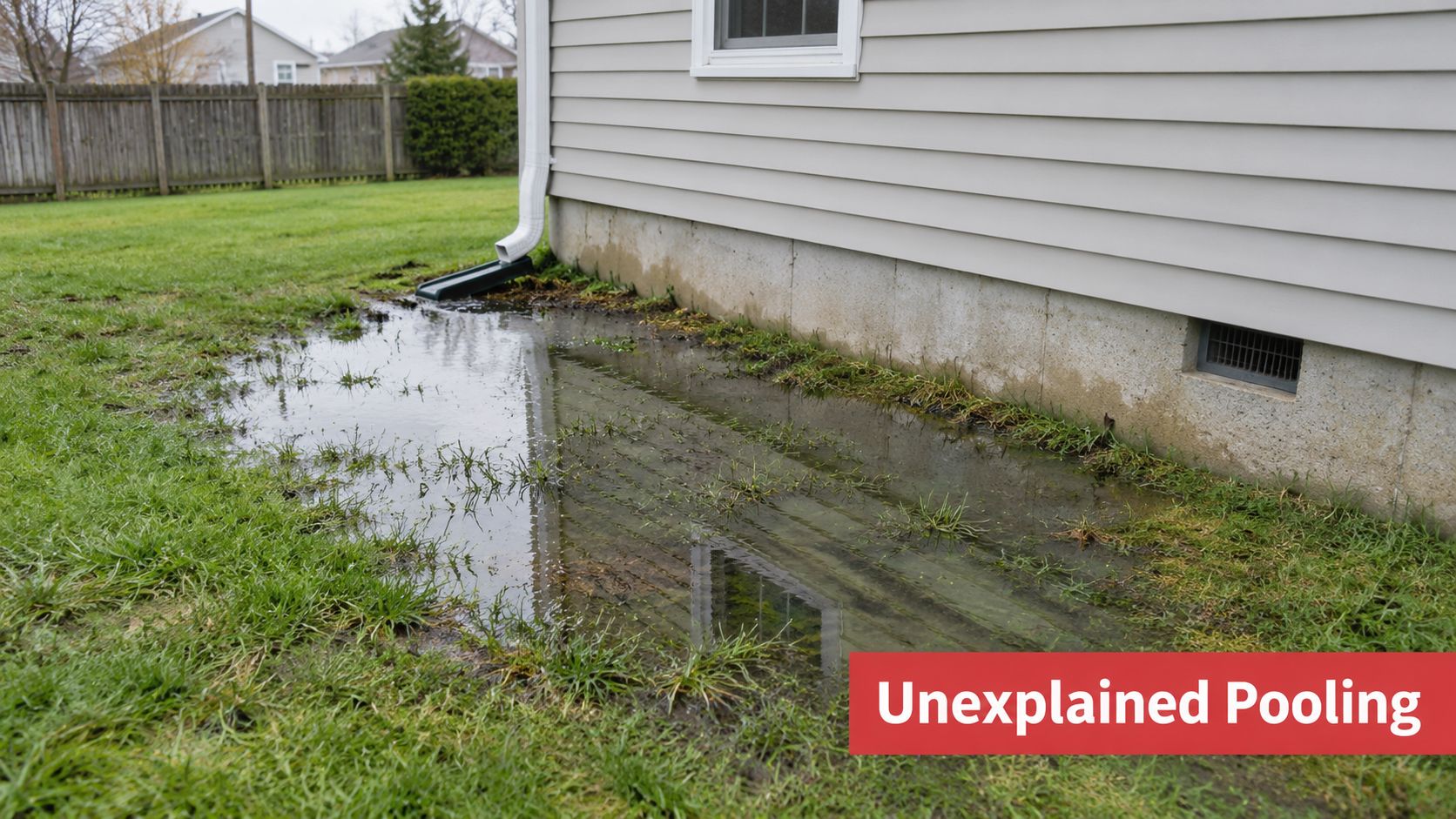
A new wet patch in a dry yard is easy to dismiss as irrigation. It becomes more suspicious when the area stays wet despite normal sprinkler settings, no recent rain, and no indoor water use. Pooling may indicate a ruptured underground water line, a damaged sewer line, or water escaping from a pipe below a slab or crawl space.
Las Vegas Valley homes face local conditions that make underground diagnosis especially important. Expansive soils and ground movement can stress aging plumbing, while older cast-iron sewer lines may crack, collapse, or admit soil. A soggy depression in a Summerlin yard or persistent moisture beside a foundation doesn't identify the exact failure by itself, but it tells you where to start looking.
Check the location without digging
Walk the property when fixtures aren't running. Look for muddy soil, unusually soft ground, a wet basement or crawl-space floor, or water that appears to follow a foundation, driveway, or suspected pipe route. Mark the wet area and photograph it before conditions change.
Practical rule: Don't dig to find the break. Excavation can damage another utility, enlarge the problem, or destroy useful evidence.
A plumber can combine electronic leak detection with locating equipment to identify a concealed water-line break. For sewer problems, a camera inspection can show whether the line has a crack, collapse, root intrusion, or blockage. MG Plumbing Services provides sewer-camera inspections, locating, leak detection, and repair recommendations for residential properties. If the water is near electrical equipment or appears contaminated, stay clear and wait for qualified help.
2. Significant Drop in Water Pressure Throughout the Home
A sudden pressure loss at the kitchen faucet, shower, bathroom sink, toilet, and outdoor hose bibb points to a system-wide problem rather than a dirty aerator. A ruptured pipe diverts pressurized water into soil, a wall cavity, or another hidden space before it reaches the fixtures. Weak flow or no flow can indicate that a supply line has failed, although a pressure-regulating-valve fault or municipal issue can produce similar symptoms.
Hard-water mineral buildup and aging copper piping are common plumbing concerns in Southern Nevada. A slow decline over time may reflect pinhole corrosion, scale, or a failing valve. A sharp drop that happens across the home deserves faster investigation.
Test several fixtures and the meter
Open cold water briefly at multiple fixtures and compare the flow. Then stop all water use, including ice makers, washing machines, irrigation, and toilets that may be refilling. Watch the meter. If it continues moving with every fixture off, water is still flowing somewhere in the system, which is consistent with an active leak or burst pipe. This simple meter check is also described in guidance on identifying a burst pipe with a water meter.
Don't try to correct the problem by adjusting the pressure-regulating valve yourself. An incorrect adjustment can create excessive pressure and damage fixtures, valves, or appliances. A professional can separate a failed PRV from a break under a slab, in a yard, or inside a wall.
MG Plumbing Services uses professional leak-detection equipment to locate concealed ruptures and provides a flat-rate, written estimate before repair begins. Depending on the location and condition of the line, the practical repair may involve targeted replacement or a reroute with Wirsbo AquaPEX rather than repeatedly opening the same area.
3. Discolored, Cloudy, or Foul-Smelling Water
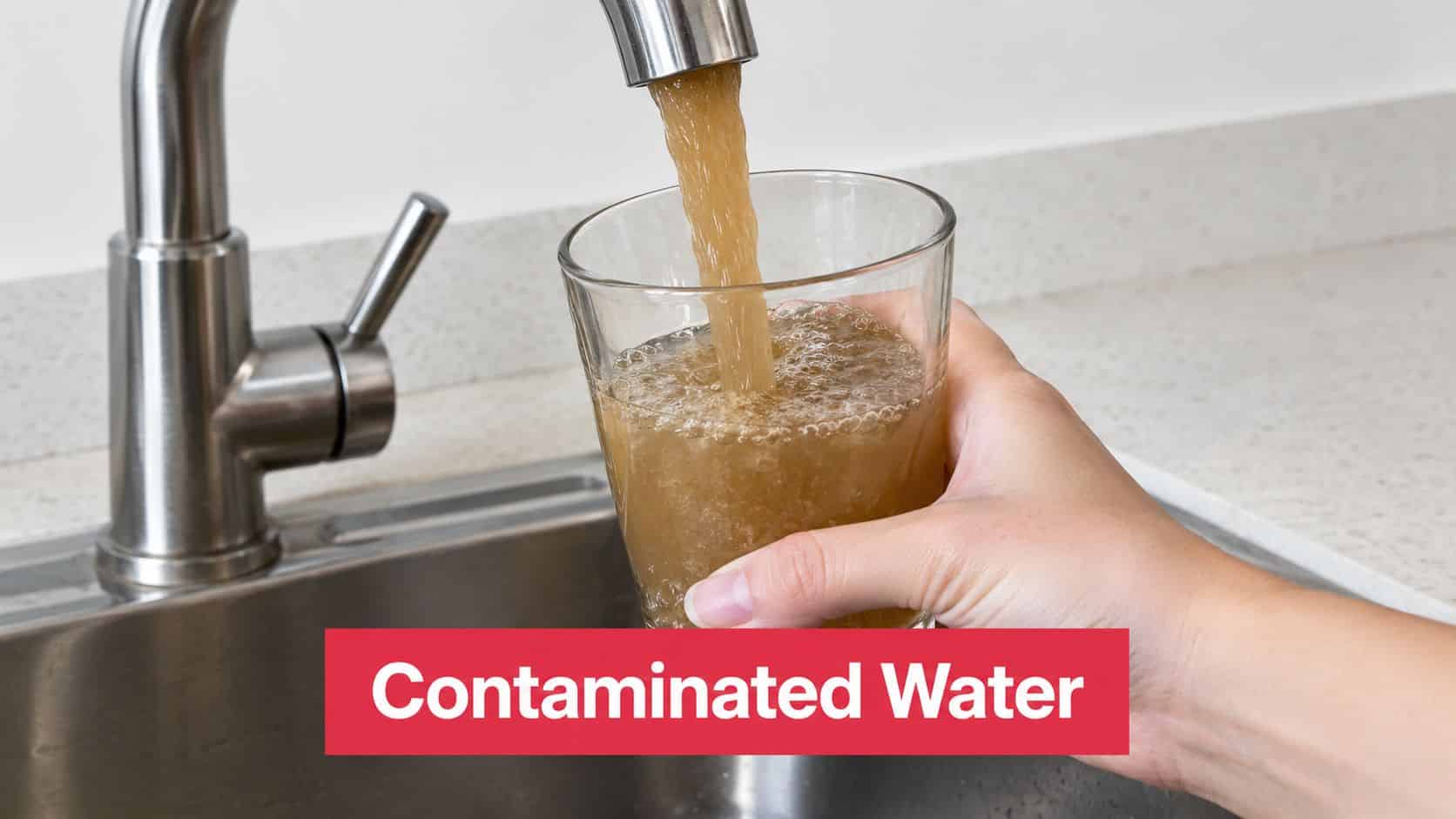
Brown, rusty, cloudy, or particle-filled water should be treated as a water-quality warning, especially when it appears from several fixtures. A damaged supply pipe can disturb sediment or allow soil intrusion. A sewer-line problem raises a different concern because wastewater and sewer gases can affect nearby plumbing systems.
Start with a cold-water faucet and let it run briefly. If discoloration remains rather than clearing quickly, collect a glass and hold it to the light. Look for suspended particles, cloudiness, or an unusual tint. Note whether the odor is earthy, musty, sewage-like, or more like rotten eggs.
Don't drink water that looks or smells abnormal until the cause has been diagnosed and the system is considered safe.
A rotten-egg odor can come from hydrogen sulfide associated with a water heater, so not every odor means a burst pipe. For that possibility, a plumber may need to evaluate the heater, anode rod, and hot-water system. MG Plumbing Services handles water heater repair and replacement, including residential tank equipment, and its Las Vegas water heater repair service can help distinguish a heater issue from a supply or sewer problem.
Match the symptom to the right inspection
Water appearing from every cold faucet, combined with a pressure change, supports investigation of the main water line. Sewage odor, drain backups, or moisture near a sewer route points toward a sewer-camera inspection. Water testing may also be appropriate before normal consumption resumes. Don't rely on flushing the line repeatedly or installing a filter as a substitute for finding the failed pipe.
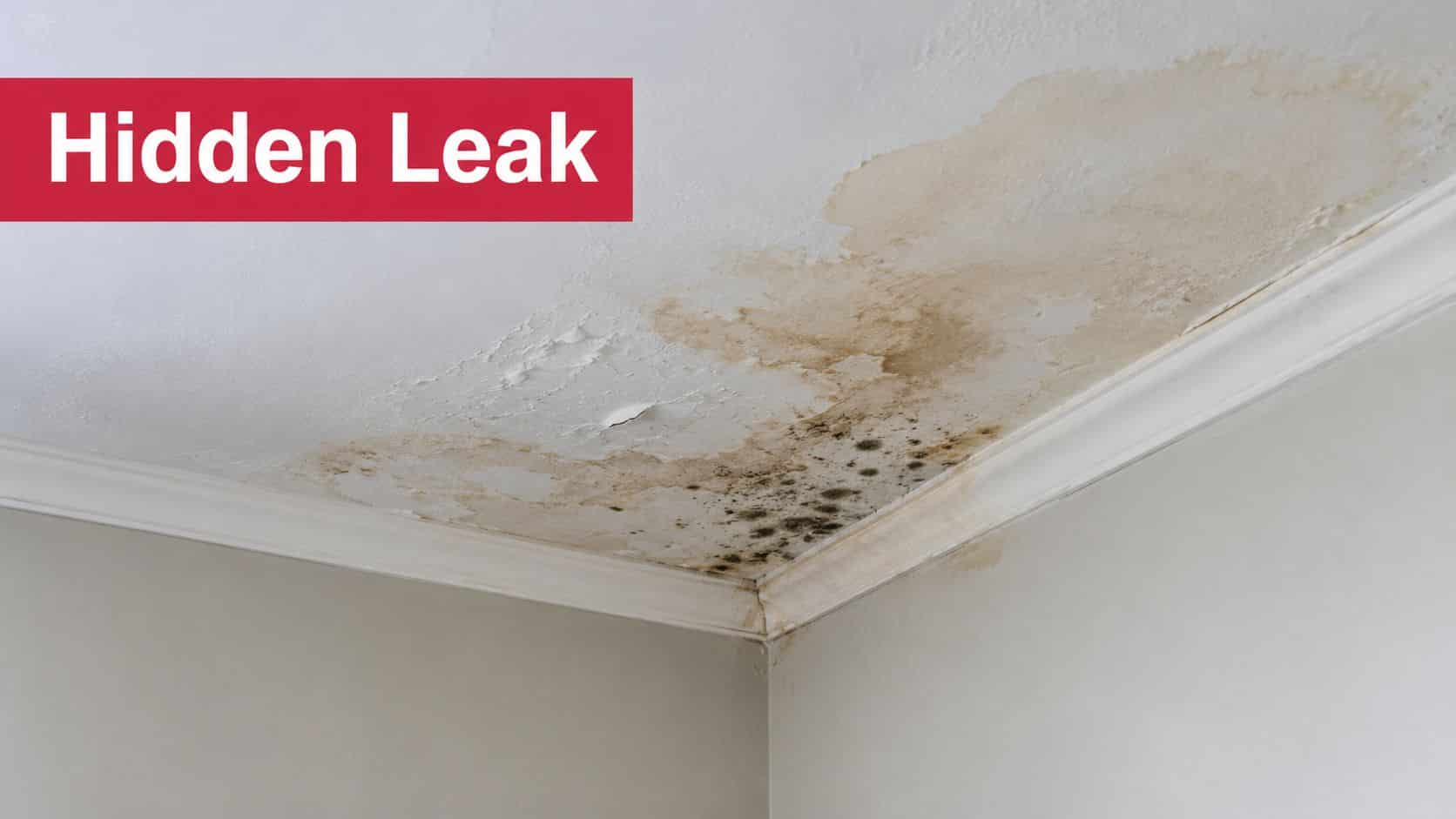
4. Wet Spots, Stains, or Mold Growth on Interior Walls and Ceilings
A brown ceiling mark below a bathroom, a soft patch beside a kitchen, or peeling paint near a laundry area can reveal a concealed leak. Water from a broken pipe may travel along framing, insulation, or flooring before it becomes visible, so the stain isn't always directly below the rupture. Musty odor and mold growth add urgency because they indicate persistent moisture rather than a one-time splash.
Touching a suspect surface can provide a useful clue, but do it gently. Soft, swollen, or warm drywall may be holding moisture. Don't press hard on a sagging ceiling, and don't open the cavity unless a professional has assessed the risk. Water near lights, outlets, wiring, or electrical panels is a hazard. Leave the area and use the appropriate electrical disconnect only if you can do so without entering water or touching wet equipment.
Fix the source before the surface
Painting over a stain won't stop the leak. Nor will drying the visible side of a wall solve moisture trapped behind it. A licensed plumber can use leak-detection methods and targeted access to identify a hot-water line, cold-water line, or other concealed pipe. MG Plumbing Services focuses on diagnosis before recommending repair, replacement, or rerouting.
Visible mold may require a separate remediation specialist. The plumber's role is to stop the water intrusion and repair the pipe. A remediation professional can then evaluate affected drywall, insulation, framing, and air quality. Photograph stains, bubbling paint, and damaged belongings before cleanup, and contact your insurer if appropriate.
5. Unusually High Water Bill or Meter Running Continuously
A higher bill can be the first visible sign of a leak under a slab, beneath a yard, or inside a wall. The key question isn't whether the bill is surprising. It's whether consumption increased without a change in occupants, irrigation, laundry, fixtures, or other normal use.
Turn off every fixture and appliance that uses water. Check toilets for silent refilling, make sure irrigation is off, and inspect the meter for movement. A moving meter with the home quiet indicates active flow somewhere in the system. You can also record the reading, wait, and compare it later, but don't delay professional help if the meter is moving quickly or other warning signs are present.
Rule out simple explanations first
A stuck toilet valve, irrigation leak, water softener cycle, or billing error can raise usage without a burst pipe. Contact the water utility if the account reading seems wrong, but don't assume a billing explanation when the meter continues moving after all fixtures are isolated.
A quiet house with a moving meter is a plumbing clue, not a problem to monitor indefinitely.
Continuous flow paired with low pressure is more concerning than either symptom alone. MG Plumbing Services' residential water leak detection service is intended for concealed leaks and slab-line problems that can't be located by visual inspection. Professional equipment can narrow the rupture location and support a targeted repair or reroute instead of unnecessary demolition.
6. Recurring Drain Backups or Slow Drains in Multiple Areas of the Home
One slow bathroom sink usually points to a local trap, branch line, or fixture clog. Several slow drains, repeated toilet backups, or wastewater rising from the lowest fixture suggest a main sewer problem. A cracked or collapsed line can restrict flow, allow soil or roots into the pipe, or create a break that prevents wastewater from leaving the home properly.
Pay attention to the pattern. Do backups appear after showers, laundry, or other heavy water use? Do they affect the first-floor bathroom, floor drain, and toilet at the same time? Do they return soon after plunging or routine drain cleaning? Those details help distinguish a localized blockage from a structural main-line failure.
Repeated chemical treatment isn't a diagnosis. Caustic drain cleaners may not reach a damaged main line, and they create a hazard for anyone who later opens the piping. A cable machine may restore flow temporarily, but if the problem returns, clearing the symptom without inspecting the pipe wastes time and can allow a collapse to worsen.
Use the camera to see the failure
A live sewer-camera inspection can show cracks, bellies, root intrusion, collapsed sections, and blockages. MG Plumbing Services provides sewer-camera inspection in Las Vegas and can recommend cable cleaning, hydro jetting, a targeted repair, or cast-iron-to-ABS replacement depending on the actual condition.
A camera doesn't replace every test, but it gives the plumber evidence before excavation. If sewage is backing up, avoid contact with it, keep children and pets away, and don't operate fixtures until the line has been assessed.
7. Cracks in Foundation, Settlement, or Structural Damage Near Plumbing Areas
New cracks near bathrooms, kitchens, water heaters, or a suspected main-line route can have several causes, including ordinary settlement, construction movement, soil changes, or a plumbing leak. The concern rises when cracking appears with pooling, low pressure, wet flooring, sticking doors, or a continuously running meter.
A large leak can saturate soil or wash material away from beneath a slab. In the Las Vegas Valley, soil conditions can respond strongly to added moisture, so a plumbing investigation is sensible when structural changes coincide with water symptoms. A diagonal drywall crack, a widening slab crack, or a driveway crack parallel to a buried line doesn't prove a burst pipe, but it shouldn't be covered cosmetically before the water source is ruled out.
Document movement and call the right specialists
Photograph the crack with a ruler or another clear scale. Date the image and note whether doors, windows, or floors are changing. Don't fill the crack with caulk or paint over it as a first step. If the plumbing is still leaking, cosmetic work won't address the cause.
MG Plumbing Services can use leak-detection equipment to investigate a suspected slab or main-line leak. If a pipe failure is confirmed and structural movement is present, a structural engineer or foundation specialist should assess the building separately. The plumber stops the water intrusion through repair, replacement, or rerouting. The structural specialist determines whether additional remediation is needed.
7-Point Comparison: Signs of a Burst Pipe
| Sign / Indicator | Implementation Complexity 🔄 | Resource Requirements ⚡ | Expected Outcomes 📊 / Quality ⭐ | Ideal Use Cases 💡 | Key Advantages ⭐ |
|---|---|---|---|---|---|
| Sudden puddles or water pooling in yards and basements | 🔄🔄 (locate rupture, possible excavation) | ⚡⚡ (locating equipment, camera, excavation) | ⭐⭐⭐⭐, pinpoint burst location; repair/replacement likely reduces loss | Visible unexplained pooling during dry weather | Easy to detect visually; helps narrow repair area |
| Significant drop in water pressure throughout the home | 🔄🔄 (system diagnostics, meter checks) | ⚡⚡ (pressure tests, leak detection tools, camera) | ⭐⭐⭐⭐, identifies system-wide rupture; urgent repair prevents major loss | Sudden low pressure at multiple fixtures | Obvious system-wide sign; prompts rapid action |
| Discolored, cloudy, or foul‑smelling water | 🔄🔄 (water testing, camera inspection) | ⚡⚡⚡ (water analysis, camera, potential water treatment) | ⭐⭐⭐⭐, confirms contamination source; restores safe water after repair | Brown/cloudy water or sewage odor at taps | Clear sensory alert; immediate health/safety trigger |
| Wet spots, stains, or mold growth on interior walls/ceilings | 🔄🔄🔄 (hidden leak tracing, wall access) | ⚡⚡⚡ (camera/infrared, demolition, mold remediation) | ⭐⭐⭐⭐, locate interior rupture; stop leak and enable structural remediation | Visible stains, soft drywall, or mold near plumbing runs | Visual evidence for insurance; indicates probable pipe location |
| Unusually high water bill or meter running continuously | 🔄 (meter check, simple isolation tests) | ⚡⚡ (meter observation, leak detection equipment) | ⭐⭐⭐⭐, finds hidden/silent leaks; stops water waste and lowers bills | Sudden unexplained bill spike or meter movement with no use | Objective, measurable indicator that justifies investigation |
| Recurring drain backups or slow drains in multiple areas | 🔄🔄🔄 (sewer camera, flow assessment) | ⚡⚡⚡ (camera inspection, hydro‑jetting, pipe repair/replacement) | ⭐⭐⭐⭐, confirms main sewer damage; restores full drainage | Multiple fixtures slow/back up repeatedly | Distinguishes main sewer failure from localized clogs |
| Cracks in foundation, settlement, or structural damage near plumbing | 🔄🔄🔄 (coordinated structural + leak diagnosis) | ⚡⚡⚡ (advanced leak detection, excavation, foundation repair) | ⭐⭐⭐, halts water intrusion; requires plumbing + structural remediation | New/worsening foundation cracks near plumbing routes | Unambiguous sign of long‑term leak and urgent structural risk |
Act Quickly When Several Signs Appear
Treat a suspected burst pipe as a control-and-diagnosis problem. First, stop using water. If the main shutoff is accessible without entering standing water or approaching electrical equipment, close it. Keep away from wet outlets, light fixtures, panels, and sewage. Move valuables only from a dry, safe position, and use towels or containers only where doing so doesn't expose you to a hazard.
Photograph the meter, stains, pooling, damaged finishes, and affected belongings. Note when the pressure changed, which fixtures are affected, whether the water smells unusual, and whether backups follow heavy use. This record helps a plumber and may help with an insurance conversation.
A single symptom doesn't always mean a burst pipe. A clogged aerator can reduce flow at one faucet. An irrigation fault can create a wet yard. A water-heater problem can explain an odor or hot-water change. A pressure-regulating-valve fault can affect household pressure, and a billing error can explain an unexpected charge. Those possibilities are why diagnosis matters.
Combinations are more urgent. Continuous meter movement plus low pressure suggests an active pressurized leak. Pooling plus soft soil, staining, or foundation movement points to hidden water intrusion. Multi-drain backups plus sewage odor justify prompt sewer inspection. A published estimate says a 1/8-inch crack can release up to 250 gallons per day, according to Progressive's burst-pipe guidance. Hanover reports an average water-damage or freezing claim loss of about $11,650, while summaries based on Triple-I data say those causes represented nearly 24% of U.S. homeowners claims in 2021. These figures explain why a small-looking symptom deserves attention, not why every wet spot should be treated as a confirmed burst.
For residential customers in Las Vegas, Henderson, North Las Vegas, Summerlin, and nearby Las Vegas Valley communities, MG Plumbing Services LLC offers leak detection, drain and sewer diagnosis, hydro jetting, camera inspection, water-line work, water heater service, and general plumbing repairs. Owner Miguel Garcia is a Nevada-licensed C-1d plumbing contractor and journeyman plumber with more than 25 years of plumbing experience. The company is licensed and insured, provides written estimates, and schedules same-day appointments during business hours, Monday through Saturday, from 7:00 AM to 5:00 PM. Service is available in English and Spanish, and the company isn't marketed as a 24/7 emergency plumbing provider. Call 702-480-8070 or use the website to request service.
MG Plumbing Services LLC provides residential leak detection, sewer-camera inspections, drain cleaning, hydro jetting, water heater work, and repair or replacement of water and sewer lines across the Las Vegas Valley. If you're seeing low pressure, pooling, interior moisture, a moving meter, or recurring backups, visit MG Plumbing Services LLC to request a written diagnosis and repair recommendation.