You get in the shower at 6:40 on a Tuesday, and the water goes from hot to lukewarm to cold in about ninety seconds. No bang, no flood, no warning light. Just a tank in the garage that has stopped keeping up, and a house full of people who now shower in shifts.
That's how most water heaters in the Las Vegas Valley fail. Not with a dramatic rupture, but with months of small annoyances you explain away: a rumble during morning recovery, hot water that smells off, a shower that quits halfway through. Then one day the garage floor is wet and the decision gets made for you, at the worst possible moment and usually at the worst price.
Signs water heater needs replacement rarely show up alone, and that's the useful part. One symptom on a young tank is usually a repair. The same symptom on a 12-year-old tank in a hard-water neighborhood is money you're about to spend twice.
What follows are the signals worth acting on here in Southern Nevada, where water runs heavy with calcium and magnesium and a tank works harder than it would in a softer-water market. Each one comes with a decision rule, so you know whether to repair, monitor, or replace instead of guessing.
Table of Contents
- 1. Water Heater Is 8 to 12 Years Old or Older
- 2. Rusty, Discolored, or Metallic-Tasting Hot Water
- 3. Rumbling, Popping, or Banging Noises from the Tank
- 4. Hot Water Runs Out Quickly or Stays Lukewarm
- 5. Water Pooling or Leaking Around the Base of the Tank
- 6. Pressure Relief Valve Frequently Dripping or Discharging
- 7. Rising Energy Bills and Frequent Repairs
- How each replacement warning sign compares
- When Repair Stops Making Sense
1. Water Heater Is 8 to 12 Years Old or Older
Age frames everything else, which is why it's the first thing I check. The ENERGY STAR water heater partner resource guide reports that the average storage water heater lasts about 13 years, and the California Public Utilities Commission market study it cites puts the effective useful life of a standard natural gas tank at roughly 8 to 12 years. Both make the same practical point: replace an aging unit before it fails, because a leaking tank generally can't be repaired economically.
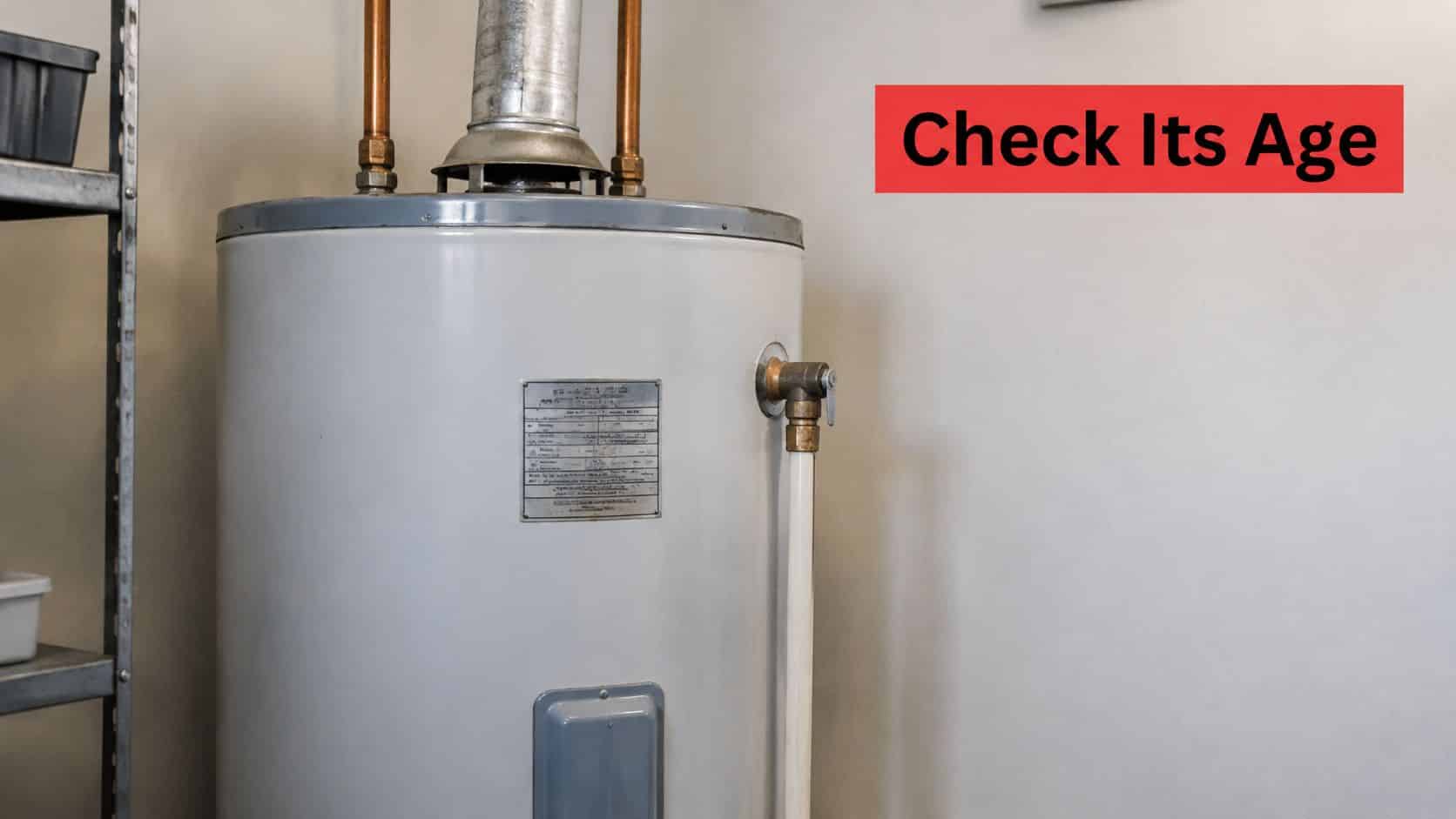
Plan on the low end of that range here. A tank is a steel pressure vessel lined with glass and protected by a sacrificial anode rod. The rod corrodes so the steel doesn't. Once it's spent, the tank becomes the anode, and a unit that looked fine last year starts losing ground fast.
Read the Date Before You Call Anyone
The rating plate on the side or top of the tank carries the model, the serial number, and usually the manufacture date. On most brands the first characters of the serial encode the year and week. If the plate is faded, the original permit record with the city or county will date the install.
- Write the install date on the tank: a marker note beside the data plate saves the next owner, and the next plumber, ten minutes of guesswork.
- Have the anode rod pulled on an older tank: a depleted rod on a tank with life left is cheap insurance and the difference between a small service and a full replacement.
- Ask for both numbers in writing: repair cost and replacement cost side by side, flat rate, before you commit.
Not every old tank has to go. We've arrived equipped to replace a water heater another plumber had condemned, found that only the anode rod needed changing, drained the tank, swapped the rod, and left the unit running. There's a running set of diagnostic write-ups on the MG Plumbing Services plumbing blog if you want to compare symptoms before calling anyone.
Decision rule: past 10 years with any other symptom on this list, replace. Past 10 years and running clean, inspect annually and start budgeting. A tank swapped on a Saturday morning by appointment is cheaper and drier than the same tank letting go into a finished garage.
2. Rusty, Discolored, or Metallic-Tasting Hot Water
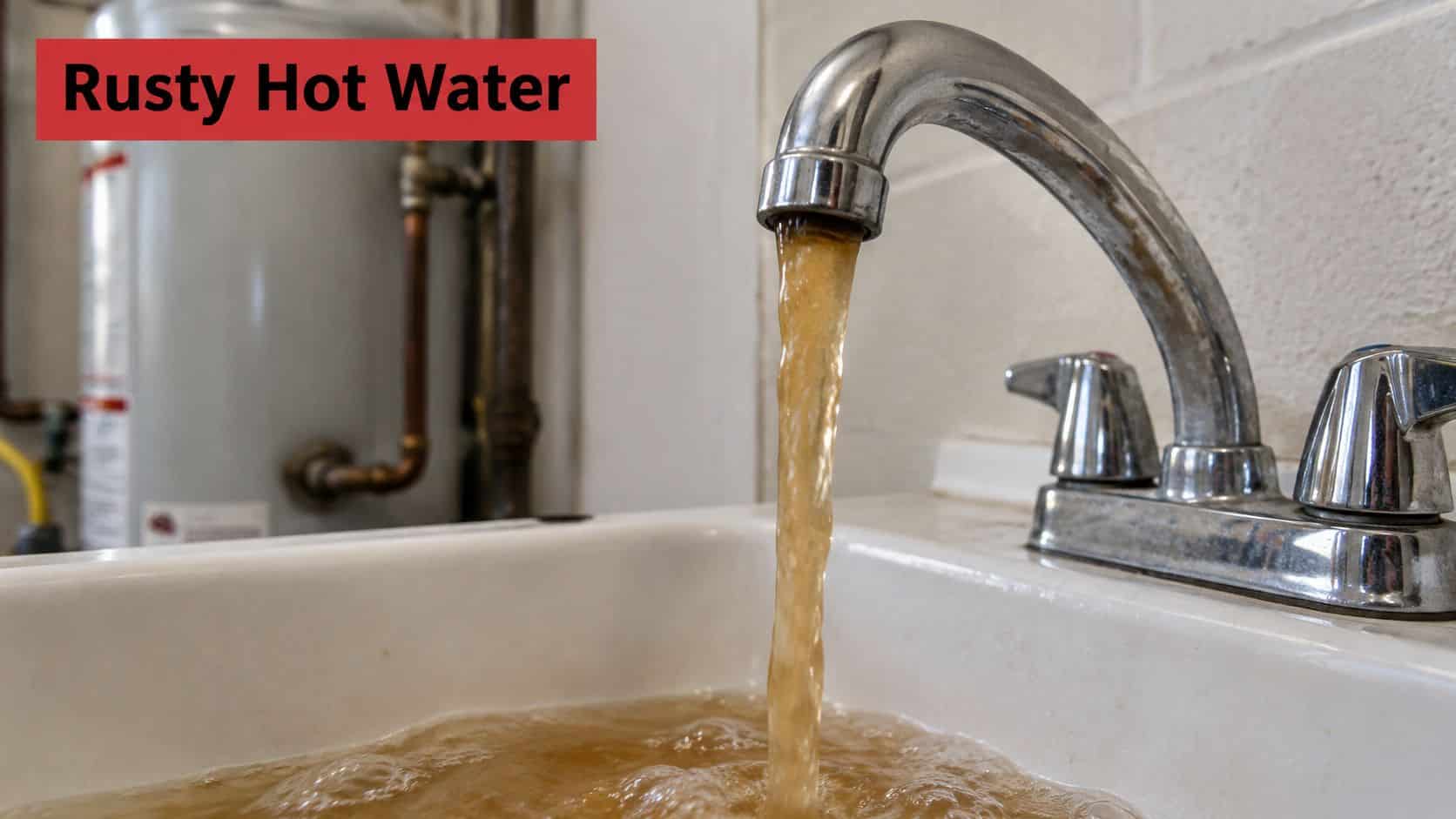
Clear water at the cold tap and tea-colored water at the hot tap is about as direct a diagnosis as plumbing gives you. The color is iron and rust particles coming off the inside of the tank, and it means the lining or the steel wall has started to give way. A U.S. Department of Energy building science lecture set on water heating makes the point plainly: corrosion and leakage aren't cosmetic, they indicate deterioration of the tank itself, and an older unit with several symptoms is a stronger replacement case than a newer one with a single failed part.
Say a Henderson household notices rust only from the hot side while the cold runs clear. That isolates the problem to the heater, not the municipal supply or the main line. In a North Las Vegas rental, the first complaint is often stained laundry rather than discolored water in a glass, because a washer pulls a large volume of hot water all at once.
Hot Side Only, or Both Sides
Run the hot tap for two or three minutes. A brief rusty burst that clears usually means the tank sat unused and stirred up sediment. Water that stays brown doesn't clear, and it doesn't heal.
- Compare taps before you buy anything: hot only points at the heater, both sides points upstream at the service line.
- Don't write off persistent color: it's corrosion, and corrosion eventually becomes a puddle on the floor.
- Check the smell separately: a metallic or sulfur odor on the hot side alone often traces to the anode rod rather than the whole tank, and a rod swap is a real fix.
On a tank under 8 years old with clear water and only an odor issue, I'd try an anode swap and a flush first. On a tank past 10 years with rust-colored hot water, replacement is the honest answer, because no amount of flushing puts the lining back.
3. Rumbling, Popping, or Banging Noises from the Tank
A water heater should be one of the quietest appliances in the house. When it starts sounding like a percolator, that's sediment, and in this valley it's almost always mineral scale.
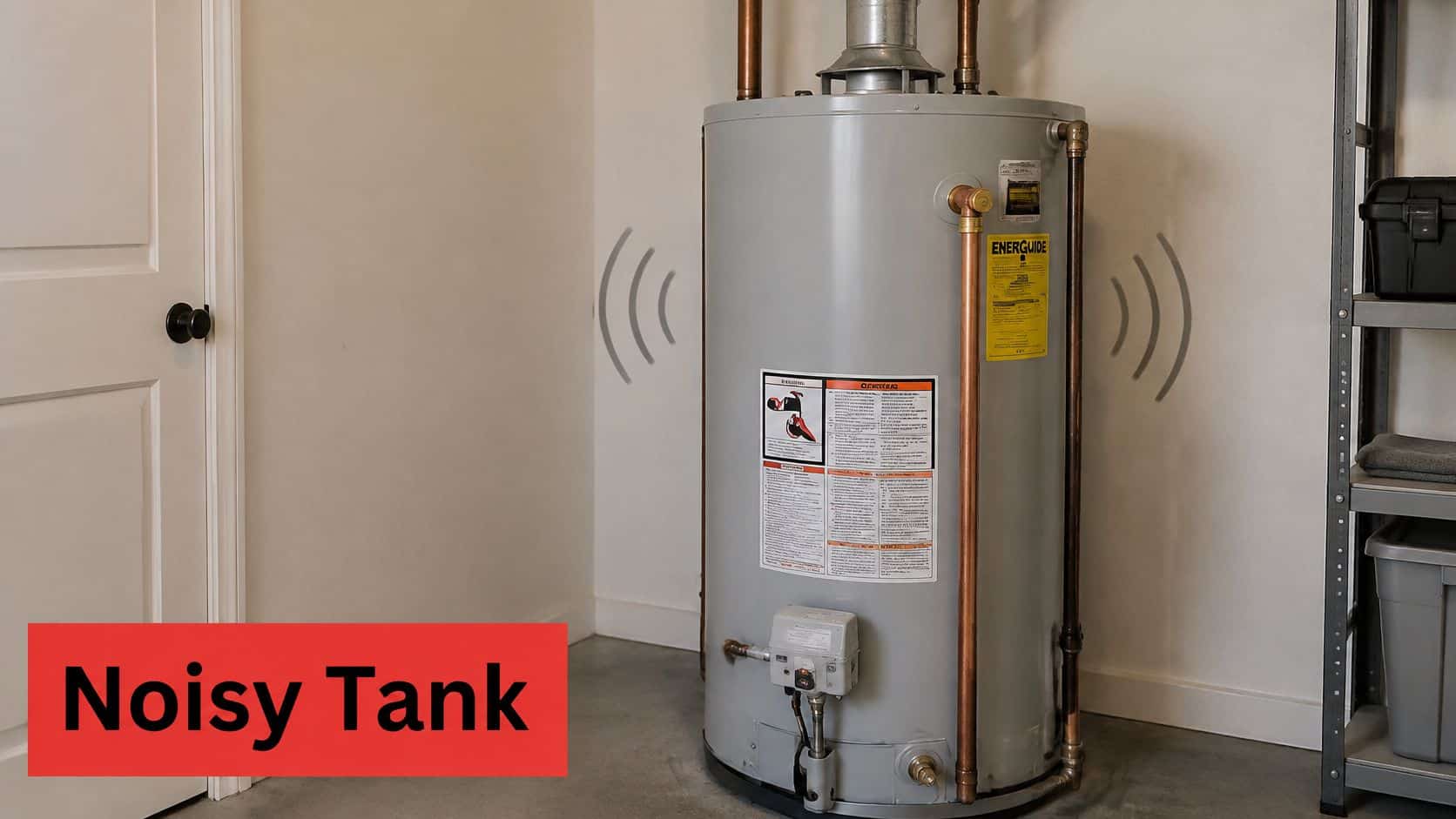
Las Vegas water carries a lot of dissolved calcium and magnesium. Heat drives those minerals out of solution and they settle on the tank floor as a crust. Water trapped beneath that crust boils and pushes steam through it, which is the pop or rumble you hear on every heating cycle.
What the Scale Is Actually Costing You
A Pacific Northwest National Laboratory review of hard-water performance data found that approximately 27 kg of accumulated scale, representing about 20 years of equivalent buildup at test sites, reduced gas water heater efficiency by roughly 5%, and that in electric units scale caused heating elements to fail periodically.
A 5% efficiency loss sounds minor until you add the element replacements and the lost capacity. The crust insulates the burner or element from the water it's trying to heat, so the tank runs longer, gets hotter at the bottom, and stresses the lining from the inside.
- Flush once a year, more often in hard water: supply off, tank depressurized, drain valve open until the water runs clear.
- Watch how fast the noise returns: if it's back within weeks of a flush, the layer has already hardened and flushing won't undo the damage.
- Treat the cause, not just the symptom: a softener or scale-control plan protects the next tank, not just this one.
Popping that returns within a month of a good flush is a tank problem, not a water problem.
A noisy 5-year-old tank gets flushed, softened, and watched. A noisy 10-year-old tank with a flush already on record gets a replacement price, because the bottom of that vessel has been running hot and dry for years.
4. Hot Water Runs Out Quickly or Stays Lukewarm
If a shower turns lukewarm sooner than usual, check whether the problem affects every hot-water fixture or just one. A change throughout the home points to the water heater; a single fixture may have a local issue.

In Las Vegas, hard water can leave mineral deposits inside a tank and reduce the hot water available. A faulty heating element, thermostat, or burner can cause similar symptoms, so the symptom alone does not prove the tank needs replacing.
Sediment, Element, or Burner
Heavy mineral buildup can reduce a gas tank's efficiency, so it uses more fuel to produce the same hot water. On an electric tank, a failed lower element can leave you with a short burst of hot water before it turns cold. A failed upper element may leave the water lukewarm from the start.
Have the elements and thermostat checked before deciding on replacement. MG Plumbing Services LLC offers water heater repair and replacement in Las Vegas for tank and tankless units. A repair may make sense when a component has failed and the tank is otherwise in good condition; replacement becomes more practical when the same problem returns or the tank is nearing the end of its service life.
- Track how long hot water lasts: Compare it with your usual routine to spot a lasting change.
- Check the cause before replacing: A failed element or thermostat may be repairable.
- Keep the thermostat near 120 degrees Fahrenheit: This reduces scald risk and can limit mineral fallout.
For a relatively young tank with one failed element, repair is usually the first decision to consider. If hot water still runs out quickly after a recent repair, or the tank is older and scaled, compare the repair cost with replacement.
5. Water Pooling or Leaking Around the Base of the Tank
Water on the floor is the one sign that doesn't wait for a convenient week. It's also the one where the location of the leak decides everything.
The U.S. Department of Energy water heater meeting materials instruct owners to check plumbing for leaks and corrosion and say leaks found during anode-rod service should be corrected immediately. The useful distinction: a leak at a fitting, the drain valve, or the temperature and pressure relief valve can often be repaired. Water seeping from the tank shell itself can't be, because the pressure vessel has failed and no patch restores that integrity.
Find the Source Before You Decide
Dry the floor with a towel and watch where water reappears. Check the nipples and fittings at the top of the tank, the drain valve at the bottom, and the relief valve discharge line. A DOE Weatherization Assistance Program guidance document lists a leaking primary tank and high carbon monoxide readings as case-by-case reasons to replace a water heater, which tells you how to weigh the evidence: failure location and safety first, age second.
On a gas unit, a carbon monoxide reading is its own emergency. Get people out, ventilate, and call for service rather than troubleshooting it yourself. If there's water on the floor right now, shut off the water supply and the gas valve or breaker at the panel before anything else.
For a leak you can't pin down, or one that shows up at the slab or in a wall near the heater, water leak detection narrows the source before anyone starts cutting drywall.
Decision rule: a fitting or valve leak on a sound tank gets repaired. Water coming through the tank body means replacement, and the only question left is how quickly it can be scheduled.
6. Pressure Relief Valve Frequently Dripping or Discharging
A relief valve that keeps dripping deserves attention, especially on an older water heater in Las Vegas, where hard water can contribute to wear and scale. The valve opens when tank temperature or pressure becomes unsafe. Discharge can point to high household pressure, overheating, a worn valve seat, or thermal expansion in a closed plumbing system.
A brief discharge during a heating cycle may be normal. A steady trickle, water flowing for hours, or a valve that will not close again calls for diagnosis. Do not cap or plug the discharge line; the valve must remain able to release pressure.
Pressure First, Valve Second, Tank Third
Check household water pressure before replacing the valve. If pressure is too high, a new valve may keep dripping until the pressure problem is addressed. If the system has a pressure-reducing valve or check valve, ask whether an expansion tank is needed to handle water expanding as it heats.
A five-year-old tank with a dripping valve may need a pressure check and valve repair. On an aging tank, repeated discharge is a reasonable reason to weigh replacement against another repair, particularly if the tank also shows other warning signs.
Decision rule: Repair a valve or pressure issue when the tank is otherwise sound. If discharge keeps recurring on an older tank, compare the cost and likelihood of another repair with replacement.
7. Rising Energy Bills and Frequent Repairs
Two numbers tell you a tank is finished: what it costs to run and what it costs to keep fixing. Neither is decisive alone. Together they usually are.
Sediment, worn elements, and tired burners all force the unit to work longer to deliver the same hot water, so the gas or electric bill creeps up while the performance creeps down. If you've paid for two or three repairs on the same tank inside two years, add them up. When the total starts approaching the price of a new installed unit, you're no longer maintaining a water heater, you're financing one in installments.
If You're Replacing Anyway, Compare the Whole Cost
A heat pump water heater field study published through the DOE data portal reports that heat pump water heaters can be two to four times as efficient as conventional units but may cost up to three times more to purchase and install, and that a 120-volt retrofit study found properly sized systems cut energy consumption by 80 to 85% versus existing gas or propane heaters. The same material notes efficiency depends heavily on water quality, which matters in a valley where scale shortens equipment life.
That trade-off is real. A heat pump needs floor space and clearance, a condensate path, a power source that can carry it, and a tolerance for slower recovery and some compressor noise. In a hard-water house it also needs a scale plan so the efficiency you paid for survives.
- Log every repair: date, part, cost. It turns a vague feeling into a defensible decision.
- Get the comparison in writing: itemized and flat rate, so repair and replacement sit on the same page.
- Ask what the water does to the new equipment: sizing and hardness control matter more than the brochure number.
We put flat-rate written estimates together before work starts, so that comparison is a document you can read at the kitchen table instead of a number shouted over a running shower.
How each replacement warning sign compares
| Item | Warning Level | Repair Possible? | Urgency | Best First Step |
|---|---|---|---|---|
| Water Heater Is 8 to 12 Years Old or Older | Elevated age-related risk | Sometimes; compare repair and replacement | Plan an inspection and replacement before failure | Check the manufacture date and have a licensed plumber inspect it |
| Rusty, Discolored, or Metallic-Tasting Hot Water | High; may indicate internal corrosion | Flushing may not resolve advanced corrosion | Prompt inspection, especially if discoloration persists | Compare hot and cold water, then contact a plumber if only hot water is affected |
| Rumbling, Popping, or Banging Noises from the Tank | Moderate to high; may signal sediment buildup | Often, if caught early | Arrange maintenance; inspect if noise returns after flushing | Schedule a tank flush or inspection |
| Hot Water Runs Out Quickly or Stays Lukewarm | Moderate; may be a repairable component issue | Often; elements or thermostats may be repairable | Arrange diagnosis if the problem persists | Ask a technician to test the heating element and thermostat |
| Water Pooling or Leaking Around the Base of the Tank | High; tank-body leaks require replacement | Fittings or valves may be repairable; tank leaks are not | Immediate action for active leaks | Shut off water and power or gas, then call a licensed plumber |
| Pressure Relief Valve Frequently Dripping or Discharging | High; a safety-related warning | Often; valve or pressure issues may be repairable | Promptly investigate; never block the discharge line | Have household water pressure and the valve checked |
| Rising Energy Bills and Frequent Repairs | Moderate to high; may indicate declining efficiency | Sometimes, but repeated repairs may not be worthwhile | Compare repair and replacement costs soon | Review repair costs and request itemized written estimates |
When Repair Stops Making Sense
A water heater that is aging and showing several warning signs calls for a replacement estimate, not another round of guesswork. One isolated, replaceable part on a younger tank may still make repair the better choice. In Las Vegas, hard water can accelerate scale buildup, so age matters most when it appears alongside recurring problems.
Start with the location of the failure. Thermostats, heating elements, valves, and fittings may be repairable. A corroded tank shell or a leak through the tank body means replacement; the vessel cannot be patched reliably.
Then weigh the tank's age and repair history. Add up what you have spent on repairs over the past two years and compare that total with the cost of replacement. A written estimate should identify the failed part, list repair and replacement costs, and explain any code requirements for the new installation.
Sizing matters too. A replacement tank that is too small can leave the household short of hot water. Choose capacity based on the household's actual demand to avoid repeating the problem.
Plan the replacement before a leak forces an urgent decision. MG Plumbing Services LLC provides residential water heater diagnosis, repair, and replacement in the Las Vegas Valley, with tank water heater installation that is code-compliant and permitted when required.
Visit MG Plumbing Services LLC to request a written, flat-rate comparison of repair and replacement. Se habla español.