Your water heater sits in the garage, mostly unnoticed, until you fill the tub and see a reddish tint or catch a sulfur smell at the hot tap. The heater still produces hot water, so replacing the whole unit feels premature. But something deserves a closer look.
For Las Vegas Valley homeowners, the useful question isn't whether to buy another water heater anode rod. It's whether the tank is sound, how much protective metal remains, and which replacement fits the water flowing through your home, especially if you use a sodium-based water softener.
Table of Contents
- What a Water Heater Anode Rod Actually Does
- The Electrochemistry Behind Sacrificial Protection
- Anode Rod Types and Which One Fits Las Vegas Water
- Warning Signs a Water Heater Anode Rod Is Failing
- Replacement Cost and When It Beats a New Heater
- DIY Replacement Versus Calling a Licensed Plumber
- What Las Vegas Hard Water Really Does to an Anode Rod
- When to Call MG Plumbing Services for Anode Rod Help
What a Water Heater Anode Rod Actually Does
Think of the anode as sacrificial metal, similar in concept to a protective zinc block on a boat hull. You accept wear on a replaceable piece so you don't lose the structure you're trying to preserve. Inside a storage water heater, that structure is the steel tank.
The tank's glass lining provides a barrier between water and steel, but it isn't flawless. Microscopic cracks, pinholes, weld areas, and damage can leave steel exposed. A more reactive anode material corrodes preferentially to protect those vulnerable surfaces, as explained in the technical overview of glass-lined tanks and sacrificial anodes.
The replaceable part protecting the tank
A water heater anode rod is a corrosion-control component, not a heating element. It doesn't heat your shower water, filter minerals, or remove sediment from the bottom of the tank. Its job is narrower and more important than many homeowners realize: preserving exposed steel inside the storage vessel.
The diagram shows that relationship between the protective rod and the tank.
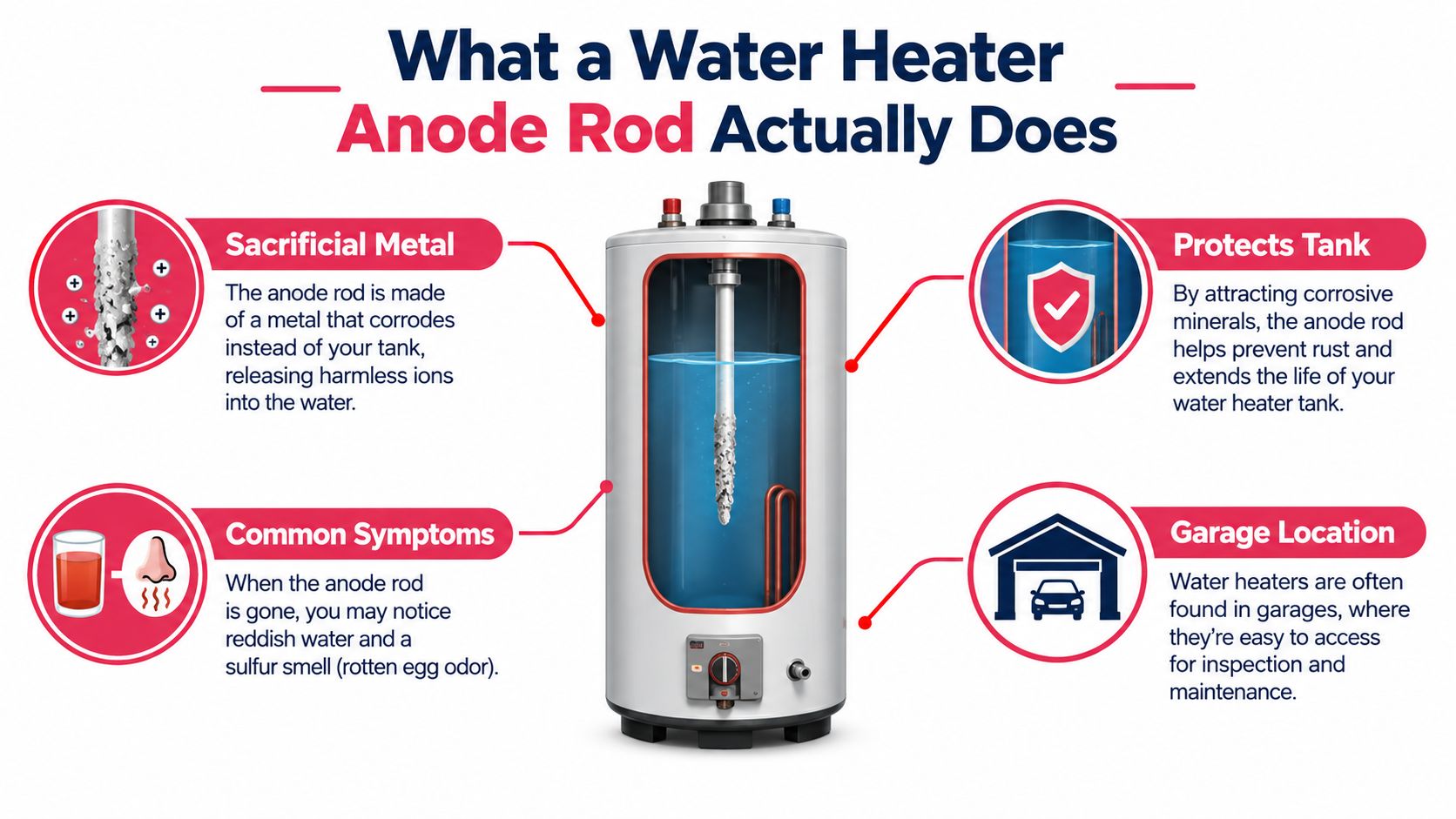
The sacrificial process starts when the tank fills with water. A rod that looks worn during an inspection may be doing exactly what it was installed to do. The concern is substantial depletion, not merely an unattractive surface.
- Normal consumption: Some deterioration is expected because the protective metal is intentionally expendable.
- Lost protection: Extensive consumption leaves less sacrificial material available to protect vulnerable tank surfaces.
- Separate maintenance needs: Anode inspection doesn't replace sediment maintenance, leak diagnosis, or checks of the heater's other components.
A functioning burner or electric element tells you the heater can produce hot water. It doesn't tell you whether the tank still has adequate corrosion protection.
That distinction matters when deciding whether maintenance is worthwhile. An intact tank with a depleted rod may be a candidate for service. A tank already leaking internally needs a different recommendation, not an accessory sold as a cure.
The Electrochemistry Behind Sacrificial Protection
Some metals give up electrons more readily than others. That's the useful part of the galvanic series for a homeowner: magnesium and aluminum-based anodes are selected because they're more electrochemically active than the steel they protect.
The rod oxidizes preferentially. The resulting electron supply suppresses oxidation at exposed steel surfaces, a process called cathodic protection. The anode replacement explanation from National Water Heater Authority describes the rod as a consumable protective electrode rather than a permanent heater component.
Why the same rod behaves differently between homes
The pictured rods provide a visual comparison, but appearance alone doesn't establish whether a replacement material is appropriate for a particular heater.
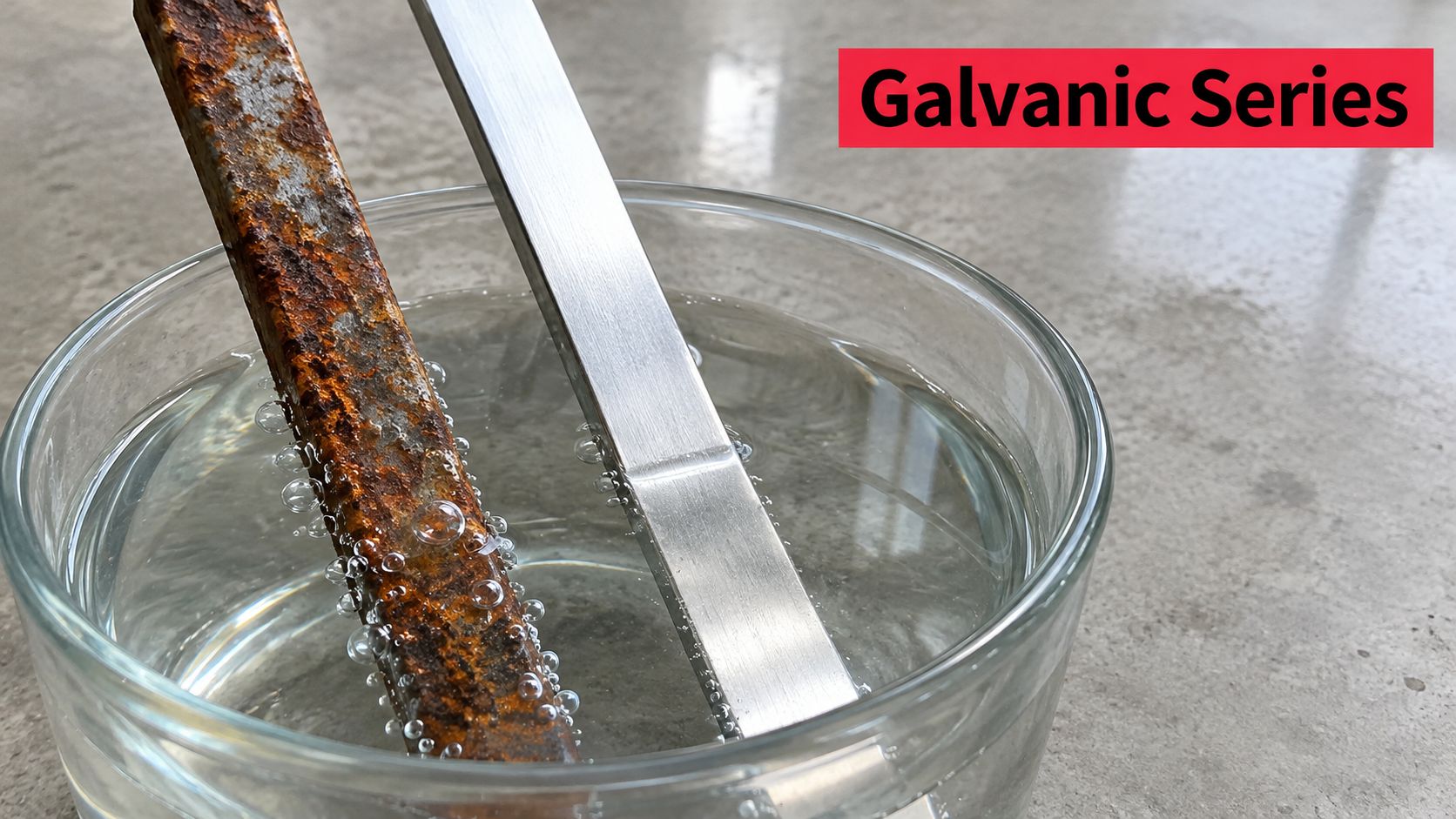
A homeowner shouldn't interpret a clean-looking metal rod as proof of suitable sacrificial protection. The correct material, compatible design, and actual remaining protective mass matter more than a polished finish.
Several operating conditions affect the chemistry:
- Conductivity: Water's ability to carry electrical current influences the electrochemical process.
- Hardness and treatment: Mineral content and water-softening equipment change the conditions inside the tank.
- Temperature and usage: Operating conditions and fresh-water turnover affect anode demand.
- Tank configuration and grounding: The installed system matters, not just the replacement part's label.
For a Las Vegas Valley home, hard-water concerns should prompt investigation rather than an automatic material choice. A household with untreated water and another with sodium-based softening may need different inspection intervals even when both have the same heater brand.
Practical rule: Choose the inspection interval from the rod's condition and the home's water conditions, not from a universal lifespan printed on a parts package.
Bradford White and Rheem tanks should be evaluated by model number and manufacturer instructions. A brand name alone doesn't establish anode access, dimensions, or replacement compatibility. The chemistry explains why inspection matters; the heater documentation establishes what can safely be installed.
Anode Rod Types and Which One Fits Las Vegas Water
Magnesium, aluminum, aluminum-zinc alloy, and powered anodes aren't interchangeable upgrades. Each represents a different compromise between protective activity, consumption, odor concerns, compatibility, and ongoing maintenance.
For Las Vegas homeowners, the first decision should be based on the tank's condition and water treatment setup. Buying the longest-lasting-looking rod without considering chemistry can miss the point of the protection system.
Anode Rod Options Compared for Las Vegas Hard Water
| Anode Type | Protection Strength | Hard-Water Behavior | Best Use Case |
|---|---|---|---|
| Magnesium | Generally stronger galvanic activity | May consume quickly in aggressive conditions | Compatible tanks where measured depletion remains manageable |
| Aluminum | Lower galvanic activity than magnesium | Often selected for slower consumption in harder water | Homes where magnesium depletion makes frequent service impractical |
| Aluminum-zinc alloy | Sacrificial protection with alloy-specific tradeoffs | Requires evaluation of deposits, compatibility, and odor concerns | A manufacturer-compatible option when odor is part of the diagnosis |
| Powered | Uses an electrically supplied protective current | Avoids relying on a dissolving sacrificial rod | Suitable tanks where electrical dependence and higher initial cost are acceptable |
Technical guidance identifies hardness above about 200 mg/L as a practical point where aluminum may be more appropriate than magnesium, not a rule that overrides manufacturer requirements or actual inspection findings. The same water-softener and water-heater guidance explains that rod dimensions also affect available sacrificial mass.
Protection strength isn't the only consideration
Magnesium can provide strong protection, particularly in relatively soft, low-mineral water. The tradeoff is faster consumption under some conditions, and possible sulfur-odor involvement when sulfate-rich water is present. A homeowner shouldn't assume that installing another magnesium rod will solve an existing odor complaint.
Aluminum and aluminum-zinc alloys deserve consideration when magnesium depletion or odor complicates maintenance. But aluminum isn't automatically better for every Las Vegas home. Deposits, water-quality effects, and manufacturer compatibility still need evaluation.
- Sacrificial options: Compare compatible materials alongside the labor required to inspect and replace them.
- Powered protection: Confirm the specified electrical connection, available outlet, installation requirements, and how operation will be monitored.
- Clearance and dimensions: Don't select a short rod merely because it fits above the tank without considering the reduction in protective material.
There's no defensible universal price band or guaranteed service life for these choices. Get an installed quote for the actual Bradford White or Rheem model, then compare maintenance requirements rather than treating the most expensive option as superior.
Warning Signs a Water Heater Anode Rod Is Failing
Symptoms justify inspection, but they don't prove anode failure. Discolored water, odors, noise, and moisture can involve different components or water conditions. Replacing a rod without identifying the source is a guess.
Use the visual checklist as a prompt to investigate, not as a diagnosis.
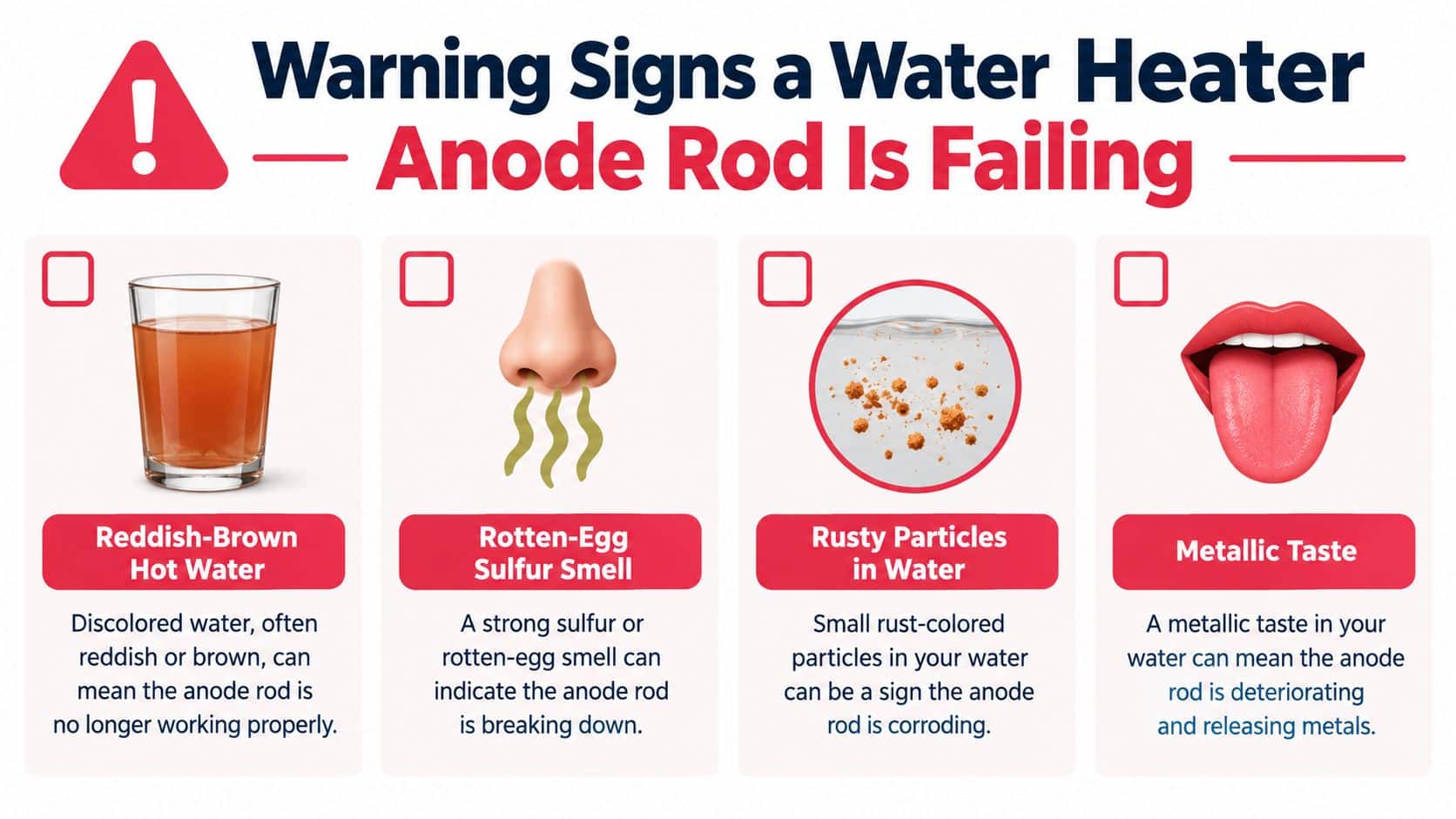
Separate corrosion clues from other problems
- Reddish or brown hot water: Note whether discoloration appears only on the hot side or also with cold water. Don't conclude that the tank has failed based on color alone.
- Rotten-egg odor at the hot tap: Report the odor alongside your softener setup and any recent changes. Water chemistry and anode material belong in the diagnosis.
- Popping or rumbling: Treat noise as a reason to assess sediment and scale conditions, not proof that an anode replacement will quiet the heater.
- Moisture at the base: Have the leak source identified. A leaking connection and a leaking tank shell require different repairs.
An anode inspection is more useful when performed before these symptoms appear. The U.S. Department of Energy technical meeting document recommends an initial inspection no later than three years after installation, followed by annual inspections until the condition establishes an appropriate replacement interval.
Keep a maintenance record you can use
Record the installation date, heater model, rod material, inspection date, and remaining diameter. Add photographs and note exposed core wire, pitting, odor complaints, temperature setting, and water treatment equipment.
That record helps distinguish a stable wear pattern from unusually rapid consumption. If the manufacturer calls for earlier inspection, follow its schedule rather than treating the DOE benchmark as permission to wait.
For additional visual context on anode maintenance, watch the following video.
A video can help you understand the task, but it doesn't replace the instructions for your particular tank or a diagnosis of active leakage.
Replacement Cost and When It Beats a New Heater
The useful comparison is a documented repair quote against a documented replacement quote. Generic dollar ranges don't account for a seized rod, restricted overhead clearance, integrated connections, or the condition of the rest of the heater.
The following graphic illustrates the categories to compare. Its displayed prices and age cutoff shouldn't be treated as a current Las Vegas estimate or a rule for your tank.
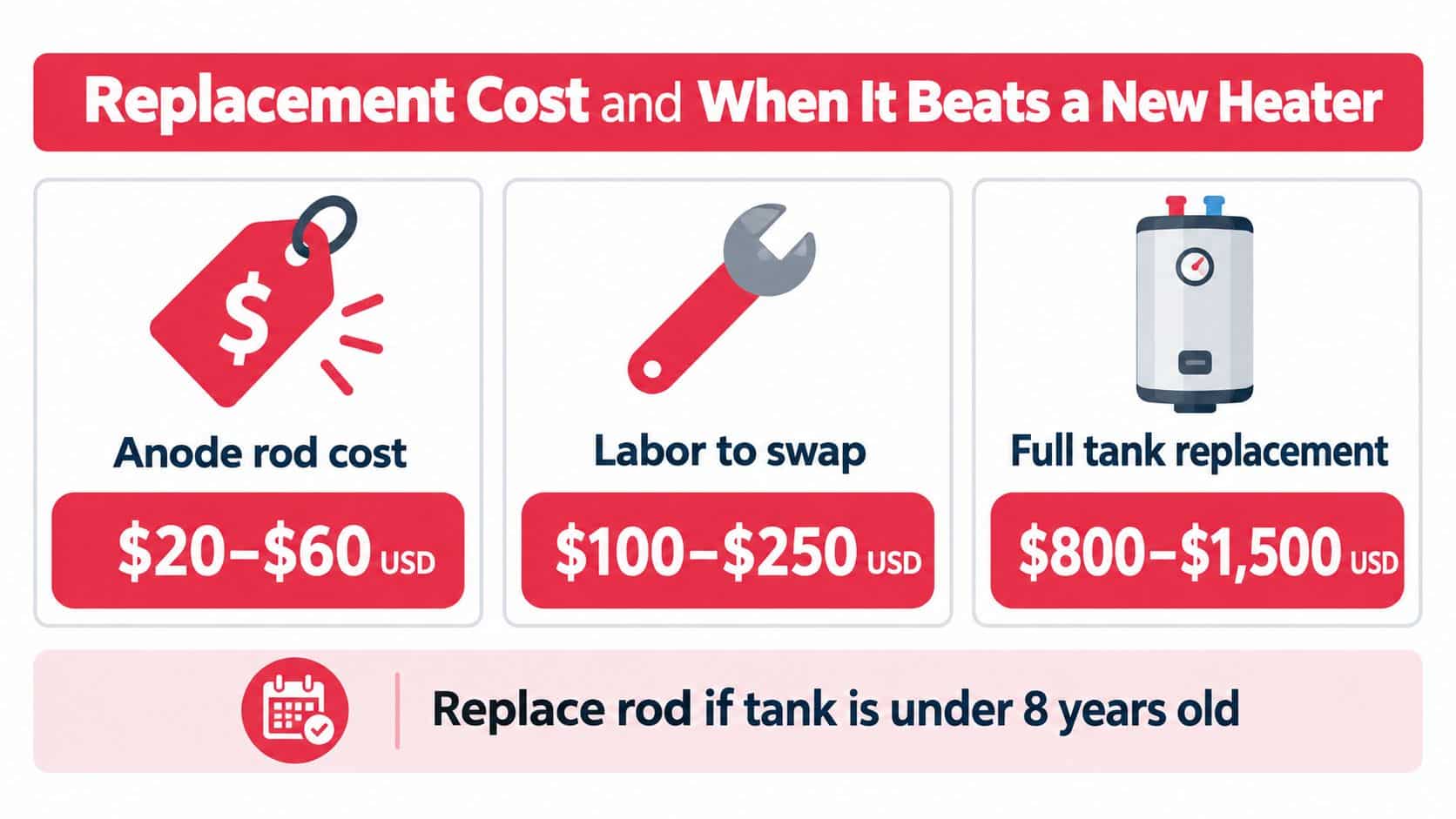
Compare scope before comparing totals
A rod replacement quote should identify the compatible part, access work, removal and installation, and leak testing. A full replacement quote should identify the proposed heater and the associated installation work. Otherwise, the totals may describe different levels of service.
| Decision | What should support it |
|---|---|
| Replace the sacrificial rod | A sound tank, serviceable connection, and documented depletion |
| Consider powered protection | Compatible installation and a maintenance-based comparison |
| Replace the heater | Confirmed tank leakage or other findings that make repair unsuitable |
| Continue monitoring | Adequate remaining material and a documented inspection interval |
The California Energy Commission assessment supports inspecting and replacing sacrificial anodes as needed to preserve water-heater performance and service life. It doesn't establish a universal financial break-even point for homeowners.
Spending money on a protective rod makes sense only if there's still a serviceable tank to protect.
Make the estimate specific to your installation
MG Plumbing Services provides flat-rate, written estimates before work begins, allowing homeowners to compare the proposed repair with replacement. Its plumbing cost-estimate information is a starting point for discussing scope, not a substitute for inspecting the heater.
For powered protection, compare the initial installed cost, electrical requirements, and ongoing operational checks against likely sacrificial-rod service needs. Don't accept a lifetime-savings claim without a clear explanation of the assumptions.
A newer tank isn't automatically worth repairing, and an older tank isn't automatically ready for disposal. Condition, compatibility, and the full diagnosis should determine the recommendation.
DIY Replacement Versus Calling a Licensed Plumber
An accessible anode in a sound tank can be a reasonable maintenance task for a capable homeowner. A seized connection, uncertain anode location, or unfamiliar fuel and electrical controls changes that decision quickly.
Start with the Bradford White or Rheem model-specific instructions. Don't assume every rod has a separate, exposed hex head at the top of the tank.
Tools and preparation
Have the correct socket, a suitable breaker bar, a drain hose, a bucket, protective gloves, and the manufacturer-approved replacement available. Use thread sealant rated for potable water and permitted by the installation instructions. The material, length, diameter, and connection must be correct.
- Make the heater safe: Shut off electrical power or fuel according to the manufacturer's procedure, and allow the water to cool.
- Isolate and depressurize: Close the cold supply, open a hot tap, and drain as directed before disturbing the anode connection.
- Remove carefully: Loosen the identified fitting and withdraw the rod without forcing it against the tank or nearby piping.
- Inspect before replacing: Document the rod's condition and confirm the replacement choice rather than automatically repeating the existing material.
- Refill and test: Restore the water supply, purge air, check for leaks, and confirm the tank is full before restoring heat.
Don't use this outline instead of the heater's service instructions. Access arrangements and shutdown procedures vary.
Know when to stop
A rounded hex head or stuck rod can turn a maintenance job into damaged piping or a compromised tank connection. If the heater moves, a nipple starts turning unexpectedly, or the fitting won't release safely, stop applying force.
Stop-work threshold: Protecting the tank is more important than winning a fight with a seized fitting.
Choose a licensed Nevada C-1d contractor when warranty conditions need review, access is difficult, the heater is power-vented or direct-vented, or you want a written diagnosis. For service availability, use the same-day residential plumbing appointment page.
Ask whether the actual scope triggers permits or code requirements. Don't assume routine anode maintenance and complete heater replacement have identical requirements.
What Las Vegas Hard Water Really Does to an Anode Rod
A softener changes the water entering the tank, but softened water doesn't automatically mean gentle conditions for an anode. Sodium alone isn't a sufficient explanation for accelerated depletion. Conductivity and the broader water chemistry deserve attention.
For a Las Vegas Valley homeowner, a current water report or suitable testing is more useful than a regional label. Don't assume every Henderson, Summerlin, or North Las Vegas home has identical hardness because the properties share a service area.
Local decision examples without guessing at outcomes
Consider a Henderson home with a Rheem tank and untreated water. If the homeowner reports a hot-water odor, the service decision should include anode inspection, material identification, and review of water conditions. A thin remnant would support replacement, but odor alone wouldn't establish what the rod will look like when removed.
A Summerlin townhouse using sodium-based softening presents a different maintenance question. If inspections reveal rapid consumption, compare the treatment setup and conductivity with the recorded wear pattern before changing materials. The written recommendation should explain both the replacement choice and the next inspection interval.
For a North Las Vegas rental with Bradford White equipment under warranty, documentation comes first. Record the model, installation history, warranty requirements, and maintenance findings before authorizing an alternative anode. These are decision examples, not claims about completed customer jobs.
Let inspection findings control the schedule
Manufacturer requirements can be more demanding than general maintenance advice. A Bosch minitank service bulletin specifies inspection at least annually and replacement every two years, with aggressive water potentially requiring annual or more frequent replacement. That schedule applies to the equipment covered by the bulletin, not automatically to every residential tank.
A defensible local checklist includes:
- Water treatment: Identify whether the heater receives softened or untreated water.
- Operating conditions: Record the temperature setting and household usage pattern.
- Physical evidence: Photograph depletion, exposed wire, and significant pitting.
- Compatibility: Confirm the approved material and dimensions for the heater.
- Follow-up: Put the next inspection date in writing.
The useful outcome isn't a blanket recommendation for aluminum or magnesium. It's a maintenance plan supported by the water conditions and the actual rod.
When to Call MG Plumbing Services for Anode Rod Help
Schedule an inspection when the maintenance history is unknown, depletion has been documented, or hot-water symptoms need diagnosis. Don't wait for a tank leak to establish whether protection remains.
A rod with roughly six inches or less of sacrificial material remaining, or extensive exposed core wire, generally warrants replacement evaluation under the anode inspection and replacement guidance. Any moisture at the base needs separate leak diagnosis; an anode can't repair an internally leaking tank.
Residential service across the Las Vegas Valley
MG Plumbing Services is a local, family-owned, owner-operated, licensed and insured residential plumbing company serving Las Vegas, Henderson, North Las Vegas, Summerlin, and surrounding communities. Owner Miguel Garcia is a Nevada-licensed C-1d plumbing contractor and journeyman plumber with more than 25 years of experience; homeowners can request diagnosis through the water heater repair service page.
The company provides straightforward recommendations, honest pricing, and quality workmanship. Its residential services also include:
- Drains and sewers: Clogged and slow drains, recurring blockages, main sewer cleaning, hydro jetting, sewer camera inspections and locating, and line diagnosis and repair.
- Leaks and water systems: Leak detection, water piping, pressure problems, shutoff valves, hose bibbs, water treatment, and softeners.
- Fixtures and general repairs: Toilets, faucets, sinks, showers, garbage disposals, and other residential plumbing repairs.
Professional drain-cleaning, hydro-jetting, sewer-camera, locating, and leak-detection equipment supports diagnosis rather than temporary fixes. Same-day appointments are available Monday through Saturday, 7:00 AM to 5:00 PM, with service in English and Spanish, as detailed in the company's service information. This is residential service, not a commercial or around-the-clock emergency offering.
MG Plumbing Services LLC offers water heater diagnosis, anode inspection and replacement when appropriate, and full tank replacement when the findings justify it. Call 702-480-8070 or visit MG Plumbing Services LLC to request service, and have your heater model, maintenance history, and water-softener information ready so the recommendation starts with your tank's actual condition.