

You flip on the shower and get a blast of cold water. Then you walk into the garage, see the water heater sitting quiet, and realize the pilot light won't stay lit again. In a Las Vegas home, that's not just an annoyance. It can be the first sign that the heater's combustion-safety chain is failing, which is why I treat it carefully before I touch a gas control or suggest any part replacement.
Older atmospheric gas water heaters depend on a standing pilot, a small flame that keeps a thermocouple, or similar flame sensor, hot enough to hold the gas valve open. If that flame goes out, or it gets too weak to heat the sensor, the safety control is supposed to shut the gas off. That's good engineering, but it also means a repeat outage can point to a real safety problem, not just a lighting mistake. The U.S. Consumer Product Safety Commission has reported an estimated 204 unintentional, non-fire carbon-monoxide poisoning deaths in 2021 tied to consumer products, and its guidance includes water heaters among fuel-burning appliances that need professional inspection of chimneys, flues, and vents. CPSC carbon-monoxide death estimate and inspection guidance
A pilot that keeps going out is the heater telling you something, and sometimes what it's saying is “stop relighting me and check the safety side.”
Table of Contents
- Why a Pilot That Won't Stay Lit Is More Than an Inconvenience
- Safety First and the Correct Relighting Sequence
- Reading the Pilot Flame Before Replacing Anything
- Matching Your Symptom to the Most Likely Cause
- Replacing the Thermocouple and Cleaning the Pilot Orifice
- Las Vegas Preventive Maintenance That Keeps the Pilot Lit
- Questions Las Vegas Homeowners Ask About Pilot Lights
Why a Pilot That Won't Stay Lit Is More Than an Inconvenience
A lot of homeowners treat a dead pilot like a flaky ignition problem. I don't. When I arrive at a house in the Valley and the homeowner says, “It lights, then dies,” I'm already thinking about flame quality, draft, gas supply, and whether the appliance still has enough combustion air to run safely.
The safety chain is doing its job, until it isn't
That little pilot flame does two things at once. It gives you hot water, and it proves the heater is burning in a controlled way. If the flame disappears, gets weak, or doesn't fully heat the sensing tip, the valve is supposed to close, which keeps unburned gas from flowing into the room.
The hidden risk is incomplete combustion. If venting is blocked or the burner compartment isn't getting enough air, the appliance can appear to be operating normally while carbon monoxide builds up. That's why I don't want anyone repeatedly bypassing the issue with guesswork, tape, wire, or a forced reset.
The symptom is data, not drama
A pilot that relights and then drops out can mean a dirty pilot orifice, a defective thermocouple, unstable gas pressure, a draft problem, or bad venting. The same symptom can also appear on newer units in a different form, where electronic ignition, flame sensing, control boards, or power venting are the underlying issue. The age and design of the heater matter, which is why model-specific service information beats internet folklore every time.
If the flame is yellow, soot appears, or a CO alarm sounds, treat that as a stop condition. Shut the appliance off if it's safe to do so, leave the area if you need to, and get qualified service. Repeated relighting is not a troubleshooting strategy when the safety chain is already signaling trouble.
Safety First and the Correct Relighting Sequence
The first move is simple. Smell for gas before anything else. If you catch a gas odor, don't relight the heater, don't flip switches, and don't keep troubleshooting in the room. Leave the area and contact the gas utility or a qualified professional.
If there's no odor, confirm that the manual gas shutoff is open, ventilate the space, and wait at least five minutes before trying again. That wait matters because it gives any lingering gas time to dissipate. Then follow the manufacturer's lighting label on the heater itself, not a generic guess from memory.
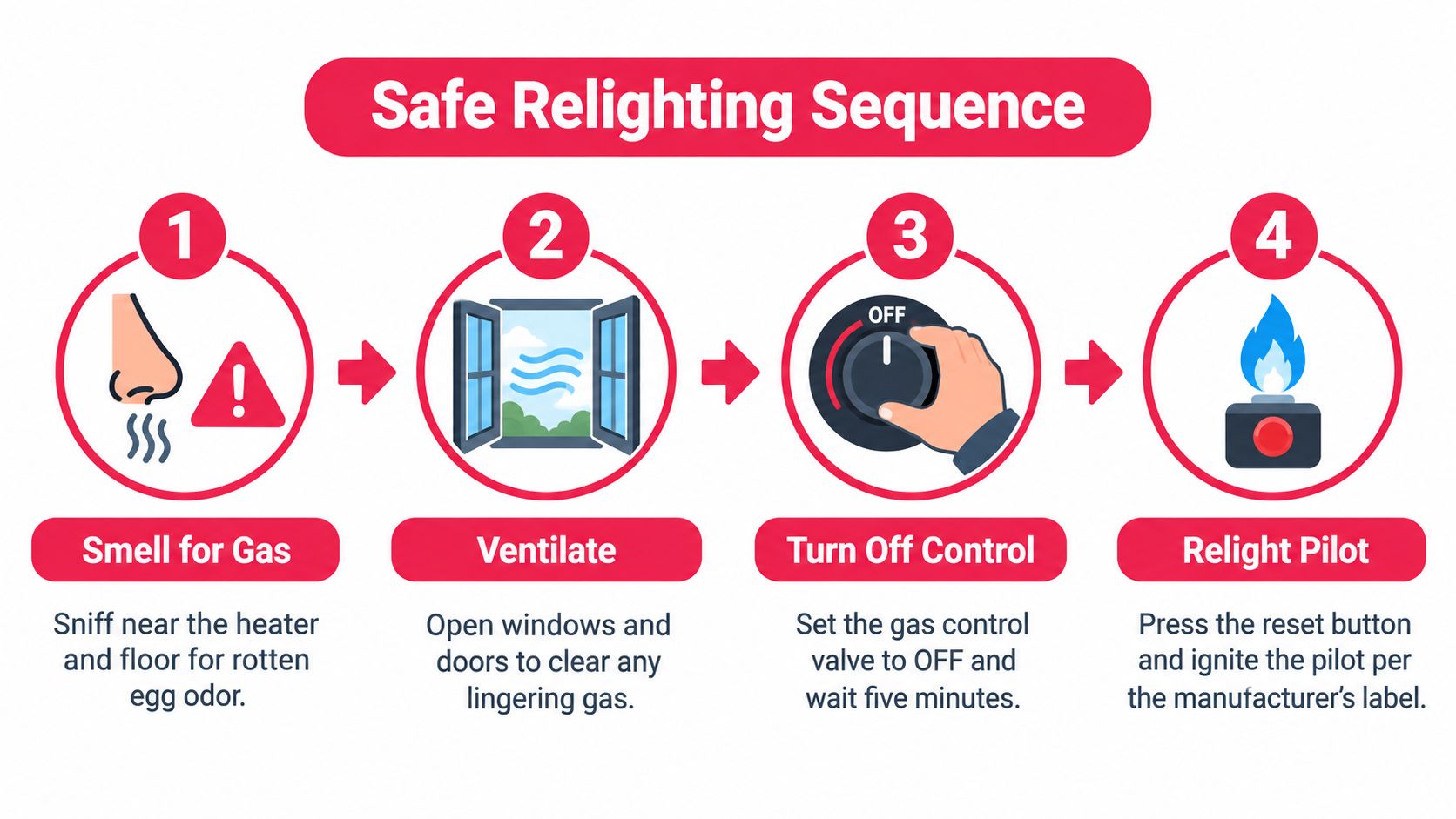
If your heater has a video walkthrough available, use it only after you've confirmed the room is safe and the gas odor question is settled. The relight sequence itself is only useful when the environment is already safe, which is why the order matters more than the button presses. MG Plumbing Services video library
Follow the label, not a shortcut
Turn the control knob to OFF, wait, then move it to PILOT. Press and hold the reset button while lighting the pilot, and keep holding it for the full time shown on the appliance label. Release it slowly and watch whether the flame stays lit.
Practical rule: never force the reset control to stay depressed and never bypass the flame-safety circuit.
If the heater won't stay lit, or if the flame comes back yellow, unstable, or sooty, stop there. CPSC guidance says not to continue relighting when gas is smelled, and it recommends the gas supplier, utility, or a qualified contractor when the pilot won't remain lit or the appliance doesn't operate properly. A water heater with a CO alarm event belongs in that same bucket.
Reading the Pilot Flame Before Replacing Anything
I see a lot of homeowners go straight to the thermocouple because it's the part everyone talks about. That's backward. A bad flame profile can cause the same symptom, and it's usually easier to spot than a failed sensor.
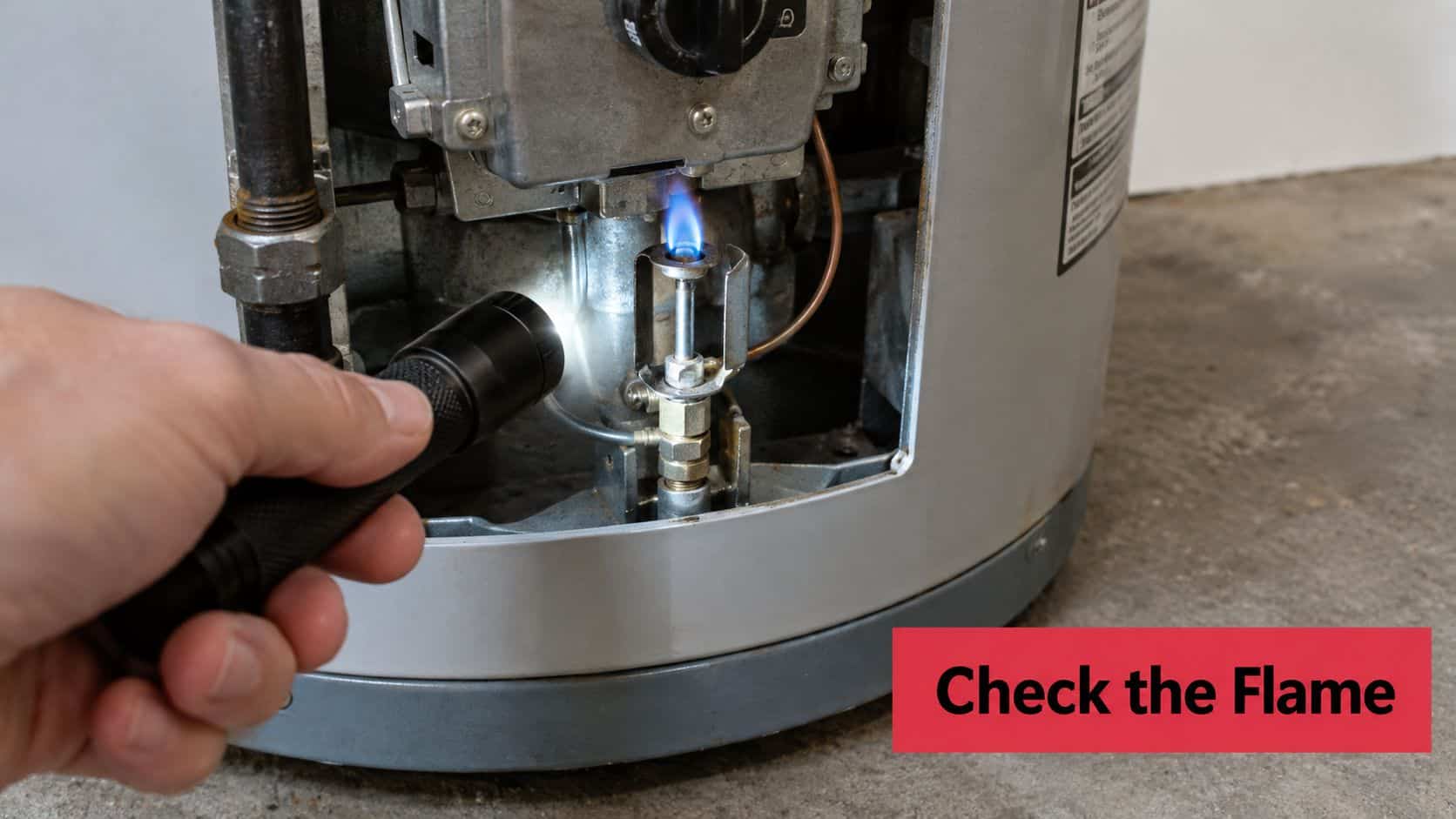
The flame should be predominantly blue and should fully engulf the thermocouple tip. Bradford White service instructions specifically call for adjusting the thermocouple tip so it is fully engulfed by the pilot flame, then running the pilot for three minutes before checking output. The CPSC also says gas-water-heater pilot flames should be blue, and a yellow or orange flame should be adjusted by a trained service representative. Bradford White flame-position guidance
What the flame is telling you
A yellow or orange flame usually points toward a weak or dirty pilot, not automatically a bad thermocouple. A flame that wavers, leans sideways, or barely touches the sensing tip can mean restricted air, a blocked pilot orifice, a dirty pilot tube, or a draft issue. Soot on the burner floor tells the same story, because soot doesn't show up when combustion is clean.
Bosch's service guidance adds another useful checkpoint for certain appliances, the thermocouple output should be 24 mVDC or greater on the referenced models. That doesn't mean every heater uses the same benchmark, because the meter reading depends on the valve, test setup, and whether the measurement is open-circuit or under load. But it does show why flame position and gas pressure get checked before anyone swaps parts.
The visual test that saves time
Look for three things in this order. Color, stability, and contact with the thermocouple tip. If the flame looks healthy but misses the tip, the sensor can still drop the gas valve even though the flame is clearly there.
If the pilot flame doesn't fully wrap the sensor, the thermocouple can't do its job, even when the heater looks like it's lit normally.
That's why a quick flashlight inspection is worth more than a blind parts run. It separates a flame problem from a sensor problem before money gets spent.
Matching Your Symptom to the Most Likely Cause
A pilot that will not stay lit usually points to one of four trouble spots, and the symptom tells you which one deserves attention first. On a real call, I sort them in this order: thermocouple or thermopile trouble, a dirty pilot orifice, a gas control valve issue, or a combustion-air and draft problem.
| Pilot Dropout Symptoms and Most Likely Causes | |||
|---|---|---|---|
| Symptom | Likely Cause | Distinguishing Clue | DIY or Pro |
| Flame dies the moment the button is released | Thermocouple not sensing enough heat | Pilot looks small, tip isn't fully engulfed, or output tests low | DIY only if you can test correctly, otherwise pro |
| Flame is weak, yellow, or hissing | Dirty or partially blocked pilot orifice | Flame won't grow even on full pilot flow | DIY if you're comfortable with appliance cleaning, otherwise pro |
| No audible pop or click as the control returns to PILOT | Gas control valve issue | Valve may not be closing correctly | Pro |
| Pilot drops out on windy days or after remodel changes | Draft or combustion-air problem | Nearby doors, utility closet changes, or other gas appliances behave oddly | Pro |
Las Vegas homes add their own complications. Desert dust settles in burner compartments, garage installations put the pilot in a tougher spot, and a remodeled utility closet can leave the heater short on air. The National Board notes that gas water heaters installed in garages should have the pilot light 18 inches above the floor because ignitable vapors can collect low to the ground. National Board garage pilot-height guidance
What to do with the clue you found
If the flame dies as soon as you release the button, start with the thermocouple or thermopile, the safety sensor that tells the gas valve there is flame. If the flame stays lit until the main burner comes on and then drops out, look harder at airflow, venting, or gas pressure. If other gas appliances in the home are acting up too, the problem may be upstream of the water heater.
That distinction saves money and time. A thermocouple swap will not fix a supply problem, and it will not cure a venting fault hiding in the background. Match the repair to the diagnosed cause.
Replacing the Thermocouple and Cleaning the Pilot Orifice
A thermocouple is a straightforward part, but it should be replaced only after testing points to failure. Bradford White's service procedures show that some models should read 20 to 30 millivolts on the thermocouple test, while another procedure treats readings below 13 or 20 millivolts, depending on the setup, as grounds for replacement. A separate manufacturer bulletin also describes open-circuit millivoltage testing and ignition timing benchmarks for burner cycling. Bradford White thermocouple service manual Manufacturer bulletin on open-circuit millivoltage testing
What a careful DIY repair looks like
Shut off the gas first. Disconnect the thermocouple lead at the gas control, remove the old thermocouple from the burner assembly, and install the correct replacement without over-tightening the connection. Reconnect the lead finger-tight plus a quarter turn, then follow the relight sequence from the heater label.
For the pilot orifice, don't stab it with wire or a drill bit. That can enlarge the opening and change the gas-air mixture, which creates a lazy flame or a combustion problem that's worse than the original issue. Use compressed air or the manufacturer's approved cleaning method, and stop if the access or the gas line setup makes the work uncomfortable.
When to stop and bring in a technician
If the pilot drops out after a new thermocouple is installed, don't keep swapping parts. Verify the flame is fully engulfing the tip, then move on to gas pressure, pilot stability, venting, and the valve itself. Bosch's troubleshooting guidance says a qualified gas technician should verify inlet gas pressure and thermocouple output, and that's the right place to be once the obvious flame issues are ruled out. Bosch troubleshooting guidance
I'll use MG Plumbing Services LLC as one local option for a residential water-heater diagnosis when the issue has moved past a simple cleaning or sensor swap. They handle gas-unit pilot-light problems, including pilot, thermocouple, and gas valve issues, with model-specific diagnosis instead of blind replacement. Water heater repair service in Las Vegas
Las Vegas Preventive Maintenance That Keeps the Pilot Lit
A pilot that needs repeated relighting often reflects conditions around the heater, not just a failed part. Las Vegas homes expose water heaters to hard-water scale, desert dust, garage storage, and remodels that can restrict combustion air. Preventive maintenance targets those conditions before a weak flame becomes a no-hot-water call.
The local conditions that matter here
Minerals can narrow the pilot orifice and coat burner ports. Fine dust can settle in the burner compartment, especially after a dry summer or monsoon season. After heavy weather, inspect that compartment for dust and debris before operating the heater. Do not brush debris into the burner orifice. Use the manufacturer's cleaning procedure, or have a technician do it.
A remodeled laundry room or utility closet also deserves attention. A new door, enclosure, or storage shelf can reduce the combustion air the heater previously received. Keep the manufacturer's required clearances open, and arrange a professional inspection if the room's layout has changed.
Garage installations require the pilot location to remain compliant with the 18-inch elevation guidance noted earlier. Keep chemicals, fuel containers, paint, and other flammable storage away from the heater. Wind can also affect an exposed or poorly protected vent termination, so a technician should check draft and vent connections if the flame becomes unstable during windy weather.
The habits that actually help
Flush a tank on a regular schedule suited to Las Vegas hard water. Scale can collect at the bottom of the tank and reduce heating performance, while sediment can disturb burner operation. If the drain produces heavy sediment, stop before the discharge damages flooring or overwhelms the drain, and schedule service if you cannot control the flow safely.
Use this practical checklist:
- Flush sediment: Remove accumulated water and sediment according to the manufacturer's procedure.
- Inspect venting: Look for blockage, loose connections, corrosion, or dust on the draft hood.
- Check the burner compartment: Inspect after dusty conditions and summer monsoon weather.
- Clean the orifice carefully: Use compressed air or an approved method, never metal wire.
- Check the thermocouple condition: Look for soot, corrosion, or poor flame contact.
- Book a professional inspection after a remodel: Combustion-air changes are easy to miss.
The first cool weather is a useful service window. A technician can check flame stability, venting, combustion air, and sediment before the heater is needed every day. If the pilot still drops out after cleaning and routine maintenance, stop resetting it and arrange a gas-appliance diagnosis rather than replacing parts at random.
Questions Las Vegas Homeowners Ask About Pilot Lights
Is a standing pilot the same thing as electronic ignition?
No. A standing pilot burns continuously and keeps the thermocouple, or similar flame sensor, warm. That is the older atmospheric setup many homeowners picture when a pilot will not stay lit. Electronic ignition lights the main burner only when the heater calls for heat, so a failure may involve the igniter, flame-sensing circuit, control board, or venting rather than a pilot assembly.
Check the heater type before ordering a part. A newer gas-fired instantaneous heater may not have a standing pilot at all. Its fault code, ignition sequence, and model-specific service information determine the correct diagnostic path.
Why does the garage location matter so much?
The garage answer starts with installation records, not another thermocouple replacement. Confirm the heater model, installation date, elevation above the floor, and any inspection or permit paperwork. The 18-inch garage elevation requirement discussed above should be documented, especially if the property has changed hands or the heater was replaced.
For a landlord or property manager, photograph the heater and surrounding storage, record the date and exact symptom, and ask the tenant whether remodeling, new cabinets, or stored materials changed the area. Keep the service report with the property file. If the installation appears low, obstructed, or different from the approved setup, arrange an inspection instead of asking a tenant to keep relighting it.
What if other gas appliances in the house are acting strange too?
Call the gas utility first. A thermocouple replacement cannot resolve an upstream supply-pressure problem. If the stove, furnace, or another gas appliance is also behaving unusually, stop forcing the water heater to relight and report the pattern to the utility or a qualified contractor.
If you smell gas, leave the building and avoid switches, flames, and further troubleshooting indoors. Contact the utility from a safe location.
What should a landlord or property manager do?
Document the symptom, heater location, model, and any gas odor, soot, yellow flame, or carbon-monoxide alarm event. Record whether other gas appliances operate normally and whether the utility room or garage changed after a remodel or storage change. A repeated outage deserves a service diagnosis, not closure as a simple relight.
For cost planning, review the MG Plumbing Services estimate page to understand how a qualified diagnostic visit may be handled before work begins. If the heater will not stay lit after a safe relight attempt, call 702-480-8070 during business hours.
MG Plumbing Services LLC handles residential water-heater repairs, including pilot-light, thermocouple, and gas-valve problems, across Las Vegas, Henderson, North Las Vegas, Summerlin, and nearby areas. Visit MG Plumbing Services LLC to request service and arrange a qualified diagnosis during business hours.