A deep rumble from the water heater can sound alarming, especially when it starts during the first morning shower and stops once the burner shuts off. The timing often offers a better clue than the volume: a sound tied to heating points to a different problem than a bang when a faucet closes or a hiss from a safety valve.
For Las Vegas Valley homeowners, hard-water mineral buildup is a common reason a tank rumbles. The noise alone doesn't prove the heater is failing, but it's useful information. Note when it happens, check for warning signs, and avoid flushing a tank if its condition makes that unsafe.
Table of Contents
- Why a Water Heater Rumbles When It Heats
- Matching the Sound to Its Most Likely Cause
- How to Check the Symptom Safely at Home
- Red Flags That Mean Stop and Call Now
- Repair, Flush or Replace Depending on the Evidence
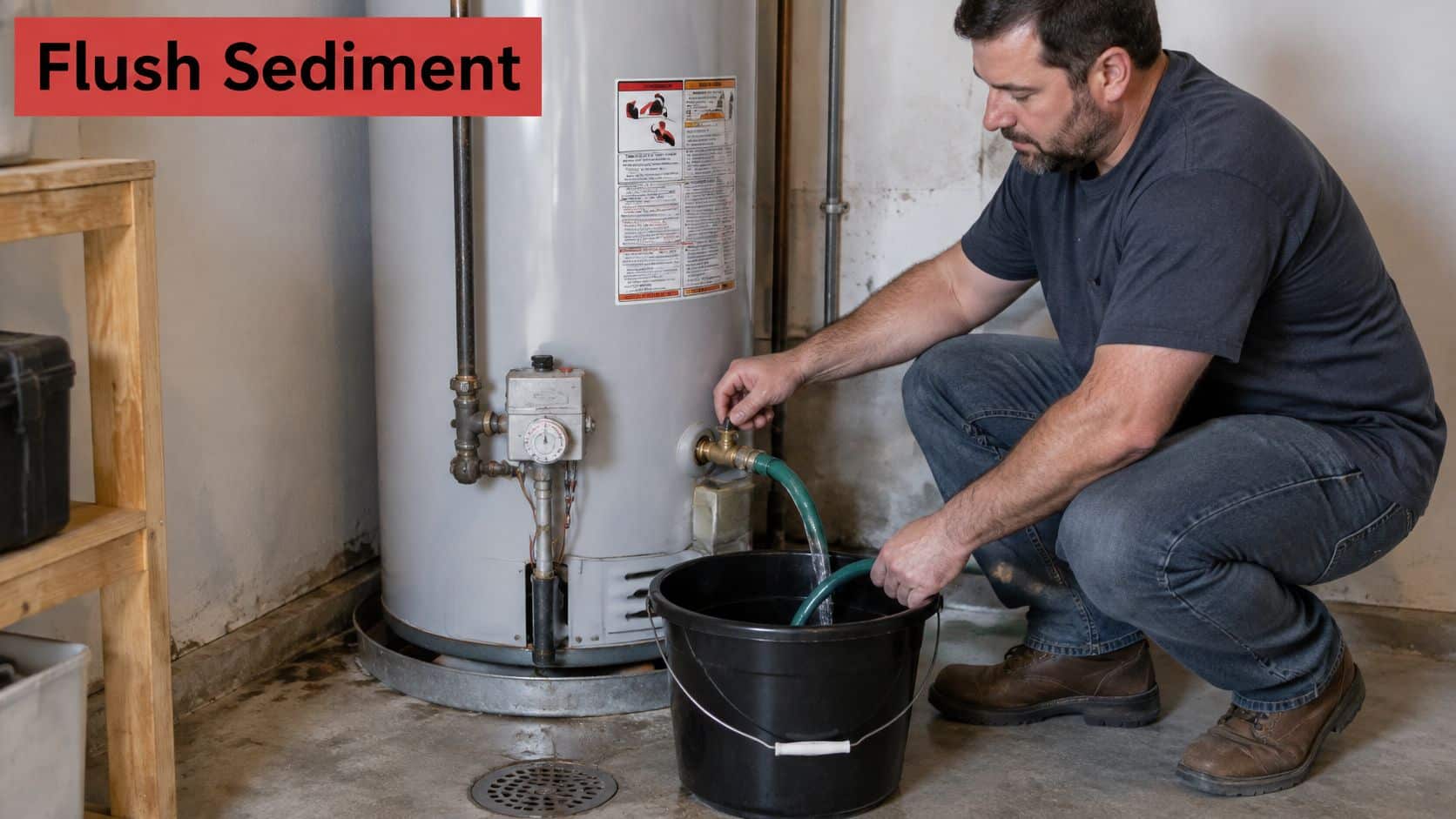
- How to Flush a Tank to Remove Sediment
- Schedule an Inspection Before the Noise Gets Worse
Why a Water Heater Rumbles When It Heats
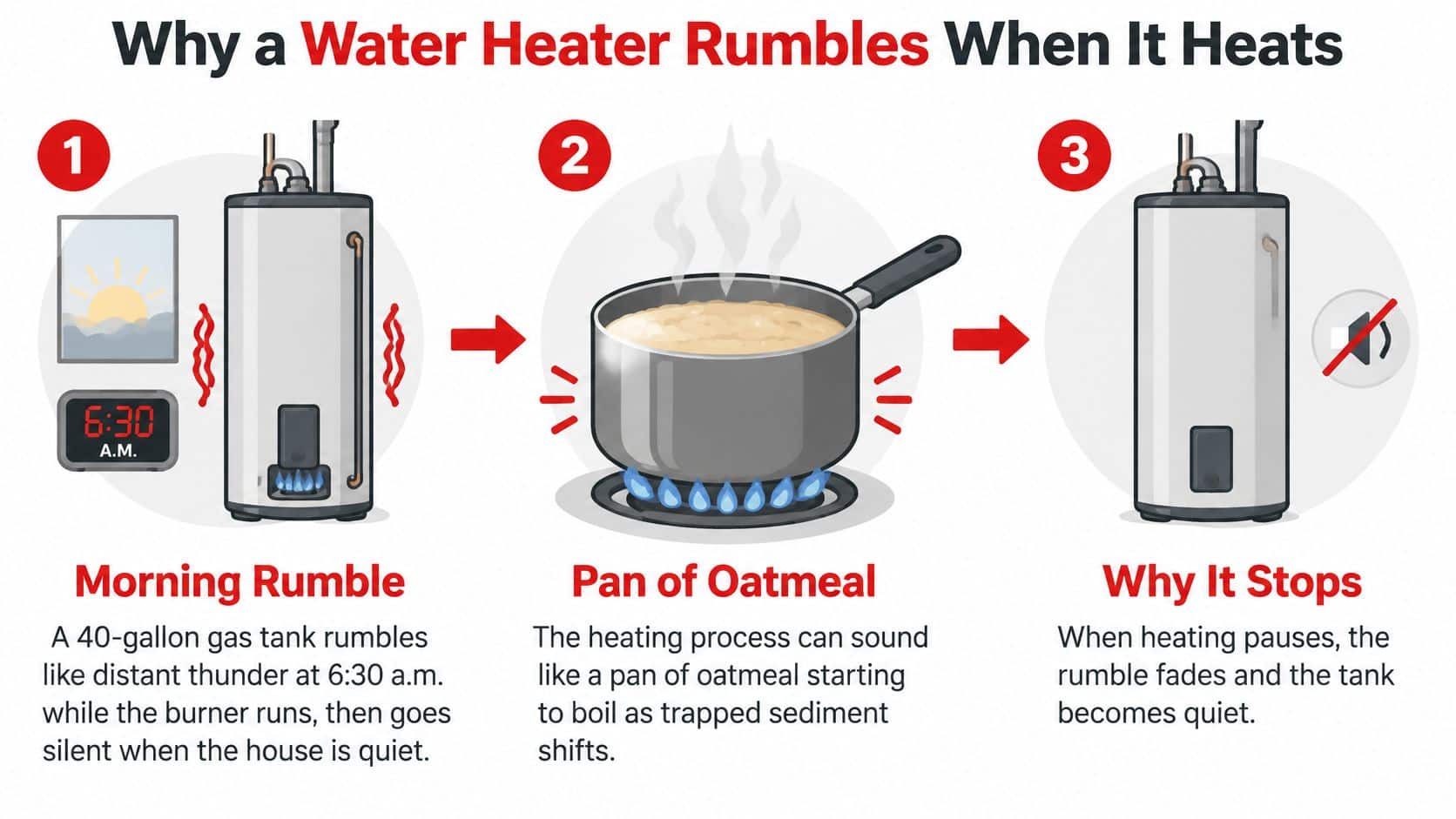
At 6:30 a.m., a 40-gallon gas tank may rumble like distant thunder while its burner runs, then go quiet when the house settles. That on-and-off pattern is a helpful clue. A layer of material on the tank's base can change how heat reaches the water, much like oatmeal scorching on the bottom of a pan while the surface is still warming.
In hard water, minerals such as calcium and silica can precipitate out and collect at the bottom of a storage tank. The deposits coat the burner area in a gas unit or build around an electric heating element. Water trapped beneath or within that layer heats unevenly, flashes into steam, and produces bubbles that collapse or push through the sediment. That's what can create a rumbling, popping, or crackling sound. A 2024 review of residential hot-water systems identifies hard water, silicates, sulfates, and suspended solids as contributors to scale or sediment formation.
The Las Vegas Valley's mineral-heavy water makes buildup a familiar issue in local homes. Sediment can reduce hot-water capacity and insulate the heat source, so the burner or element may run longer to heat the tank. Where mineral loading is high, deposits can also contribute to faster wear.
Practical rule: A rumble that starts during heating, often after someone uses hot water, is more suggestive of sediment than a sound that continues when the heater is idle.
Noise alone doesn't prove imminent failure. Persistent rumbling is a condition signal worth investigating, particularly if recovery takes longer or the sound is getting worse. What does the sound pattern suggest, what can you safely check, and when should a professional take over?
Matching the Sound to Its Most Likely Cause
Start with timing. A sound that occurs while a burner or element is firing points toward the tank's heating process; noise when the heater is idle, or banging when a cycle changes or a faucet closes, may come from the plumbing instead. Match both the sound and its timing before deciding what to check.
| Sound | When it happens | Likely cause | First check |
|---|---|---|---|
| Rumbling or boiling | While burner or element is firing, often after hot-water use | Sediment or scale on the tank bottom | Note timing, tank age, and water hardness |
| Popping or crackling | During heating cycles, getting louder over time | Steam pockets trapped under mineral deposits | Check for sediment in the drain discharge |
| Sizzling or hissing | While heating, close to the element or burner | Sediment contacting the heat source | Look for sediment at the drain valve |
| Banging or knocking | At cycle changes, or when a faucet closes | Pipe expansion or water hammer, not the tank | Check pipe straps and household pressure |
| Steady hum or vibration | Continuous, often when no hot water is drawn | Loose panel, mounting, or pump on hybrid units | Check cabinet and mounting for looseness |
| Whistling or hissing from valve | Any time, often with dripping | Relief valve discharging | Treat as urgent; see the red flags section |
Sound quality can help narrow the cause, but it isn't a complete diagnosis. An A. O. Smith installation manual distinguishes sediment-related sizzling or hissing near the heat source from rumbling or boiling. A noise at cycle changes, by contrast, may come from pipe movement rather than deposits inside the tank.
The last row is a safety signal, not an ordinary noise complaint. If you hear a hiss or whistle at the relief valve, particularly with water dripping or discharging, treat it as urgent. When symptoms fit more than one row, follow the more urgent possibility first and use the red-flag guidance below if you notice a safety concern.
How to Check the Symptom Safely at Home
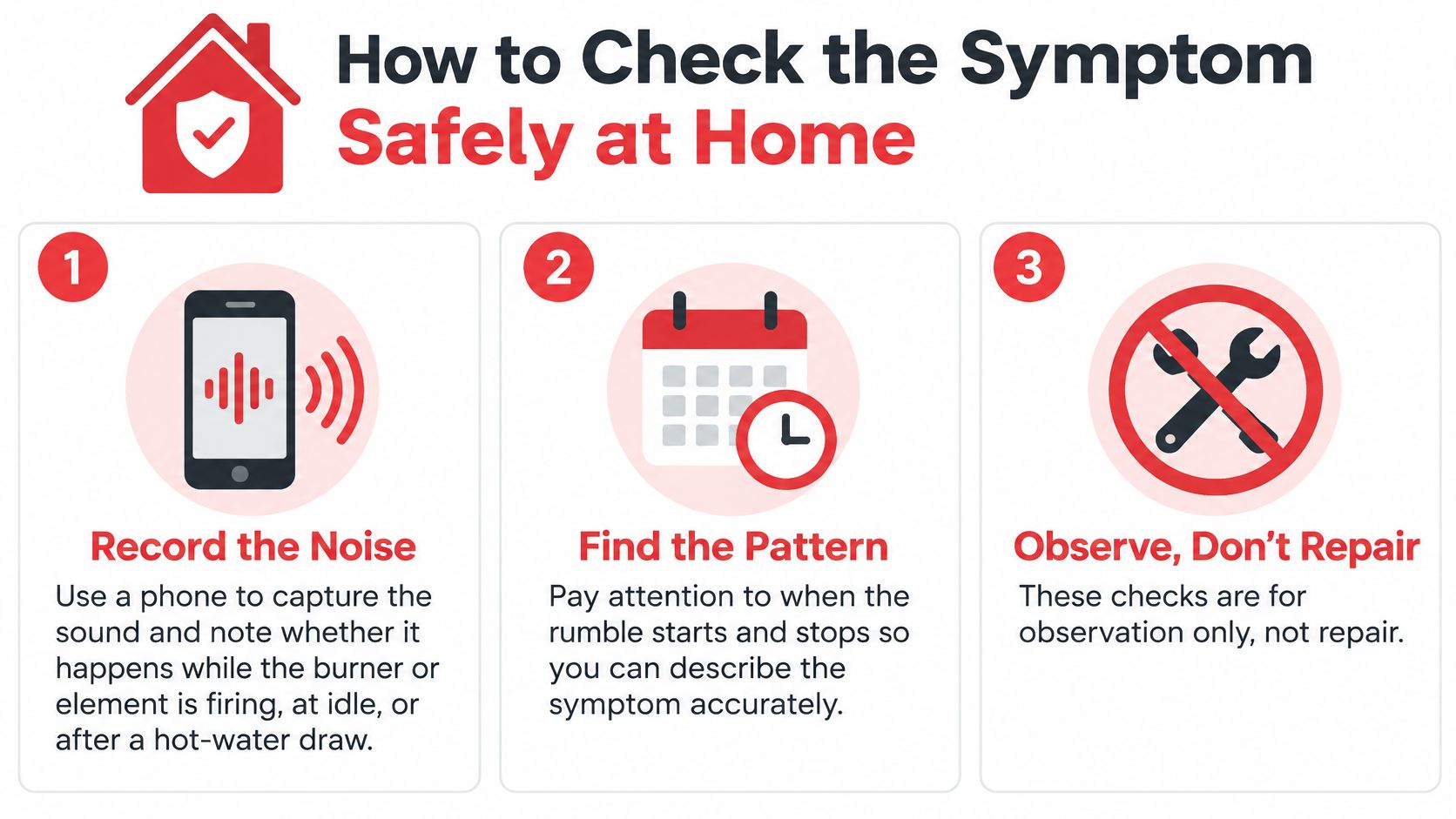
A rumbling tank is safe to observe from a few feet away, and the most useful thing you can capture is when the sound happens. These checks stay at the level of observation. Don't open the burner or electrical compartment, test a hot discharge pipe, or adjust a safety control. What you record here gives a technician a head start on the diagnosis.
Time the noise against the heating cycle. Use your phone to record the sound, then note whether it happens while the burner or element is firing, while the tank sits idle, or right after a hot-water draw. Timing is what separates a heating-cycle rumble from a pipe or vibration noise, so write down the trigger along with the sound itself.
Find the tank's age and fuel type. Read the data plate and note the year, whether the unit is gas or electric, and whether it shows signs of past service. Don't remove a cover to get this information.
Look for moisture or corrosion. Check the floor, tank base, and visible seams for pooling water, staining, or rust-colored water. Don't touch hot surfaces or move a wet heater.
Observe the relief valve and its discharge pipe. Look for dripping, discharge, or a missing or improperly installed pipe, but don't touch, cap, block, or remove the valve. Federal safety material on water-heater relief valves warns that a defective valve may fail to reduce pressure, creating rupture and burn hazards; a discharge or valve problem needs prompt professional attention.
Check for gas or burning odors. If you smell gas or something burning, stop the inspection and follow the urgent actions in the red-flag section. Don't try to diagnose a burner or wiring problem yourself.
Read the thermostat without changing it. A CPSC technical publication identifies 120°F as a setting that can reduce bathroom burn hazards. Ask a qualified professional before changing any thermostat setting.
Keep a dated log. Note what you saw and whether hot water recovers at its usual pace. Stable noise without other warning signs supports scheduling a routine check, while a leak, relief-valve discharge, or odor changes the urgency.
For a visual overview of the symptom and safe observation, use this video:
Red Flags That Mean Stop and Call Now
A steady rumble with normal hot water, no leaks, and no unusual smell is generally safe to run short term while you log the sound and book a routine check. Stop using the heater and call when a sign below is marked Immediate or Same day.
| Sign | Urgency | Action |
|---|---|---|
| Gas odor, yellow flame, or soot | Immediate | Leave the home and call the gas utility or 911 from outside |
| Burning smell or scorched wiring | Immediate | Turn off power at the breaker and call a licensed professional |
| Water pooling at base or from tank seams | Same day | Shut off the water supply and power or gas, then call for service |
| Relief valve dripping or discharging | Same day | Don't cap or remove the valve; call for prompt service |
| Rust-colored water with weak or no hot water | Within a few days | Schedule a service visit |
| Rumbling noticeably louder within weeks | Within 1 to 2 weeks | Schedule an inspection |
| Rumbling only, with normal hot water | Routine | Log the sound and schedule a maintenance check |
A relief valve protects against unsafe temperature or pressure. A drip or discharge isn't harmless noise, and blocking or removing the valve can make the hazard worse.
A 2026 guide from Better Water Heaters estimates that a sudden 10–15-decibel increase in water-heater noise may precede mechanical failure. That's one industry guide's estimate, not a universal standard. A phone sound-level app can help you track a change in the same setting, but it isn't a reliable substitute for inspection.
If you smell gas, see a yellow flame, or notice soot, leave and call the gas utility or 911 from outside. For active flooding, prioritize getting help rather than trying to manage a damaged tank. MG Plumbing Services' same-day plumbing service information is available for residential plumbing needs, but the company isn't a 24/7 emergency service. For gas odor or an immediate threat, the first call goes to the utility or emergency services.
Repair, Flush or Replace Depending on the Evidence
A rumble that sounds only while the burner fires usually points to sediment, and sediment alone is often a maintenance problem. Noise that continues at idle, travels through the pipes, or arrives alongside rusty water or a dripping valve pushes the decision toward repair or replacement. Scale and sediment reduce efficiency and shorten tank life, but that fact cuts both ways: it does not mean every noisy tank should be flushed immediately, and it does not mean every noisy tank is dying.
Flushing is not always the safe first move. An older tank may have a stiff or blocked drain valve, and disturbing a heavily sedimented unit can expose corrosion that was not apparent before. Before opening the valve, weigh the tank's age and condition and whether it can drain safely.
| Factor | Maintenance is reasonable | Replacement is worth pricing |
|---|---|---|
| Tank age | Under about 8 years | About 10 to 12 years or older; 8 to 10 years is a judgment call |
| Noise trend | Steady, unchanged for months | Getting louder over weeks or a sudden jump in loudness |
| Recovery time | Hot water returns at the normal pace | Longer recovery, higher fuel or power use |
| Water condition | Clear after flushing | Rust-colored or brown water, visible corrosion |
| Leaks at the tank | None at base or seams | Any leak from the tank body |
| Drain valve | Opens and flows freely | Blocked, stuck, or will not close |
| Relief valve | Operates and does not drip | Dripping, stuck, or failed to operate |
Age is a frame for the decision, not a diagnosis by itself. An older, sound tank with a fixable component may still merit repair; a leak from the tank body points toward replacement.
Hypothetical example: A homeowner is quoted for full replacement of a rumbling six-year-old tank. Inspection finds a sediment-covered lower element and a drain valve that flows freely, so a controlled flush and element service may be enough. A leak from the tank body would change the recommendation.
Miguel Garcia once arrived prepared to replace a customer's water heater at the customer's request after another plumber said replacement was needed. After inspecting it, he determined that only the rod inside needed replacing, drained the tank, replaced the rod, and left the area clean. Diagnose before buying a new unit. Compare the repair estimate with age, the noise trend, recovery performance, and leak status; water-heater repair service in Las Vegas can be assessed against that evidence.
How to Flush a Tank to Remove Sediment
Flushing can remove loose sediment, but it won't necessarily clear hardened scale or make a deteriorated tank safe to keep using. An A. O. Smith service manual recommends draining and flushing a storage tank every six months to reduce sediment, which can settle at the bottom and damage heating elements if it reaches them. Follow your heater's manual, and skip the job if the tank or valve looks compromised.
Turn off the heat source. Switch off an electric heater at the breaker, or set a gas control to pilot or off as the manufacturer directs. Let the tank cool because drain water can scald.
Shut off the cold-water supply to the tank. This stops fresh water from entering while you drain it.
Connect a hose rated for hot water to the drain valve and route it to a floor drain or outdoors. Keep the hose outlet clear and away from people, pets, and plants that could be harmed by hot discharge.
Open the drain valve, then a hot-water tap elsewhere in the house. The open tap lets air into the system so the tank can drain; don't force a stuck valve.
Let the tank drain, watching for sediment and waiting for the water to run clear. If the flow slows to a trickle or stops, the valve may be blocked.
Close the drain valve and hot-water tap, then open the cold-water supply. Let the tank refill fully before restoring power or gas.
Restore heat only after the tank is full. For a gas unit, relight it exactly as the manual directs; energizing an empty electric tank can damage its heating elements.
Stop instead of flushing if the tank leaks, the relief valve discharges, there's a gas odor, wiring is damaged, or the heater shows severe overheating symptoms. Stop as well if the drain valve won't open or only allows a trickle. If rumbling continues after maintenance, a professional can assess the burner or lower element, anode rod, sediment depth, and corrosion; repeated flushing isn't a substitute for checking the tank's condition.
Schedule an Inspection Before the Noise Gets Worse
Call with the timing already sorted out: whether the rumble starts while the burner or elements are heating, fades after shutdown, or shows up in the pipes at idle. Bring the tank's age and fuel type from the data plate, a short sound log, any leak or water-color change, and whether the relief valve has dripped. That pattern lets the inspector separate sediment boiling under the burner from expansion, pressure, or valve noise that only seems to come from the tank.
A qualified inspection should cover the burner or element compartment, sediment depth, anode rod, relief valve and discharge piping, drain valve, recovery performance, and water condition. If the tank is sound, a flush or a single part such as the anode rod may be the right scope; if it is leaking, corroded, or near the end of its service life, replacement is the cleaner decision. The point is evidence first: noise shows where to look, and condition decides repair versus replacement.
MG Plumbing Services LLC is a licensed, owner-operated residential plumbing company serving Las Vegas, Henderson, North Las Vegas, Summerlin, and nearby communities. Miguel Garcia holds a Nevada C-1d plumbing contractor license and has worked in the trade since 2000. The company diagnoses, repairs, and replaces tank and tankless water heaters, including code-compliant tank installation and replacement with permits when required, and provides flat-rate written estimates in English or Spanish with same-day appointments during business hours. Before booking, review the cost-estimate information.
If your water heater rumbles during heating, contact MG Plumbing Services LLC to request residential plumbing service in the Las Vegas Valley.